
ASIATODAY.ID, JAKARTA – Ten years after a landmark international arbitration ruling on the South China Sea, a group of Indo-Pacific and European nations has renewed its commitment to international law, peaceful dispute resolution and a stable maritime order in one of the world’s most strategically important regions.
The joint statement was issued on July 12, 2026, by 14 governments — New Zealand, Australia, Canada, Estonia, Germany, Italy, Japan, Latvia, Lithuania, the Philippines, Romania, Slovenia, the United Kingdom and the United States — to commemorate the 10th anniversary of the Philippines-China South China Sea Arbitral Tribunal Award.
The countries reaffirmed their vision of a free, open, peaceful and stable Indo-Pacific, emphasizing that maritime activities and disputes should be addressed in accordance with international law, including the United Nations Convention on the Law of the Sea (UNCLOS).
2016 Tribunal Award Remains a Reference Point
The anniversary marks a decade since the Arbitral Tribunal, established under Annex VII of UNCLOS, delivered its decision on the maritime dispute between the Philippines and China.
In the joint statement, the countries described the award as a significant milestone and reaffirmed that it is “final, legally binding and definitive” between China and the Philippines concerning the maritime entitlements and claims considered by the tribunal.
They stressed that lasting stability in the South China Sea depends on respect for international law, diplomacy and peaceful mechanisms for resolving differences.
Keeping One of the World’s Busiest Sea Lanes Open
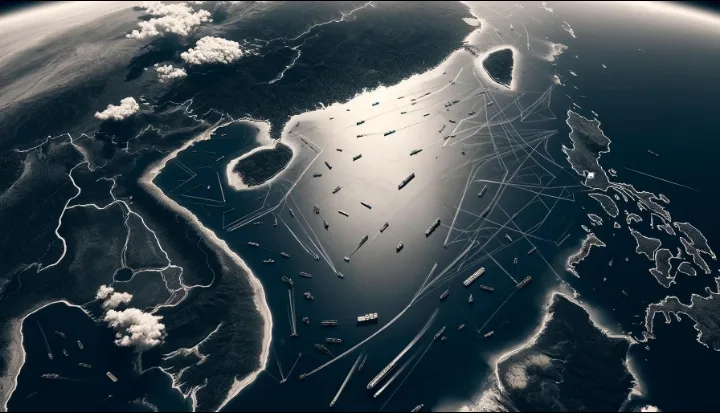
The South China Sea is among the world’s most important maritime corridors, serving as a major route for international trade, energy shipments and economic connectivity across Asia and beyond.
The signatories highlighted the importance of freedom of navigation and overflight, along with other lawful uses of the sea under UNCLOS, as essential foundations for regional prosperity.
They also expressed concern over actions that could heighten tensions, including the use of force or coercion and activities that could disrupt lawful maritime operations or endanger people at sea.
A Test for the Future of Indo-Pacific Stability
The South China Sea remains at the center of broader discussions on the future of the Indo-Pacific, where economic interdependence intersects with maritime security challenges.
The countries reaffirmed their support for ASEAN’s vision of the South China Sea as a sea of peace, stability, cooperation and prosperity, driven by open and lawful commerce.
They called on all parties to uphold international commitments, pursue dialogue and utilize recognized legal mechanisms to manage differences peacefully. (AT Network)
Follow Us at Google News, Instagram, WA Channel, and LinkedIn