
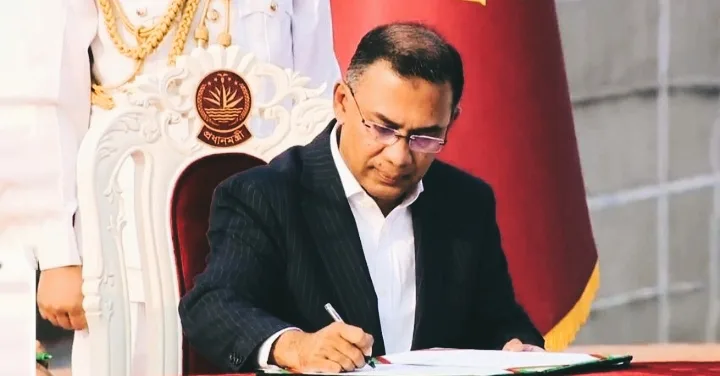
ASIATODAY.ID, DHAKA — Bangladesh’s new government under Prime Minister Tarique Rahman has sent a clear signal to India: the old era of bilateral relations is over, and a new chapter is being built from scratch.
The message came from Foreign Affairs Adviser Humaiun Kobir following a meeting between Rahman and India’s High Commissioner to Bangladesh, Pranay Verma.
“Our bilateral relations should focus on people-to-people connections, not individuals,” Kobir said, stressing Dhaka’s determination to avoid repeating “past mistakes” that shaped earlier ties.
A Clean Break from the Hasina Era
Kobir made it explicit that the previous framework of relations—closely associated with former Prime Minister Sheikh Hasina—is no longer relevant.
“This is a new relationship. There is no longer an Awami League as before. Hasina is no longer part of the political landscape,” he said, underscoring a dramatic shift in Bangladesh’s diplomatic posture.
Hasina was ousted in a 2024 coup and fled to India, a move that significantly strained ties between Dhaka and New Delhi. Bangladesh’s interim government had even urged India to hand her over.
India Responds with Cautious Optimism
India has responded with measured openness. Pranay Verma stated that New Delhi is willing to rebuild ties with a “forward-looking approach,” signaling readiness to engage while navigating the new political reality in Dhaka.
First High-Level Visit to Test New Relations
Momentum is building ahead of Bangladeshi Foreign Minister Khalilur Rahman’s upcoming visit to New Delhi—the first high-level engagement since Tarique Rahman took office in February 2026.
He is scheduled to meet Indian External Affairs Minister S. Jaishankar and National Security Adviser Ajit Doval.
Key issues on the agenda include: Energy cooperation amid ongoing Middle East tensions, Transboundary river water sharing and Normalization of visa services suspended after the 2025 protests in Dhaka.
Energy Diplomacy Emerges as Early Test
Amid fuel shortages in Bangladesh, India has already stepped in by supplying diesel—an early gesture seen as a potential foundation for rebuilding trust.
Despite these positive signals, the road ahead remains uncertain. Bangladesh’s attempt at a full diplomatic reset could reshape South Asia’s geopolitical landscape—raising a critical question: will this new chapter bring stability, or fresh tensions? (RT)
Follow Us at Google News and WA Channel