
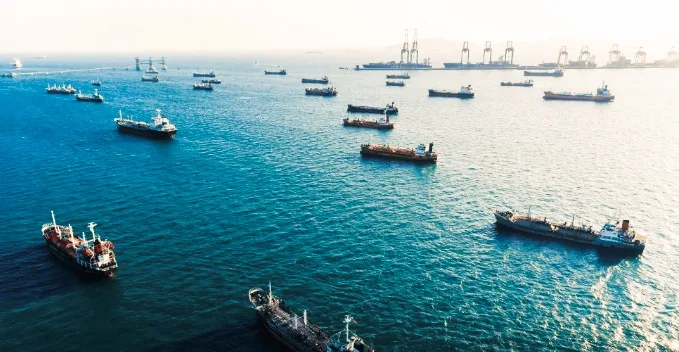
ASIATODAY.ID, NEW YORK — A two-week ceasefire between Iran and the United States has raised cautious optimism, but the Strait of Hormuz remains far from safe. Despite a temporary pause in hostilities, the world’s most critical maritime chokepoint is still overshadowed by significant security risks.
The Strait of Hormuz connects the Persian Gulf to the Gulf of Oman and serves as a lifeline for global energy flows. Roughly one-fifth of the world’s oil and gas supply passes through this narrow corridor, making any disruption a direct threat to global economic stability.
A Narrow Passage with Global Consequences
At just 39 kilometers (21 nautical miles) at its narrowest point, the Strait of Hormuz is a vital export route for major energy producers, including Saudi Arabia, Iraq, and the United Arab Emirates.
Even minor disruptions can trigger: Sharp spikes in oil prices, Delays in global supply chains, Escalating geopolitical tensions.
Shipping Activity Plummets
Since the conflict escalated in late February, maritime traffic through the strait has dropped dramatically.
– Before the conflict: Around 150 vessels transited daily.
– During the conflict: Only 4–5 ships per day.
– Limited to vessels deemed “non-hostile”
This sharp decline has effectively choked one of the world’s busiest energy corridors.
Thousands of Ships Stranded, Crews Trapped
According to the International Maritime Organization (IMO): Approximately 2,000 vessels are stranded in the Persian Gulf, More than 20,000 seafarers remain onboard, 21 confirmed attacks on international shipping, 10 fatalities, with several others injured.
Many crews have endured weeks of uncertainty in what officials describe as a tense and volatile environment.
International Law vs. Geopolitical Reality
Under international law, the Strait of Hormuz should remain open to global shipping.
The UN Convention on the Law of the Sea (UNCLOS) establishes: The right of transit passage, The obligation not to obstruct navigation.
However, enforcement remains complicated. Iran is not a party to UNCLOS, although transit rights are widely regarded as part of customary international law.
Reopening the Strait? Still Risky
Despite the ceasefire, a full reopening of the strait remains uncertain. Shipping operators continue to assess security risks before resuming normal operations.
If traffic resumes, vessels are expected to follow the Traffic Separation Scheme (TSS)—an internationally recognized routing system designed to: Reduce collision risks, Ensure orderly maritime traffic, Enhance navigational safety.
Yet, the overall security environment remains fragile.
A World on Edge
The fate of the Strait of Hormuz now hangs in the balance. If the ceasefire holds, global energy flows may stabilize. If tensions reignite, the consequences could be severe—ranging from oil price shocks to widespread supply chain disruptions.
One thing is clear: even as the guns fall silent, Hormuz remains a high-risk flashpoint capable of shaking the global economy at any moment. (AT Network)
Follow Us at Google News and WA Channel