
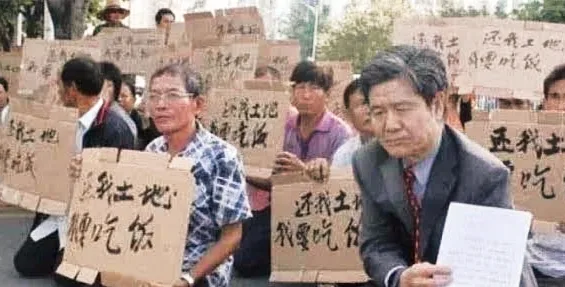
ASIATODAY.ID, BEIJING – Social unrest in China is no longer confined to its major cities. Rural areas have emerged as a new flashpoint of dissent, as a prolonged economic slowdown, land disputes, and clashes between state policies and long-standing local traditions fuel a sharp rise in grassroots protests.
Throughout 2025, protests across China’s countryside surged dramatically, signalling a deepening strain between rural communities and local authorities. Villages once viewed as politically quiet are increasingly becoming centres of open resistance, highlighting mounting social pressure beyond China’s urban core.
Alarm Bells: Rural Protests Jump 70% in One Year
According to China Dissent Monitor (CDM) quoted on Saturday 17, 2026, an independent tracking project affiliated with Freedom House, approximately 661 protest incidents were recorded in rural areas during the first 11 months of 2025—a 70% increase compared with the total number of incidents in 2024.
This surge is part of a broader nationwide trend. CDM documented 1,392 protest events in the third quarter of 2025, representing a 45% year-on-year increase and marking the sixth consecutive quarter of rising protest activity across China.
While not all demonstrations originated in rural regions, villagers now account for a growing share of public dissent, joining workers, homeowners, and other social groups voicing grievances over economic hardship and social policy.
Economic Slowdown Pushes Migrant Workers Back to Villages
The spike in rural protests coincides with China’s broader economic deceleration. Weakening industrial output, slowing investment, and shrinking urban job opportunities have driven millions of migrant workers back to their home villages.
However, return migration has offered little relief. Limited employment, declining agricultural incomes, and shrinking access to land have left many rural residents without stable livelihoods, eroding the countryside’s traditional role as an economic safety net.
Singapore-based Mandarin daily Lianhe Zaobao reported growing concern among Chinese policymakers about the need to “prevent large-scale return and permanent settlement of migrant workers in rural areas”—a phrase that has sparked widespread public anxiety and renewed debate over rural economic stagnation.
Land Disputes and Cultural Clashes Fuel Rural Anger
Beyond economic stress, land disputes and cultural tensions have emerged as key drivers of rural unrest. In Lingao County and Fuchuan County, the demolition of privately built temples and clan ancestral halls triggered fierce confrontations between villagers and authorities.
For local communities, such structures represent cultural identity and ancestral heritage, not merely physical property. Their removal quickly escalated into broader protests against local governance and land management practices.
Mandatory Cremation Policies Spark Backlash
Similar tensions surfaced in Xifeng County, where the enforcement of mandatory cremation policies provoked strong opposition from residents who viewed the measure as an attack on long-established burial traditions.
Efforts to impose these rules were widely perceived as cultural intrusion, transforming administrative enforcement into collective resistance and mass protest.
Unresolved Structural Fault Lines
Economists and sociologists argue that the unrest reflects longstanding structural problems, including land expropriation, forced relocations, and deepening inequality between urban and rural China.
CDM data from previous years show that land seizures have consistently ranked among the primary causes of rural protests, even before economic growth slowed. The return of migrant workers—many facing reduced incomes and, in some cases, loss of land-use rights—has further intensified social tensions.
In numerous rural areas, farmland once considered a fallback option has already been repurposed for industrial or commercial development, leaving returnees trapped in economic uncertainty and social frustration.
Grassroots Resistance Tests State Control
China’s official response to rising rural protests remains rooted in its established framework of public order management, combining targeted security measures, limited crackdowns, and tight control of media narratives and online content.
This model—often described as grid-based social management—relies on dense local surveillance networks to identify and contain unrest before it spreads. Yet the growing volume of recorded protests suggests that local grievances continue to surface and, at times, break through information controls.
Independent monitoring initiatives like CDM, drawing on public reports, social media indicators, and civil society documentation, provide rare insight into forms of dissent that rarely appear in official channels.
A Deepening Social Fracture
The surge in rural protests in 2025 underscores how economic slowdown, rising living costs, and stagnant incomes are colliding with unresolved structural and cultural tensions across China’s countryside.
In regions left behind by economic revitalisation efforts, grassroots discontent continues to find expression through collective action, despite the risks involved.
As rural protests become more frequent and diverse, the relationship between the Chinese state and rural society appears increasingly strained, with countryside resistance emerging as a persistent feature of China’s evolving socio-economic landscape. (AT Network)
Follow Us at Google News and WA Channel