
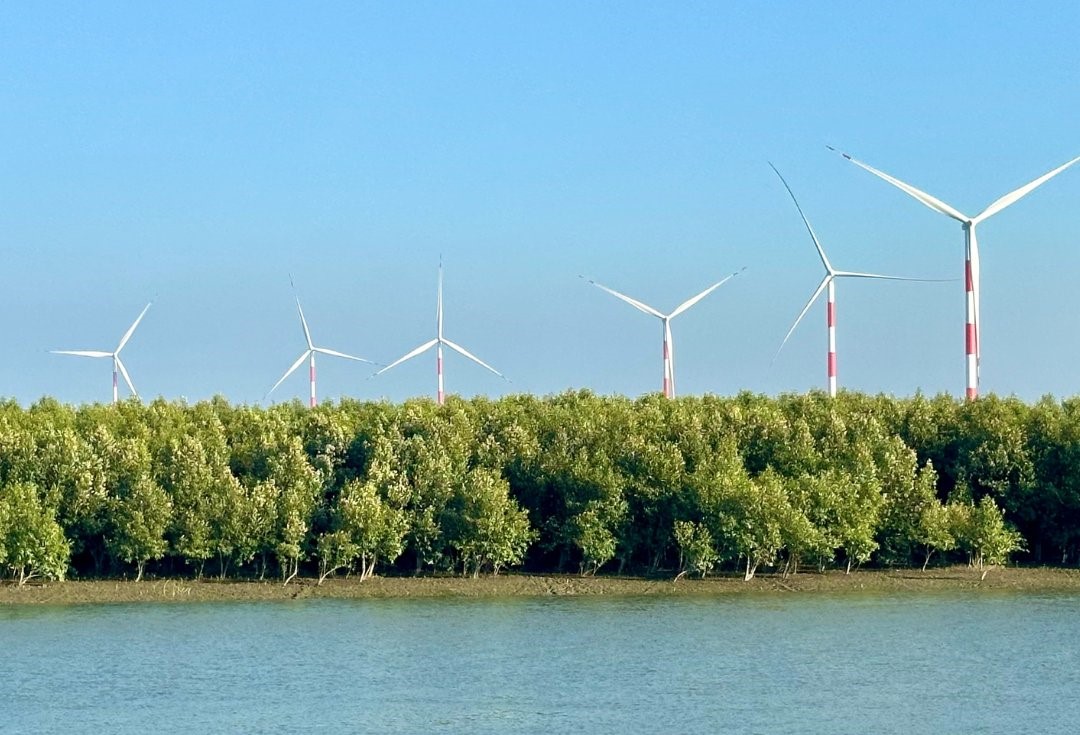
ASIATODAY.ID, JAKARTA – The German Federal Government supports Indonesia to expand new renewable energy, especially on Rote Island, East Nusa Tenggara.
“We agree with our partner the Indonesian Government to support the expansion of renewable energy, expansion of the electricity network, and a regulatory framework for a just energy transition,” said Head of Development Cooperation, German Embassy in Jakarta, Sabine Schmitt at the Launch of the PV Boat and PV Pilot Projects Agri in Oeseli Village, Rote Ndao Regency, Tuesday, May 21 2024.
Photovoltaics (PV) Boat and PV Agri are two pilot projects for energy transition and an environmentally friendly economy through dedieselization which is a collaboration between the Federal Ministry of Economic Cooperation and Development through the German Agency for International Cooperation and in collaboration with the Ministry’s Directorate General of New, Renewable Energy and Energy Conservation. Energy and Mineral Resources.
He said the two programs showed the German Federal Government’s commitment to ensuring that no citizen, even on a remote island, was left behind.
For PV Boat, he said there is an integration of innovative solar-powered solutions in maritime transportation together with the private sector, so that it contributes to the local economy and environmental conservation, improving the quality of life and business for island communities.
PV Boat represents a remarkable achievement in environmentally friendly technology, but also strengthens our shared commitment to a planet where future generations can thrive.
Meanwhile, PV Agri in the agricultural context on Semau Island has answered the challenges of limited electric power and scarce water resources which generally have an impact on agricultural productivity.
According to him, PV Agri contributes to sustainable agricultural practices and increases crop yields.
“This project is a clear signal of our intention to invest in areas that have been underserved, to ensure inclusive development for everyone,” he said.
He further explained that Indonesia as a global partner has an important position on the world stage.
Indonesia is a country that still has extensive tropical forests, is a hotspot for biodiversity, and has abundant mineral resources, but at the same time it is in the 10 largest greenhouse gas producing countries in the world.
This status emphasizes not only the challenges, but also the great opportunities for impactful sustainable development.
In bilateral cooperation between the two countries, Germany is very committed to supporting Indonesia in navigating existing challenges. Great focus is placed on climate change mitigation, which is part of a larger narrative, particularly implementation of the 2030 Agenda for Sustainable Development and the Paris Declaration on Climate Change.
He explained that the bilateral cooperation between the two countries focuses on four sectors, namely energy, forestry, circular economy and urban mobility.
In the energy sector, Germany agreed with the Government of Indonesia to support the expansion of renewable energy, expansion of the electricity grid, and a regulatory framework for a just energy transition.
Strong involvement has been demonstrated in the Just Energy Transition Partnership (JETP) which was launched at the G20 Summit in Bali. He said Germany and Indonesia were working with other international partners to utilize renewable energy solutions and pave the way towards a sustainable and just future.
“With a broad portfolio of technical and financial cooperation, Germany is dedicated to supporting Indonesia’s transition to a green economy,” said Sabine Schmitt. (AT Network)
Follow Us at Google News and WA Channel