
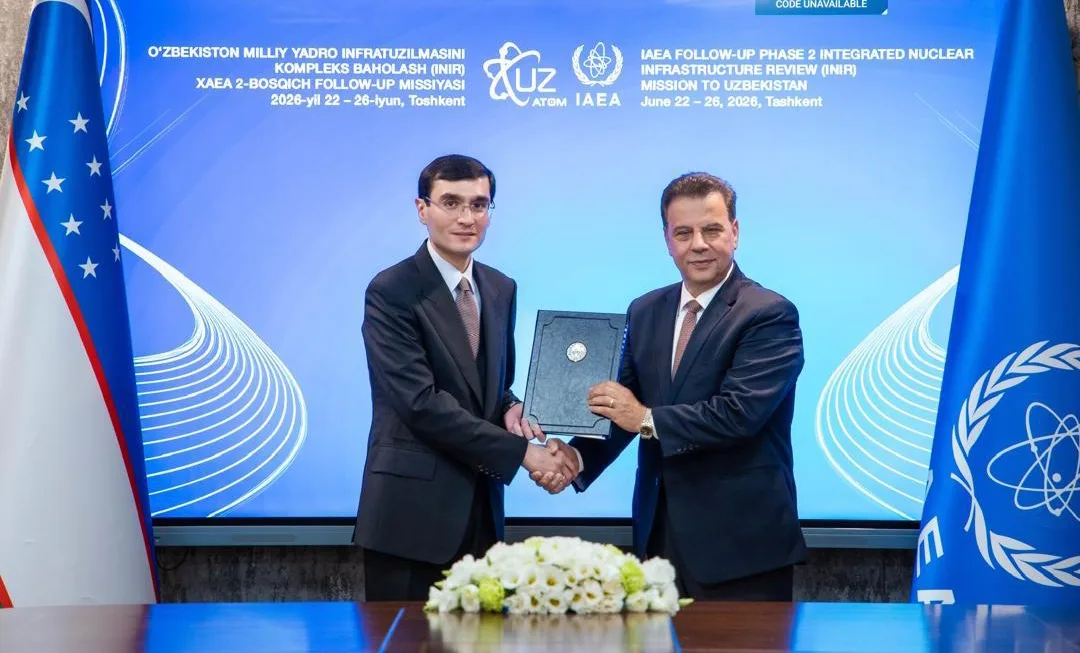
ASIATODAY.ID, TASHKENT — Uzbekistan has made significant progress in developing the infrastructure needed to implement its nuclear power programme, the International Atomic Energy Agency (IAEA) said following a follow-up review mission that assessed the country’s readiness to move into the next stage of nuclear energy development.
The Integrated Nuclear Infrastructure Review (INIR) follow-up mission, conducted from June 22 to 26 at the request of the Uzbek government, evaluated progress made since the IAEA’s 2021 Phase 2 review, which examined the country’s preparedness for implementing a nuclear power project.
The IAEA said Uzbekistan has strengthened key elements of its nuclear infrastructure, including its legal and regulatory framework, nuclear safety and security, safeguards, human resource development, stakeholder engagement, environmental protection, and electricity grid planning.
“Uzbekistan has demonstrated commitment to developing a safe, secure and sustainable nuclear power programme,” said John Haddad, leader of the IAEA mission and an official with the agency’s Nuclear Infrastructure Development Section.
He said the country had worked actively to implement recommendations from the 2021 review while establishing the institutional foundations required for the implementation stage of its nuclear programme.
Uzbekistan launched its civilian nuclear power programme in 2018 to help meet growing electricity demand, diversify its energy mix, and strengthen long-term energy security.
The country’s current plans include the construction of two RITM-200N small modular reactors (SMRs) and two VVER-1000 large nuclear reactors. Earlier this year, IAEA Director General Rafael Mariano Grossi attended the first concrete pouring ceremony marking the start of construction of the country’s first SMR unit, which is expected to become operational around 2029.
According to the review team, Uzbekistan has joined key international nuclear legal instruments, updated its national nuclear legislation, and developed regulations governing reactor licensing, regulatory oversight, management systems, and electricity grid enhancement.
The mission also concluded that further work is needed to strengthen the country’s nuclear regulatory body and complete ongoing feasibility studies supporting the programme.
The review was hosted by Uzatom, Uzbekistan’s Atomic Energy Agency, with participation from more than 20 national institutions involved in the country’s nuclear power programme.
Uzatom Director Azim Akhmedkhadjaev said the follow-up mission provided an important opportunity to measure Uzbekistan’s progress against international standards while identifying practical steps to further strengthen the country’s nuclear infrastructure.
The IAEA has supported Uzbekistan’s nuclear power programme for several years through technical cooperation, expert advisory missions, training, workshops and capacity-building initiatives.
The agency said the findings of the latest review would help guide future cooperation as Uzbekistan continues developing its national nuclear energy programme. (AT Network)
Follow Us at Google News, WA Channel, and LinkedIn