
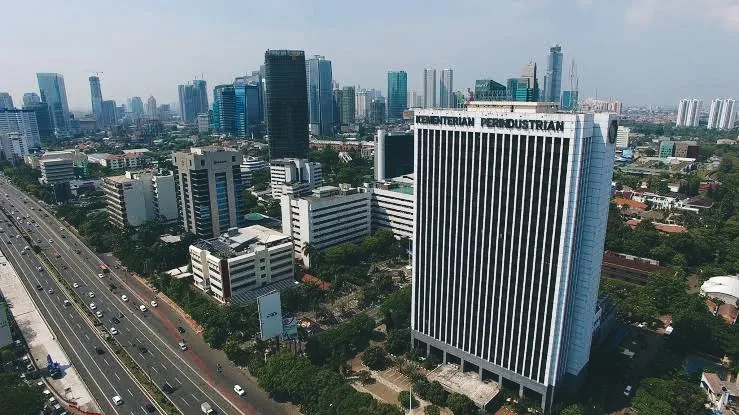
ASIATODAY.ID, JAKARTA — Indonesia’s Financial Transaction Reports and Analysis Center (PPATK) has flagged IDR 12.49 trillion (approximately USD 800 million) in suspicious financial transactions within the textile trading sector, reigniting concerns over the entrenched textile import mafia that has long been blamed for undermining domestic industry.
The revelation has intensified public scrutiny over who controls the shadow networks behind textile imports, how illicit funds circulate, and through which channels these practices operate beyond official oversight.
Responding to the issue, the Ministry of Industry stressed that the PPATK findings are not linked to the issuance of Technical Recommendations (Pertek) for Textile and Textile Product (TPT) imports.
However, the ministry acknowledged that the import mafia problem cannot be narrowly framed around a single licensing instrument.
“We fully support PPATK’s findings and the ongoing legal process. When discussing an import mafia, this issue must be addressed across sectors and authorities, not reduced to a simplistic narrative that targets Pertek alone,” said Febri Hendri Antoni Arief, Spokesperson for the Ministry of Industry, on Tuesday, February 3, 2026.
According to ministry, textile import mafia networks often operate outside the Pertek mechanism, exploiting loopholes across Indonesia’s broader trade and customs ecosystem.
Not all textile imports require Pertek approval. Several schemes fall beyond the ministry’s direct authority, including Bonded Zones, Bonded Warehouses, Bonded Logistics Centers, Special Economic Zones (SEZs), Import Facilities for Export Purposes (KITE), as well as outright illegal import practices.
“This is where the import mafia thrives. There are legal channels that do not require Pertek, and there are illegal routes that clearly violate the law. These pathways must be dismantled comprehensively, not obscured by misplaced accusations,” Febri emphasized.
Ministry warned that loosely linking PPATK’s suspicious transaction findings to Pertek issuance risks diverting public attention from the real actors behind illicit textile imports.
Since 2017, textile import controls have been implemented through formal inter-ministerial mechanisms, including Limited Coordination Meetings under the Coordinating Ministry for Economic Affairs, Industrial Capacity Verification (VKI), and annually regulated Pertek issuance under ministerial regulations—processes that are documented, traceable, and subject to oversight.
“Data shows that Pertek approvals have become increasingly selective and proportionate compared to total national imports. If textile flooding and trillion-rupiah suspicious transactions persist, the root of the problem is likely outside the Pertek system,” he said.
In this context, PPATK’s findings are widely viewed as a critical entry point to expose the broader textile import mafia network, including trading companies, customs channels, and potential cross-sector collusion.
Ministry reaffirmed its full support for law enforcement efforts and systemic reform.
“We do not tolerate fraudulent practices. If there is solid evidence implicating individuals or networks within the import mafia, it must be revealed and prosecuted. Indonesia’s domestic industry must no longer be sacrificed for the利益 of a few powerful players,” Febri concluded. (AT Network)
Follow Us at Google News and WA Channel