
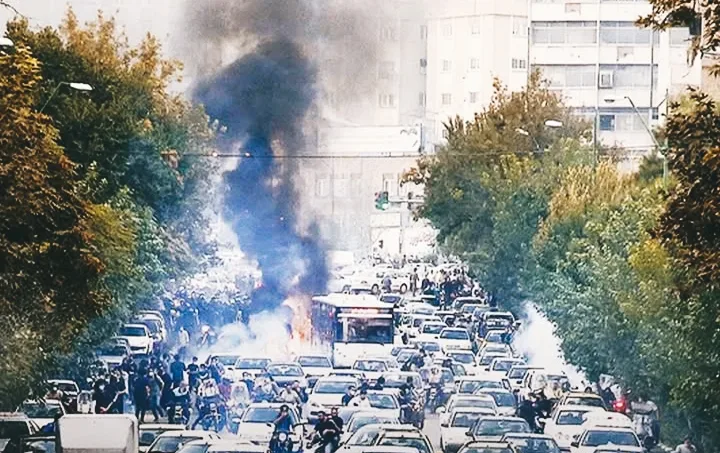
ASIATODAY.ID, TEHRAN — Iran is plunging deeper into a full-scale human rights crisis as at least 648 protesters have been killed, including nine children, during a nationwide uprising met with what the United Nations describes as excessive and shocking use of force by state authorities.
UN Secretary-General António Guterres said he was “shocked” by reports of lethal violence against civilians, as protests entered their third week and the Iranian government enforced a near-total internet blackout, effectively sealing the country off from the outside world.
“All Iranians must be able to express their grievances peacefully and without fear,” Guterres’ spokesperson said in a statement issued quoted on January 13, 2026.
Nationwide Protests Turn Deadly
The unrest erupted on December 28, 2025, following the sudden collapse of Iran’s national currency and worsening economic hardship. What began as scattered demonstrations quickly evolved into a nationwide revolt, spreading to all 31 provinces and nearly 120 cities, including Tehran, Isfahan, Mashhad, Shiraz, Karaj, and Rasht.
Security forces responded with live ammunition, military-grade weapons, and mass arrests, according to human rights groups. Witnesses and medical sources report that protesters were shot at close range, often targeting the head and upper body.
648 Dead — and the Toll May Be Far Higher
According to Iran Human Rights (IHRNGO), at least 648 protesters have been killed in 14 provinces. The organization stresses that this figure includes only cases verified through independent sources, hospital records, and morgue documentation.
Due to the ongoing communications blackout, the true death toll may be far higher. Unverified reports suggest that several hundred to more than 6,000 people could have been killed since the protests began.
Among the confirmed victims are nine children under the age of 18. IHRNGO says it is still working to verify the ages of several additional minors believed to be among the dead.
Morgues Overflow, Hospitals Overwhelmed
Disturbing footage from Kahrizak morgue in southern Tehran shows 250 bodies believed to be protesters killed during recent demonstrations.
A doctor who spoke anonymously to Time Magazine said they personally counted 217 bodies across six hospitals in Tehran, a city with more than 100 hospitals.
Reports of high casualty numbers have also emerged from Isfahan, Mashhad, Shiraz, Karaj, and Rasht.
Thousands more protesters have been seriously injured, overwhelming medical facilities across the country.
Internet Blackout Hides the Bloodshed
On the night of January 8, Iranian authorities shut down 99% of the country’s internet, according to NetBlocks, dramatically restricting access to information and independent reporting.
The blackout mirrors Iran’s November 2019 crackdown, when hundreds — and by some estimates up to 1,500 people — were killed during nationwide protests.
Only a limited number of Iranians have been able to access the internet via Starlink, though reports indicate signal jamming is actively disrupting satellite connections.
Mass Arrests and Looming Executions
The government has labeled protesters as “rioters,” “terrorists,” and mohareb (enemies of God) — charges that can carry the death penalty under Iranian law.
Human rights groups estimate that more than 10,000 people have been arrested. Many face fast-track trials in Revolutionary Courts, raising grave concerns over the absence of due process.
One particularly alarming case is that of Erfan Soltani, a 26-year-old protester arrested on January 8 in Fardis, Karaj. Sources close to his family told IHRNGO that he has reportedly been sentenced to death, with execution allegedly scheduled for January 14 — just days after his arrest.
According to the family, Soltani had no access to a lawyer, and no formal trial was held. Authorities have not publicly disclosed the charges against him.
UN and Rights Groups Sound the Alarm
The UN Secretary-General has urged Iranian authorities to:
– Immediately halt excessive and disproportionate use of force
– Restore internet and mobile communications
– Respect freedoms of expression, assembly, and association
– Prevent arbitrary executions and ensure fair trials
Mahmood Amiry-Moghaddam, Director of Iran Human Rights, warned that the current violence echoes the mass atrocities of the 1980s, which have since been recognized as crimes against humanity.
“The risk of mass and extrajudicial executions is extremely serious,” he said. “Under the Responsibility to Protect, the international community has a duty to protect Iranian civilians from mass killings by the Islamic Republic.”
Iran Faces a Defining Humanitarian Test
With hundreds dead, children among the victims, thousands detained, and executions reportedly imminent, Iran is now facing what human rights advocates describe as its gravest humanitarian crisis in more than a decade.
As the internet blackout continues and state violence escalates, pressure is mounting on the international community to act — before the crackdown turns into a silent massacre hidden from the world. (AT Network)
Follow Us at Google News and WA Channel