
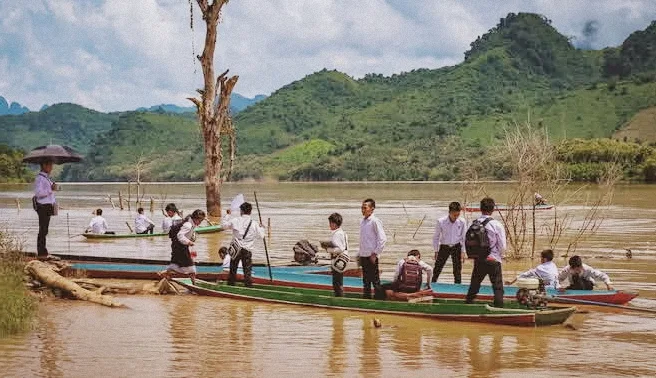
ASIATODAY.ID, VIENTIANE — Facing deepening shortages of teachers and health workers, Laos is turning to the World Bank for urgent support to prevent a long-term human capital collapse.
On Wednesday, the World Bank approved a $35 million, six-year project aimed at boosting the performance of frontline workers in primary education and healthcare, two sectors hit hard by years of declining public investment.
The project, titled “Improving Frontline Workers Performance in Education and Health,” targets systemic weaknesses in staff management, training, and retention—particularly in rural and high-poverty areas, where shortages are most severe.
Under the program, Laos will roll out comprehensive continuous professional development for primary school teachers, including classroom observations and learning assessments.
Teacher training colleges will be strengthened with smart classrooms, support will be provided to an existing two-year continuous bachelor’s program, and online professional development systems will be modernized nationwide.
In the health sector, the project will expand health worker registration and licensing, while enhancing both pre-service and in-service training.
Special incentive and retention packages will be deployed in district hospitals and health centers across eight target provinces, aiming to stem the exodus of medical professionals from underserved regions.
“Laos still faces significant challenges in education and health,” said Khwima Nthara, World Bank Country Manager for the Lao PDR.
“The government deserves recognition for its leadership and commitment in mobilizing much-needed resources to support teachers and health workers at the frontline, enabling them to focus fully on serving local communities.”
The intervention comes amid worrying trends. Public spending on education and health fell sharply from 4.9% of GDP in 2013 to an estimated 2.3% in 2023, eroding earlier gains in learning outcomes and child nutrition.
Recent surveys suggest a partial reversal in child nutrition progress, while schools and clinics grapple with chronic workforce shortages.
Geography further compounds the crisis. Rural and remote areas—often the poorest—face the most acute lack of qualified teachers and medical staff, widening inequality in access to basic services.
Beyond training, the World Bank–backed initiative will strengthen national frameworks for recruitment, deployment, and personnel management, aiming to improve how education and health workers are distributed across the country.
With human capital increasingly recognized as a cornerstone of economic resilience, the project signals a stark reality: without decisive reform and sustained investment, Laos risks locking an entire generation out of quality education and healthcare.
The World Bank’s move positions this intervention not just as development support—but as a strategic rescue mission for the country’s future workforce. (AT Network)
Follow Us at Google News and WA Channel