
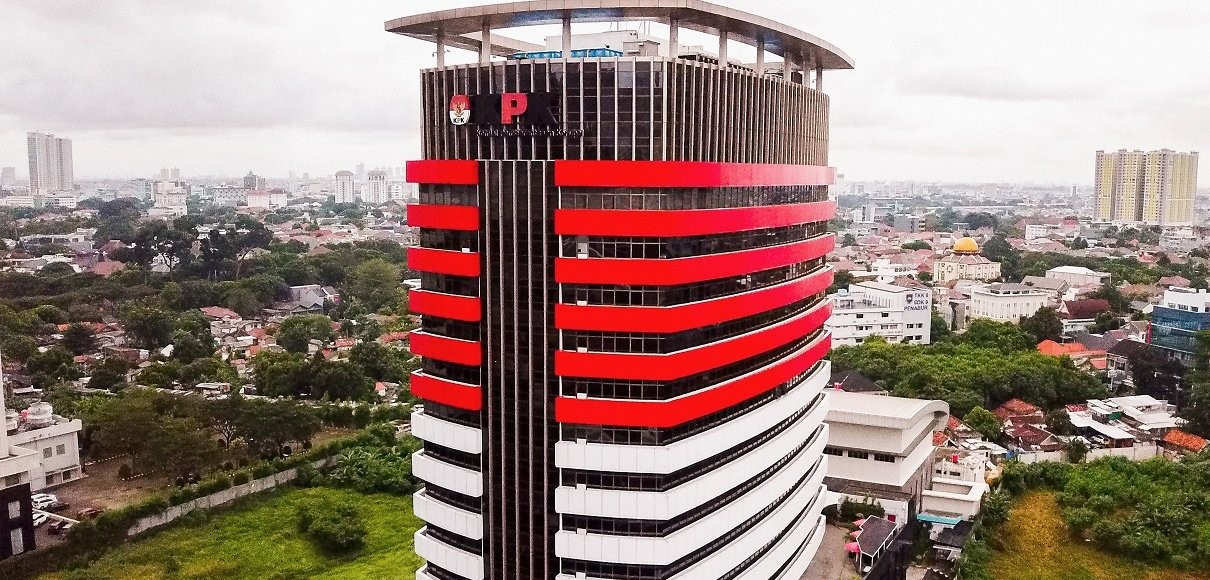
ASIATODAY.ID, JAKARTA – Behind the prestigious image of Indonesia’s State-Owned Enterprises (SOEs) as the “backbone of the national economy” lies a dark record of large-scale corruption that has drained public funds. Over the past two decades, numerous SOE directors and commissioners have been implicated in corruption scandals involving billions to trillions of rupiah.
Below are some of the largest SOE corruption cases uncovered by the Corruption Eradication Commission (KPK) and other law enforcement agencies:
- Karen Agustiawan – Pertamina
State Loss: Trillions of Rupiah
The former President Director of PT Pertamina (Persero) was sentenced to 9 years in prison for corruption in the procurement of liquefied natural gas (LNG) between 2009–2014. The state loss is estimated to reach trillions, making this one of the most complex corruption cases handled by the KPK.
- Fazwar Bujang – Krakatau Steel
State Loss: IDR 6.9 Trillion
The former CEO of Krakatau Steel was convicted over a fictitious project to build a blast furnace complex. The abandoned project led to IDR 6.9 trillion in state losses—one of the largest in SOE history. He was sentenced to 5 years in prison in 2023.
- Desi Arryani – Waskita Karya / Jasa Marga
State Loss: IDR 202 Billion
The former head of PT Waskita Karya was involved in fake projects worth hundreds of billions of rupiah. Together with several other officials, she approved payments for work that was never carried out, resulting in IDR 202 billion in state losses.
- Destiawan Soewardjono – Waskita Karya
State Loss: Tens of Billions of Rupiah
This former CEO allegedly abused the Supply Chain Financing (SCF) scheme by disbursing funds for non-existent projects. He is suspected of enriching himself and others by more than IDR 40 billion.
- RJ Lino – Pelindo II
State Loss: IDR 28.7 Billion
The corruption case involving the procurement of quay container cranes at Pelindo II ensnared former CEO RJ Lino. After years of legal proceedings, he was finally imprisoned, with state losses estimated at IDR 28.7 billion.
- Budi Tjahjono – Jasindo
State Loss: IDR 15 Billion (Fictitious Agent Commissions)
The former CEO of PT Asuransi Jasindo was convicted of creating fictitious agent schemes in the procurement of insurance for ministerial assets. Around IDR 15 billion ended up in private pockets.
- Catur Prabowo & Trisna Sutisna – Amarta Karya
State Loss: IDR 46 Billion
Two officials from PT Amarta Karya were charged with engineering fictitious projects that caused Rp46 billion in losses. The KPK also charged them with money laundering.
- Muhammad Firmansyah Arifin – PT PAL
Bribery in Warship Export
The former CEO of PT PAL received 1.25% in kickbacks from a USD 86.96 million warship export deal with the Philippines. He was arrested in a KPK sting operation.
- Siti Marwa – Berdikari
State Loss: IDR 2.96 Billion
The former CFO of PT Berdikari accepted bribes in a fertilizer procurement project for the livestock sector. Though the amount was relatively small, this case highlights the lack of oversight in food-related SOEs.
- Andra Y. Agussalam – Angkasa Pura II
Bribe: IDR 1.9 Billion
This special staff member at Angkasa Pura II was caught receiving IDR 1.9 billion in a baggage handling system procurement project, part of a IDR 5.6 billion commitment fee.
New SOE Law Sparks Controversy: Is the KPK’s Authority Under Threat?
Amid these staggering corruption cases, the recent enactment of Law No. 1 of 2025 on SOEs has sparked widespread concern. The regulation stipulates that SOE directors and commissioners are no longer considered public officials, potentially limiting the KPK’s authority to prosecute corruption within SOEs.
However, the KPK has firmly stated that it retains full jurisdiction to investigate corruption in SOEs, referring to the Anti-Corruption Law, the State Finance Law, and Law No. 28/1999 on Clean and Transparent Governance.
As a legal safeguard, the KPK has issued Circular Letter No. 5 of 2024, reaffirming that SOE officials can still be categorized as public officials when their functions intersect with public power and state financial management. This circular provides a legal foundation for the KPK to continue pursuing SOE corruption cases without regulatory obstruction.
These cases illustrate that corruption in SOEs is not merely an individual lapse but a systemic issue, spanning from procurement and fictitious projects to money laundering schemes.
With trillions of rupiah in state losses, cracking down on SOE corruption must become a national priority. Strengthening oversight, enforcing accountability, and supporting the KPK are essential. The KPK’s circular serves as a testament that legal loopholes must not become shields for corruption under the guise of authority. (AT Network)
Follow Us at Google News and WA Channel