
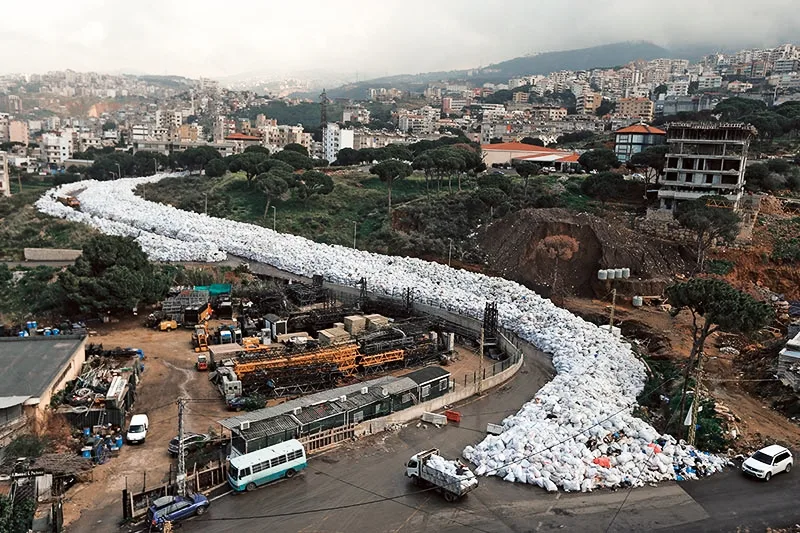
ASIATODAY.ID, WASHINGTON — The Middle East and North Africa (MENA) region is facing a mounting waste crisis that is costing its economies an estimated US$7.2 billion every year, threatening public health, long-term growth, and one of the region’s most vital sectors: tourism, according to a new World Bank report titled Waste Management in the Middle East and North Africa.
The report reveals that MENA generates more waste per capita than the global average, producing over 155 million tons of waste annually. Without urgent reforms, this figure is expected to double by 2050, deepening environmental damage and undermining economic competitiveness across the region.
Urban centers are bearing the brunt of the crisis. Poorly managed waste is increasingly contaminating air, soil, and water, while unchecked dumping and plastic leakage are damaging coastlines and marine ecosystems—particularly in the Mediterranean Sea, now among the most polluted in the world.
“Urban centers across the MENA region are on the frontline of the waste challenge,” said Almud Weitz, Regional Practice Director for Infrastructure at the World Bank on January 26, 2026.
“Improving waste service delivery is critical to reducing pollution, protecting communities, and ensuring cities remain engines of growth and opportunity.”
Despite relatively high waste collection rates—averaging nearly 80 percent—the region is lagging badly in what happens next. Less than 10 percent of waste is recycled, while more than two-thirds is mismanaged, fueling pollution, marine litter, and serious health risks.
MENA also records the highest per-capita plastic leakage into the seas globally, intensifying threats to fisheries and coastal tourism.
The World Bank warns that even small improvements could deliver outsized benefits.
“Even a modest shift can make a big difference,” said Mesky Brhane, Regional Practice Director for the Planet Department at the World Bank.
“A 1 percent reduction in waste generation could save the region up to US$150 million annually. Modernizing waste systems and embracing circular economy solutions can protect public health, strengthen tourism, and build greener cities.”
Drawing on new data from 19 countries and 26 cities, the report outlines differentiated pathways for reform.
High-income countries are urged to sharply reduce landfilling and scale up circular economy solutions.
Middle-income countries are encouraged to achieve universal collection while improving waste recovery and treatment.
Fragile and conflict-affected states, meanwhile, are advised to prioritize low-cost, community-based approaches.
Crucially, the report estimates that up to 83 percent of collected waste in MENA could be reused, recycled, or recovered for energy. A shift toward a circular economy would not only cut pollution but also create better jobs, particularly in waste services and recycling—turning today’s waste emergency into a potential driver of sustainable and inclusive growth. (AT Network)
Follow Us at Google News and WA Channel