
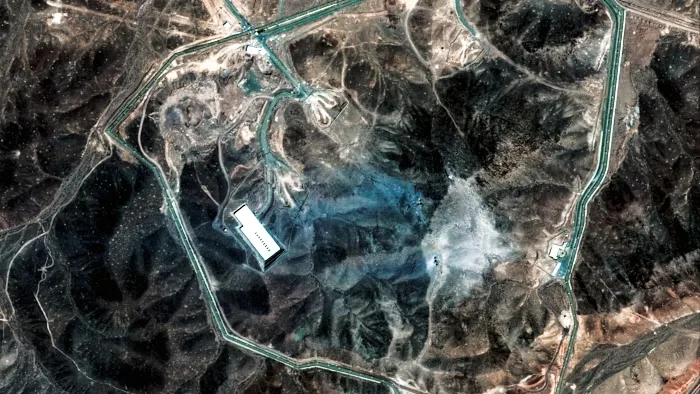
ASIATODAY.ID, MOSCOW — Russia has signaled its readiness to remove Iran’s remaining stockpiles of enriched uranium, a move that could ease mounting geopolitical tensions between Tehran and Washington amid fears of a wider Middle East escalation.
Russian Foreign Ministry spokeswoman Maria Zakharova stressed that Iran’s possession of the nuclear material is fully legitimate and does not violate any international agreements.
“The stockpiles in question belong to Iran, and their presence in no way contradicts Tehran’s obligations under the Treaty on the Non-Proliferation of Nuclear Weapons,” Zakharova said during a briefing on Wednesday, as quoted by Kommersant.
She emphasized that Iran retains full sovereign rights over the material, including decisions on whether it should be removed from Iranian territory and where it could be exported.
Military Pressure, Diplomatic Openings
Moscow’s statement comes as international efforts intensify to contain a growing crisis between Iran and the United States.
In recent weeks, Washington has reinforced its military posture across the Middle East, deploying additional Patriot and THAAD air defense systems and dispatching a naval strike group led by the USS Abraham Lincoln to the Arabian Sea.
While US officials have suggested that the immediate risk of military action has eased, Washington continues to insist on key demands, including limits on Iran’s uranium enrichment activities and restrictions on its ballistic missile program.
Iran, for its part, maintains that its nuclear program is entirely peaceful.
Russia, Türkiye, and Qatar Push Mediation
According to Kuwait-based newspaper Al-Jarida, the likelihood of an imminent US strike on Iran has diminished, as diplomacy gains momentum following intensive mediation efforts led by Russia and Türkiye, with support from Qatar.
Russia first floated the idea of removing Iran’s enriched uranium last summer, proposing to transfer, reprocess, and later return the material for use at Iran’s civilian nuclear facilities.
Moscow said it had informed Iran, the United States, and the International Atomic Energy Agency (IAEA) of the proposal. Iranian authorities, however, have yet to publicly provide a definitive response.
In January, Russian Foreign Minister Sergey Lavrov reiterated that Moscow remains prepared to help prevent escalation and steer Washington and Tehran away from direct confrontation. (RT)
Follow Us at Google News and WA Channel