
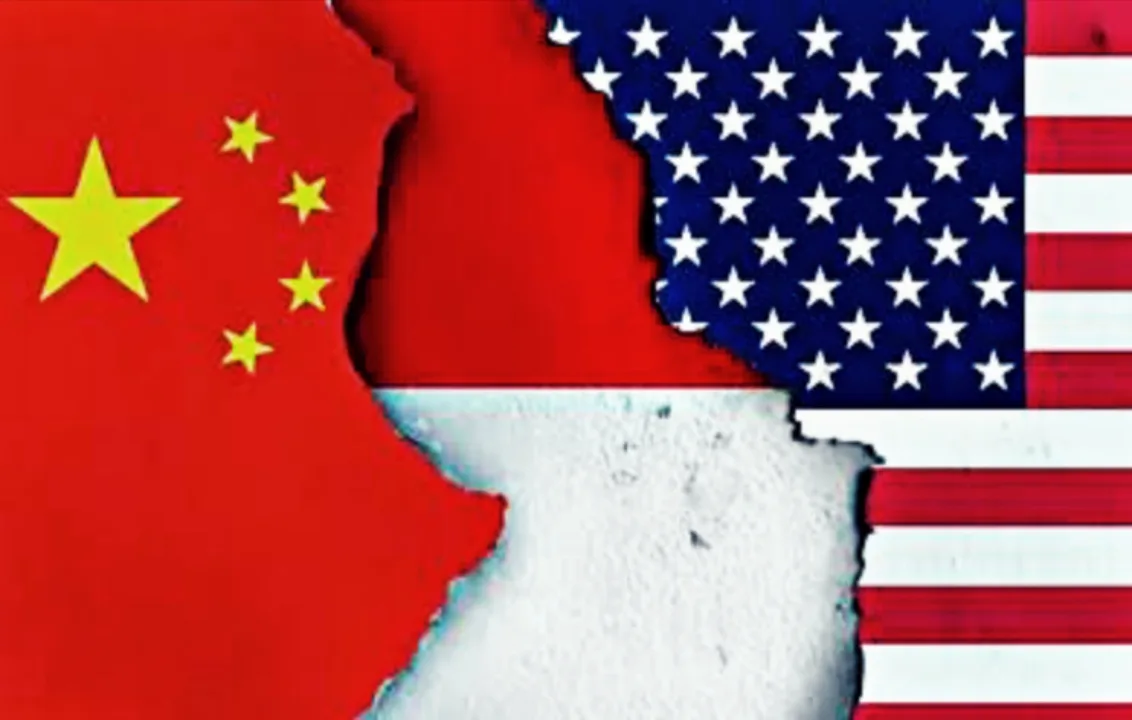
ASIATODAY.ID, JAKARTA – Amid escalating trade tensions between the United States and China, Indonesia is no longer a passive observer. Instead, it is emerging as a strategic player in global trade diplomacy, navigating between superpowers while safeguarding its national interests.
Through its recent engagement with BRICS and trade expansion via IEU–CEPA, Indonesia is redefining its economic posture—balancing pragmatism, sovereignty, and opportunity.
Caught Between Giants: A Pragmatic Approach to the US and China
In navigating the complexities of the global trade war, Indonesia has adopted a dual strategy—embracing open trade with the United States to attract investment and technology, while exercising caution toward China to protect local industries.
Trade Relations with the United States:
The US has lowered import tariffs on Indonesian goods to 19%, while Indonesia has eliminated tariffs on several American products.
This has made imported goods such as iPhones, laptops, meat, and dairy more affordable to Indonesian consumers.
Industrial machinery and raw materials from the US can now enter tariff-free, reducing production costs for Indonesian manufacturers.
Trade Policy Toward China:
Despite being Indonesia’s largest trading partner, many Chinese products remain subject to import tariffs.
Items such as textiles and steel face anti-dumping duties, as a measure to shield domestic producers from ultra-cheap imports that could undermine local industries.
This dual stance shows that Indonesia is neither leaning fully East nor West, but choosing what benefits its economy and people most.
Entering BRICS: Expanding Indonesia’s Geopolitical Footprint
Indonesia’s decision to join BRICS+ (Brazil, Russia, India, China, South Africa, and partner countries) marks a significant geopolitical shift. It provides access to alternative trade frameworks and diversifies Indonesia’s economic alliances beyond traditional Western blocs.
Why BRICS Matters to Indonesia:
Expands access to non-Western trade and investment networks.
Opens doors to new development financing mechanisms, such as the BRICS Development Bank.
Offers opportunities to tap into emerging markets across the Global South.
By joining BRICS, Indonesia strengthens its bargaining power and reaffirms its commitment to a multipolar global economy.
IEU–CEPA: Deepening Trade Integration with the European Union
In addition to its pivot toward emerging economies, Indonesia is also deepening ties with developed markets through the Indonesia–European Union Comprehensive Economic Partnership Agreement (IEU–CEPA).
Strategic Benefits of IEU–CEPA:
Preferential access to the high-value European market.
Encouragement for sustainable practices and industrial upgrades in Indonesia.
New export opportunities for agriculture, fisheries, textiles, and manufacturing sectors.
IEU–CEPA demonstrates Indonesia’s ambition to integrate into global trade not only through market size but through value, sustainability, and innovation.
Smart, Balanced, and Pro-People Trade Policy
Indonesia’s multi-vector trade strategy shows a disciplined, intelligent approach to global competition. The country is creating tangible domestic benefits from its foreign trade policies.
Who Benefits?
Consumers enjoy lower prices on high-quality imported goods.
Local industries gain access to affordable production inputs, boosting competitiveness.
Investment flows increase, generating jobs and accelerating economic growth.
Indonesia is no longer merely a battleground for the US–China trade rivalry. Instead, it is emerging as a global trade architect, skillfully leveraging relationships with both powers while also forging new alliances like BRICS and the EU.
Through this nuanced, people-centered trade diplomacy, Indonesia protects its economic sovereignty while positioning itself as a rising middle power with influence on the global economic stage.
This strategy deserves recognition—not only for maintaining geopolitical balance, but also for generating real economic value for the Indonesian people and building resilience in a rapidly changing world. (ATN)
Follow Us at Google News and WA Channel