
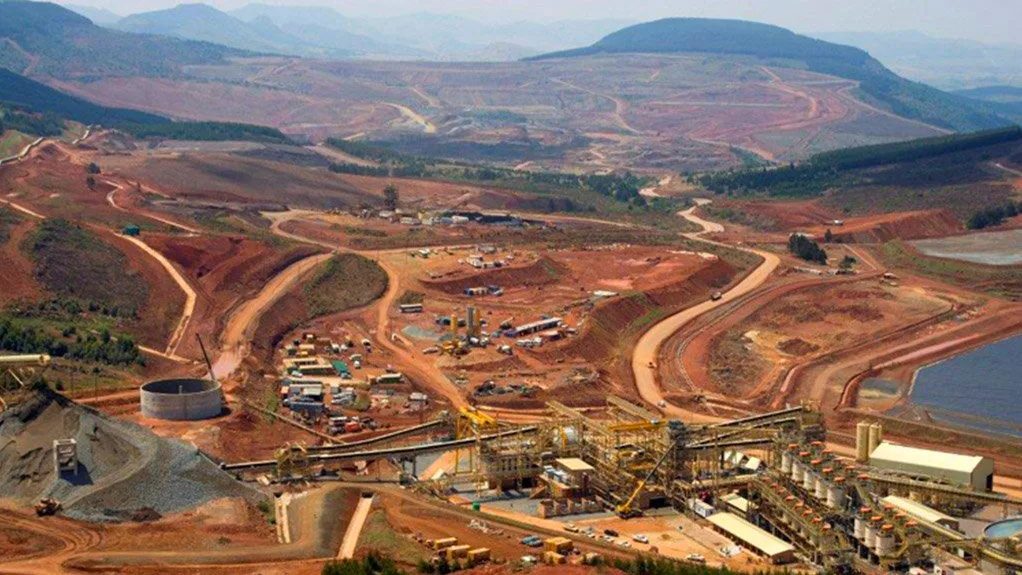
ASIATODAY.ID, JAKARTA — Indonesia’s position as the world’s nickel powerhouse is facing a new challenge as major Chinese investors that helped transform the country into the globe’s largest nickel producer begin exploring opportunities in Africa and the Pacific.
The shift comes amid growing concerns over regulatory uncertainty in Indonesia, where a series of new government policies have raised questions among investors about the long-term outlook for the country’s mining and downstream metals industries.
According to Reuters, Tsingshan Group—the Chinese industrial giant that played a pivotal role in building Indonesia’s nickel-processing empire—is considering a major industrial project in Madagascar. Meanwhile, Lygend Resources is exploring nickel investments in Tanzania and seeking to revive the Koniambo nickel operation in New Caledonia.
The developments mark a potentially significant turning point for Indonesia, whose nickel industry has become a cornerstone of the global electric vehicle supply chain following the country’s 2020 ban on raw nickel ore exports.
Data from the U.S. Geological Survey show that Indonesia’s share of global mined nickel production surged to more than 60 percent in 2025, up from roughly 30 percent in 2020.
Massive Chinese-backed investments in smelters and industrial parks fueled the country’s meteoric rise, making Indonesia the dominant force in the global nickel market.
The rapid expansion of low-cost Indonesian nickel production created a global oversupply that pushed prices lower and forced higher-cost producers, including Glencore, BHP, and Sumitomo, to scale back or shut down operations.
However, investor sentiment has become increasingly cautious since President Prabowo Subianto took office in late 2024 and introduced a series of measures aimed at increasing state revenues to fund ambitious government programs, including Indonesia’s estimated US$20 billion free school meals initiative.
In late May, the government announced plans to centralize exports of strategic commodities such as coal, palm oil, and ferroalloys under state-controlled mechanisms. Although nickel pig iron (NPI)—a key product of Chinese-owned nickel operations—was later excluded from the proposal, the announcement heightened concerns over policy predictability.
Investors have also been grappling with tighter nickel mining quotas, proposed tax increases, and significant revisions to Indonesia’s mineral pricing regulations.
The growing unease prompted the Chinese Chamber of Commerce in Indonesia to send a letter directly to President Prabowo, warning that the policy changes could undermine future investment flows.
“This clearly has a negative impact on the industry. If the government increases bureaucracy and controls commodity pricing, it will inevitably affect investment decisions and scale,” said Tim Hoff, Senior Mining Analyst at Canaccord.
Signs of a slowdown are already emerging. Foreign direct investment (FDI) into Indonesia declined by 6 percent in 2025 after growing 19 percent the previous year. Investment in mining peaked in 2024, while new commitments in the basic metals processing sector have largely stagnated since then.
Against this backdrop, Africa is increasingly emerging as an alternative destination for Chinese mining capital.
Tsingshan has submitted a multibillion-dollar proposal to Madagascar to develop an integrated industrial zone encompassing several mineral projects, including nickel. Madagascar’s Mining Minister Karl Andriamparany said the concept was inspired by Indonesia’s successful Morowali and Weda Bay industrial parks.
The proposal remains under review, although Tsingshan signed a memorandum of understanding with the Malagasy government earlier this year.
At the same time, Lygend Resources—widely recognized as a pioneer of High-Pressure Acid Leach (HPAL) technology used in electric vehicle battery materials—is reportedly in talks to acquire a stake in Tanzania’s Kabanga nickel project from Lifezone Metals.
The company has also submitted an offer to New Caledonia’s state-owned mining company SMSP to acquire an interest in the currently idle Koniambo nickel operation.
If completed, the Tanzania and New Caledonia projects would represent Lygend’s first major nickel investments outside Indonesia.
Despite the growing interest in overseas opportunities, industry analysts note that replicating Indonesia’s success will not be easy.
Indonesia still possesses a unique combination of advantages, including vast nickel reserves, established industrial infrastructure, and a highly integrated downstream processing ecosystem that few countries can match.
Madagascar only recently lifted a 16-year moratorium on mining permits, while Ambatovy—the country’s largest nickel-cobalt operation—has struggled with operational challenges for years.
Tanzania’s Kabanga project, meanwhile, is considered one of the world’s largest undeveloped nickel sulfide deposits. However, according to Lifezone Metals, it will require nearly US$1 billion in upfront investment and approximately six years before reaching its targeted annual output of around 50,000 tonnes of nickel.
For now, Indonesia remains the center of the global nickel industry. Yet the growing push by Chinese mining giants into Africa and the Pacific sends a message that policymakers cannot ignore: investors are beginning to build long-term alternatives outside Indonesia.
If that trend accelerates, the country’s future leadership in the global nickel market may depend not only on its vast mineral wealth, but also on its ability to provide regulatory certainty, policy stability, and a competitive investment environment. (AT Network)
Follow Us at Google News and WA Channel