
ASIATODAY.ID, JAKARTA — Indonesia, through the National Research and Innovation Agency (BRIN), has initiated a revival of Southeast Asian regional studies grounded in Science and Technology Studies (STS), responding to the escalating global environmental crisis in the Anthropocene era.
The initiative signals a decisive break from conventional approaches that frame regions merely as geographic or political units, instead advancing a perspective that views Southeast Asia as a dynamic entanglement of humans, nature, and technology.
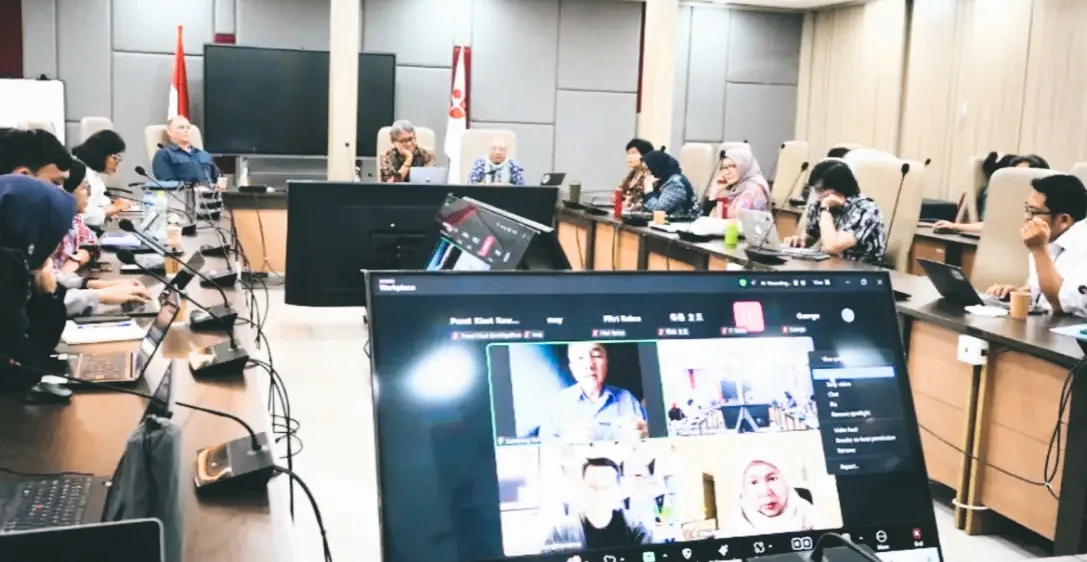
The idea was prominently discussed at the international seminar “Entangled Areas: Reactivating Southeast Asia in the Anthropocene,” held at the Sasana Widya Graha Building, Sarwono Prawiroharjo Science and Technology Park, Jakarta, on Tuesday, January 13, 2026.
Organized by BRIN’s Research Organization for Social Sciences and Humanities through its Center for Regional Studies, the event also marked the launch of a special issue of the international journal Engaging Science, Technology, and Society.
Professor Casper Bruun Jensen of the Department of Sociology and Anthropology at Chulalongkorn University, Bangkok, and a leading scholar in STS, emphasized that the Anthropocene has fundamentally reshaped the foundations of social science.
According to him, ecological degradation, transboundary pollution, sinking coastal cities, and climate uncertainty demonstrate that regions can no longer be understood as products of human agency alone.
“The overlap between Science and Technology Studies and regional studies has so far remained very limited. Yet in the Anthropocene, the entanglement of human and non-human actors is crucial for understanding how regions are formed, transformed, and even dismantled,” Jensen said.
He added that regions should no longer be treated as passive containers, but as dynamic entities shaped by multiple Anthropocene agents—ranging from geological formations and water systems to the atmosphere and microscopic pollution particles.
Meanwhile, Irina Rafliana, a researcher at BRIN’s Center for Regional Studies, introduced a provocative concept she termed “Tsunami as Method.”
She urged participants to move beyond viewing tsunamis solely as disasters to be predicted and controlled, proposing instead that they be understood as material forces that actively generate knowledge.
“Tsunamis create entangled regions—not only geographically, but also socially, technically, and epistemically,” Rafliana explained.
She outlined her reflections through three analytical zones: the Trade Zone, which examines the relationship between tsunami science and geopolitics; the Red Zone, illustrating contestations between state scientific authority and local cosmologies; and the High-Tension Zone, highlighting the moral and emotional burdens carried by operators of early warning systems.
This approach, she argued, opens pathways toward more ethical and collective modes of coexistence with natural phenomena, rather than perpetuating paradigms of domination and control.
In closing, renowned Southeast Asian studies scholar Thongchai Winichakul delivered a critical reflection on the urgency of abandoning outdated regional frameworks.
He introduced the metaphor of the “durian region” to symbolize Southeast Asia’s deep entanglement with everyday practices often overlooked in mainstream scholarship.
“The world may still operate through nation-states, but we must train our minds to think across land, sea, and atmospheric zones. This is a wake-up call for traditional regional studies,” he concluded.
Through this forum, BRIN hopes Southeast Asian studies will evolve into a field that is more relevant, adaptive, and responsive to global environmental crises and contemporary scientific dynamics—serving not merely as academic discourse, but as an ethical and epistemic foundation for confronting an uncertain planetary future. (AT Network)
Follow Us at Google News and WA Channel