
ASIATODAY.ID, OSLO – Greenland is rapidly transforming into a new geopolitical flashpoint.
Once seen as a remote autonomous territory within the Kingdom of Denmark, the vast Arctic island is now at the center of an intensifying strategic rivalry between the United States and Russia, driven by military positioning, resource competition, and the future balance of power in the Arctic.
Western officials have reportedly discussed measures to limit Russian and Chinese access to Greenland’s mineral resources as part of broader NATO security deliberations.
According to The New York Times and Politico, proposals include restricting mining rights for non-NATO states and tightening oversight of mineral exploration licenses on the island.
The discussions underscore a shifting reality: Greenland is no longer treated as a peripheral territory, but as a strategic asset in global power politics.
An Arctic Treasure Trove
Greenland is rich in zinc, lead, gold, iron ore, copper, hydrocarbons, and hosts some of the world’s largest deposits of rare-earth elements—materials essential for high-tech manufacturing, defense systems, and the global energy transition. Since the 2009 Self-Government Act, control over these resources has rested with Greenland’s local authorities.
Yet the island’s vast mineral wealth and strategic location have increasingly drawn the attention of major powers, particularly the United States, which views Greenland as both a resource hub and a critical military outpost linking North America, Europe, and the Arctic frontier bordering Russia.
Washington’s Strategic Push
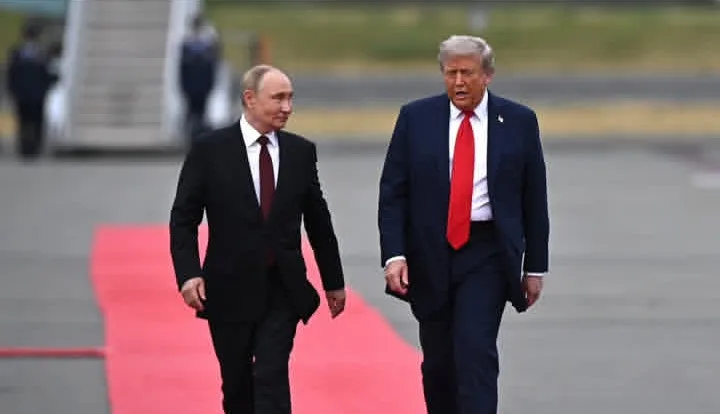
US President Donald Trump has repeatedly expressed interest in acquiring Greenland, framing the idea as a matter of national and Arctic security.
He has cited alleged threats from Russia and China, arguing that only US control could ensure Greenland’s protection.
The remarks sparked diplomatic tensions with Denmark and European allies, including threats of new tariffs and even speculation about the use of force. At the World Economic Forum in Davos, Trump claimed that a “framework deal” negotiated with NATO would grant the United States expanded military access to Greenland.
The US already operates military facilities on the island under long-standing defense agreements with Denmark.
US Vice President J.D. Vance later stated that Washington expects access to a share of Greenland’s natural resources in return for providing military “protection,” signaling a transactional approach that has alarmed both Copenhagen and Nuuk.
Greenland Pushes Back
Greenland’s authorities have firmly rejected any external attempts to shape their resource policy. Mineral Resources Minister Naaja Nathanielsen told Politico that Greenland will not accept its future mineral development being decided outside the island.
Denmark has also dismissed the notion that Greenland faces an external military threat, pushing back against Washington’s security-based justification for deeper involvement.
Russia: Targeted but Uninterested
Despite being portrayed as a strategic rival, Moscow has repeatedly denied having any interest in Greenland.
Russian President Vladimir Putin has stated that the situation surrounding Greenland “does not concern Russia,” while Foreign Minister Sergey Lavrov said Washington is fully aware that neither Russia nor China has plans to seize the island.
Russia’s ambassador to Denmark, Vladimir Barbin, has argued that developing Greenland’s resources makes little economic sense for Moscow.
Russia already controls vast Arctic reserves of oil, gas, nickel, copper, palladium, gold, diamonds, and rare-earth elements—supported by established infrastructure and lower operational costs.
“Greenland would require colossal investments before large-scale extraction could begin,” Barbin said, noting that although dozens of exploration licenses have been issued, “99 percent remain licenses on paper, with no real activity.”
From Moscow’s perspective, the Greenland issue is less about resources and more about political symbolism and military positioning by the West.
The Arctic as the New Cold War Frontier
Even as Russia downplays its interest, NATO’s efforts to restrict access to Greenland have reinforced the perception that the Arctic is becoming a new frontline in a 21st-century Cold War. Melting ice is opening new shipping routes, exposing untapped resources, and reshaping global strategic calculations.
At the heart of this transformation lies Greenland—a territory increasingly caught between competing powers, where geopolitics, military strategy, and resource security intersect.
Beneath the ice, the struggle over Greenland is no longer just about minerals. It is about who will dominate the Arctic in an era of intensifying great-power rivalry. (AT Network)
Follow Us at Google News and WA Channel