
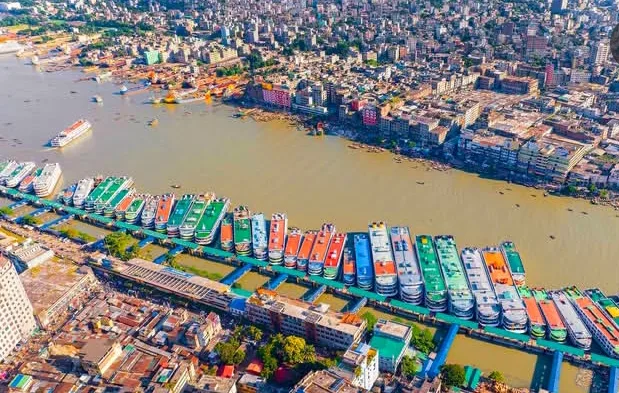
ASIATODAY.ID, WASHINGTON — The World Bank has approved $370 million to enhance sanitation and solid waste management in Dhaka, aiming to curb water pollution threatening public health and economic growth.
The Metro Dhaka Water Security and Resilience Program will strengthen the capacity of local and national institutions to restore Dhaka’s rivers and canals, a metropolitan area generating half of the country’s formal employment and one-third of GDP.
Program Goals: Sanitation and Waste Management
The program introduces a results-based system to help city authorities and the Water Supply and Sewerage Authority (WASA) deliver tangible improvements, including:
– Providing safely managed sanitation services to 550,000 residents
– Improving solid waste management for 500,000 residents
– Prioritizing communities most affected by pollution and service gaps
“Rivers and canals are the lifelines for millions in Dhaka. Rapid urbanization and industrial growth have outpaced the city’s capacity to manage wastewater and pollution, affecting public health, the environment, and the economy,” said Jean Pesme, World Bank Division Director for Bangladesh and Bhutan on February 10, 2026.
“This program lays the institutional foundation to reduce pollution and restore the health of Dhaka’s waterways over time.”
Dhaka’s Wastewater and Water Pollution Crisis
Dhaka faces critical challenges:
– Only 20% of residents are connected to piped sewer systems
– 2% use functional fecal sludge management
– Over 80% of untreated wastewater flows directly into rivers and canals
– Half of Dhaka’s canals have disappeared or are clogged
The program takes a holistic approach, engaging public and private sectors and city corporations, focusing on:
– Improving sanitation and waste management services
– Strengthening regulatory frameworks and water quality monitoring
– Restoring rivers and canals to reduce pollution and restore flow capacity
Industrial Pollution: A Major Health and Environmental Threat
Industrial pollution in Dhaka is severe: about 80% of export-oriented garment factories are located in the city, with over 7,000 factories discharging an estimated 2,400 million liters of untreated wastewater daily, causing: Skin diseases, Diarrheal illnesses and Neurological disorders.
The program encourages private sector participation to:
– Scale up industrial effluent treatment
– Implement water reuse
– Increase water efficiency and reduce pollution
Digital Monitoring and Integrated River Restoration
According to Harsh Goyal, Senior Water Supply and Sanitation Specialist at the World Bank, the first phase of the program will:
– Reduce pollution discharge into Dhaka’s water bodies
– Strengthen institutional and regulatory monitoring systems
– Establish a comprehensive water quality index
– Implement digital real-time pollution monitoring
– Develop integrated restoration plans for four major Dhaka rivers
The initial phase will cover Dhaka and Narayanganj, including:
– Expanding primary waste collection, prioritizing communities near canals and rivers
– Upgrading recycling systems
– Community-led awareness campaigns and enforcement to prevent solid waste dumping and industrial wastewater discharge
Since independence, the World Bank has provided over $46 billion in grants, interest-free loans, and concessional credits. The institution currently maintains a $12 billion ongoing commitment across 43 projects, supporting sustainable development and water security in Bangladesh. (AT Network)
Follow Us at Google News and WA Channel