
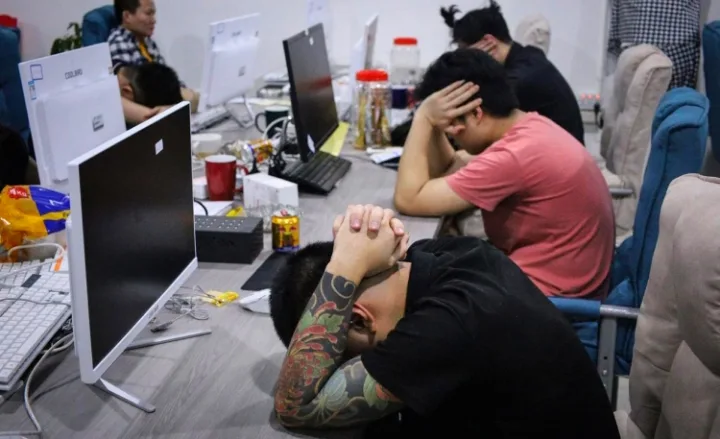
ASIATODAY.ID, NEW YORK – A damning new report by the United Nations has uncovered the brutal reality behind Southeast Asia’s sprawling online scam industry — a criminal enterprise estimated to generate up to $64 billion annually.
Behind the staggering profits lies what investigators describe as a system built on human trafficking, torture, sexual violence, debt bondage and forced criminality, affecting hundreds of thousands of victims from at least 66 countries.
The report, titled A Wicked Problem, was released in Geneva on 20 February 2026 by the Office of the United Nations High Commissioner for Human Rights (OHCHR).
An Industry Operating at “Industrial Scale”
According to the findings, at least 300,000 people are believed to be working inside scam compounds across Southeast Asia, with 74 per cent located in the Mekong region.
While exact figures are difficult to verify, credible estimates suggest:
– Global annual revenue: approximately $64 billion
– Mekong region alone: over $43.8 billion per year
These operations range from remote border zones to special economic areas and major urban centres.
UN High Commissioner for Human Rights Volker Türk described the situation as:
“A staggering and at the same time heart-breaking litany of abuse.”
He warned that victims are often denied protection and instead face disbelief, stigma, detention or prosecution.
Inside the Scam Compounds: “Self-Contained Prison Cities”
Survivors described massive compounds resembling self-contained towns spanning more than 500 acres, surrounded by barbed wire and guarded by armed personnel.
Some compounds include supermarkets, restaurants, casinos and brothels. Smaller operations function from apartments, hotels or gated housing estates.
Regardless of size, one element remains constant: total control.
– Passports confiscated
– Communication tightly restricted
– 24-hour surveillance
– Severe punishment for escape attempts
Many survivors simply call them “prisons”.
Torture as a Performance Tool
Victims are forced to conduct sophisticated online scams, including:
– Impersonation fraud
– Fake cryptocurrency investment schemes
– Online gambling platforms
– Extortion operations
– “Romance scams”
The operations are highly structured, with separate units handling recruitment, scripting, financial transfers and money laundering via mule accounts and cryptocurrency.
Failure to meet daily or monthly quotas results in extreme punishment.
One Sri Lankan survivor reported being submerged in so-called “water prisons” for hours. Others described confinement in pitch-black rooms for days.
The report states:
“All victims described receiving and/or witnessing severe mistreatment amounting to torture.”
Public torture during morning assemblies was reportedly used to intimidate underperforming teams.
Sexual Violence and Forced Pregnancies
The report notes a sharp increase in sexual violence since 2024.
Women described rape, forced prostitution and forced abortions. Male victims reported sexual humiliation and assault.
Twelve women released from compounds in Myanmar reported being raped and impregnated. A pregnant Filipina survivor described being beaten and electrocuted.
Victims also endured:
– Up to 19-hour workdays
– Severe food deprivation
– Sleep deprivation
– Physical beatings
One survivor said his group received almost no food for 15 to 20 days and became so weak they “could not even stand.”
Debt Bondage and Ransom
Most victims were lured with promises of high salaries. Upon arrival, they faced escalating “debts”, arbitrary fines and unrealistic profit targets.
A Thai survivor said he was required to generate $9,500 per day to avoid being beaten or “sold” to another compound.
Families were often extorted for ransom payments worth tens of thousands of dollars. Traffickers reportedly conducted video calls showing abuse in real time to pressure relatives into paying.
Corruption and Official Collusion
The report highlights allegations of collusion between criminal syndicates and public officials.
Some victims said immigration officers appeared to coordinate directly with recruiters. Others reported police entering compounds and receiving payments from managers.
OHCHR describes corruption in the sector as “deeply entrenched”.
Although large-scale raids have freed thousands — including a February 2025 operation along the Thailand-Myanmar border that rescued approximately 7,000 people — compounds frequently resume operations or relocate.
Freedom Without Safety
Release does not guarantee protection.
Many rescued victims are detained in immigration facilities, fined for visa violations or prosecuted for crimes they were forced to commit.
OHCHR is urging governments to formally adopt and implement the “non-punishment principle”, ensuring that trafficking victims are not criminally liable for acts committed under coercion.
High Commissioner Türk emphasised:
“Effective responses must be grounded in international human rights law and standards.”
What the UN Is Calling For
The report outlines urgent recommendations:
– Embed the non-punishment principle in national legislation
– Ensure safe and timely rescue operations
– Provide trauma-informed medical and psychological care
– Expand safe labour migration pathways
– Crack down on corruption and official collusion
– Strengthen cooperation between governments, digital platforms and financial institutions to disrupt recruitment and money laundering networks
The findings expose a harsh truth: behind Southeast Asia’s booming digital fraud economy lies a vast system of coercion and abuse.
Unless coordinated, rights-based action is taken, the convergence of cybercrime, human trafficking and corruption may continue to expand — turning the region’s scam compounds into one of the most entrenched human rights crises of the digital age. (AT Network)
Follow Us at Google News and WA Channel