
ASIATODAY.ID, NEW YORK – Illegal waste trafficking is rapidly escalating into a multi-billion-dollar global crisis.
In its latest report, the United Nations Office on Drugs and Crime (UNODC) warns that organized crime networks are generating up to $18 billion annually from the illicit trade and dumping of waste, including hazardous and toxic materials.
Behind weak regulations, regulatory loopholes, and corruption, criminal syndicates are exploiting the booming global waste management sector—turning environmental crime into one of the most lucrative underground industries worldwide.
Toxic Waste Flowing from Wealthy Nations to Vulnerable States
According to UNODC, nearly every region of the world has been drawn into illegal waste trafficking. The most dangerous and difficult-to-dispose materials often flow from wealthier countries to developing nations with weaker enforcement systems.
Candice Welsch, Director of Policy Analysis and Public Affairs at UNODC, stressed:
“This is not an abstract challenge. It has severe consequences for public health, driving toxic pollution of drinking water, oceans, soil and beyond.”
Globally, the legal waste management industry was valued at $1.2 trillion in 2024, up dramatically from $410 billion in 2011. However, illicit operations are expanding in parallel with this rapid growth.
E-Waste: A Goldmine for Criminal Networks
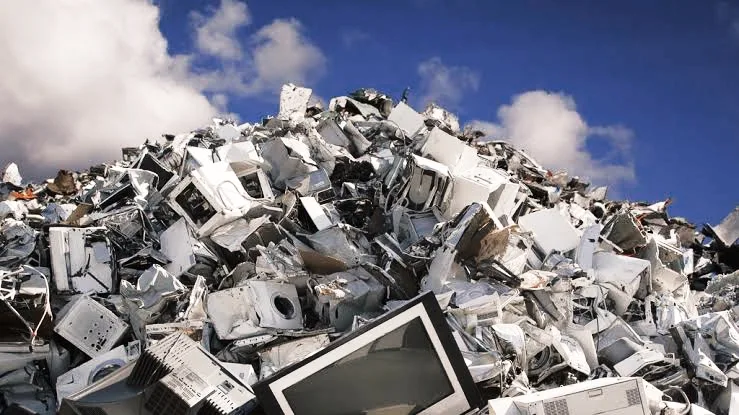
Electronic waste (e-waste) has become one of the fastest-growing and most vulnerable waste streams. Data from 2022 shows that only around 20 per cent of global e-waste is managed in an environmentally sound manner.
Yet discarded electronics contain valuable raw materials—such as gold, copper and iron—worth an estimated $91 billion. Of that, approximately $28 billion is believed to be captured by illegal traffickers.
UNODC also flags other mass-produced waste streams, including discarded solar panels, as increasingly susceptible to exploitation by organized crime groups.
“Jurisdiction Shopping” and Sophisticated Criminal Logistics
The report reveals that organized crime groups are highly knowledgeable about environmental legislation. Many engage in so-called “jurisdiction shopping”—targeting countries with the weakest regulations and lowest penalties.
Investigations cited by INTERPOL and EUROPOL indicate that traffickers often operate through legitimate front companies. Their tactics include:
– Dumping liquid toxic waste into rivers and lakes
– Burning waste for energy without environmental safeguards
– Falsely labelling hazardous materials as non-hazardous
– Undercutting legal competitors in waste disposal tenders
In some cases, fines imposed are lower than the profit generated from a single illegal e-waste shipment—making environmental crime a low-risk, high-reward venture.
A Major Obstacle to Sustainable Development
Illegal waste trafficking is more than an environmental issue. It: Damages ecosystems, Endangers public health, Fuels corruption, Undermines governance and Deepens inequality in destination countries.
Developing nations receiving illegal shipments often lack adequate waste management infrastructure. Informal waste pickers working at landfills are among the most vulnerable, facing significant health risks from toxic exposure.
The crisis poses a direct challenge to the sustainable development goals championed by the United Nations.
Weak Enforcement and Rising Demand
In the European Union, stricter environmental regulations and rising legal disposal costs have unintentionally increased demand for illegal waste services.
UNODC highlights that limited enforcement capacity, lack of traceability, and relatively low penalties continue to enable traffickers worldwide.
Without stronger international cooperation, tougher penalties, and improved monitoring systems, illegal waste trafficking is expected to grow alongside global consumption and industrial expansion.
Environmental crime is no longer a hidden side issue—it is a global public health emergency and a direct threat to the planet’s future. (AT Network)
Follow Us at Google News and WA Channel