
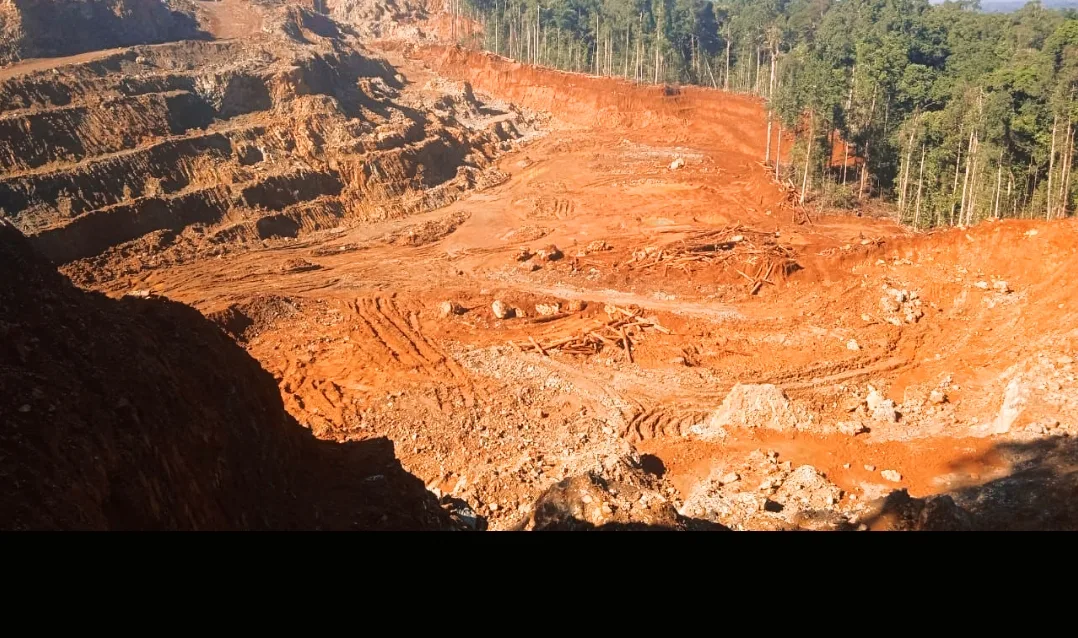
ASIATODAY.ID, JAKARTA – Rapidly expanding nickel mining activities along the coast of East Halmahera are drawing increasing concern from academics, who warn that the impacts extend far beyond environmental degradation. If not managed carefully, mining operations could pose serious risks to public health and the long-term sustainability of coastal economies.
The warning comes from Dr. Meutia Ismet, a lecturer at the Faculty of Fisheries and Marine Sciences of IPB University, who emphasized that coastal mining areas such as Buli Bay face significant environmental pressures linked to sediment runoff and ecosystem disruption.
According to Dr. Meutia, one of the most visible consequences of mining activities is the growing turbidity and discoloration of coastal waters caused by sediment washing into the sea from cleared mining land. When vegetation and topsoil are removed, rainfall can easily carry large volumes of sediment into nearby marine environments.
“The influx of suspended solids can significantly reduce water quality. Increased turbidity limits sunlight penetration into the water column, disrupting photosynthesis in marine organisms and reducing dissolved oxygen levels,” she explained quoted on June 15, 2026.
The deterioration of water quality, she added, poses a direct threat to coral reef ecosystems. Sediment covering coral surfaces reduces the light available to symbiotic algae that corals rely on for energy production.
“In the long term, these conditions can stress coral reefs, triggering coral bleaching and eventually leading to coral mortality,” Dr. Meutia said.
Damage to coral reefs affects far more than a single ecosystem. Numerous marine species depend on reefs as habitat, feeding grounds, and spawning areas. Similar threats could also impact seagrass beds and mangrove forests, both of which play critical roles in maintaining coastal ecological balance.
Beyond sedimentation, Dr. Meutia highlighted the potential accumulation of heavy metals such as nickel, iron, manganese, and cadmium in coastal waters as a result of mining activities. These metals can be absorbed by marine organisms and become increasingly concentrated through the food chain via a process known as biomagnification.
As a result, communities that rely on seafood harvested from contaminated waters could face serious long-term health risks.
“In high concentrations, accumulated heavy metals may increase the risk of chronic health problems, including skin diseases, neurological disorders, impaired kidney function, and even certain forms of cancer,” she warned.
Given these concerns, Dr. Meutia stressed the importance of regular monitoring of water quality, sediment levels, and heavy metal concentrations in Buli Bay to better assess the environmental impacts of mining operations.
She also called for stronger implementation and evaluation of Environmental Impact Assessments (EIA), improved sediment control measures, large-scale revegetation of disturbed land, and greater protection for affected communities through economic assistance, healthcare services, and access to clean water.
“Environmental recovery must be carried out through an integrated upstream-to-downstream approach by addressing the sources of pollution on land so that both ecosystems and local communities can benefit,” she concluded.
The IPB academic’s assessment underscores that the consequences of nickel mining in Halmahera are not limited to marine environmental damage. Without effective and sustainable management, mining activities could also create significant public health challenges and threaten the livelihoods of coastal communities that depend on healthy marine ecosystems. (AT Network)
Follow Us at Google News and WA Channel