
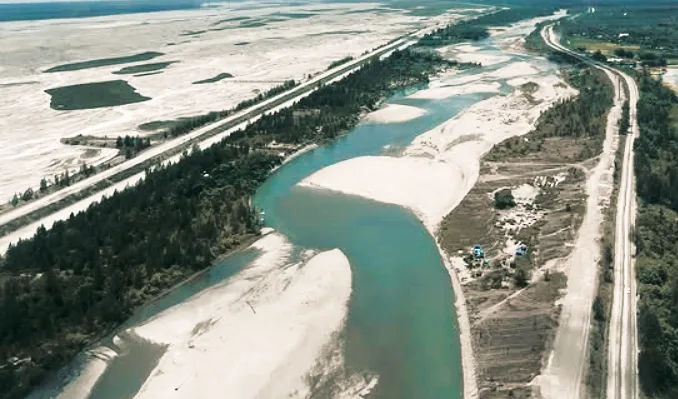
ASIATODAY.ID, JAKARTA — Indonesia’s Parliament has renewed pressure on the government to address allegations of environmental damage linked to the tailings management of PT Freeport Indonesia, following fresh testimony from indigenous community representatives in Papua who say river ecosystems, coastal areas, and traditional livelihoods continue to deteriorate.
The renewed scrutiny came during a public hearing of the House of Representatives’ Commission IV on Monday, where lawmakers argued that years of discussions have yet to produce meaningful government action.
PT Freeport Indonesia operates the Grasberg mining complex in Papua, one of the world’s largest copper and gold mines and a strategically important supplier to global mineral markets.
Commission IV member Sonny T. Danaparamita said Parliament must ensure the latest hearing results in concrete policy recommendations rather than another field visit.
“It would not be appropriate if, after discussing this issue twice, the only outcome is another visit. We need concrete follow-up,” Sonny told the hearing.
Representatives from the Central Papua Provincial Parliament and indigenous communities from Mimika Regency told lawmakers that residents in 23 villages across the districts of Agimuga, Jita, and East Mimika have experienced environmental changes they associate with the management of mining tailings.
According to presentations delivered during the hearing, those alleged impacts include sedimentation of the Yamaima River, degradation of coastal ecosystems, damage to islands regarded as culturally significant by indigenous communities, the loss of sago forests, declining access to clean water, disrupted river transportation, and health problems reported in several villages.
Community representatives also said sedimentation has affected navigation to Sipu-Sipu Port, forcing some communities to depend increasingly on marine transportation after sections of the river became difficult to use.
Sonny urged Parliament to prioritize practical solutions by recommending coordinated action from the ministries responsible for forestry, agriculture, marine affairs, and fisheries to restore ecosystems, strengthen food security, and improve transport infrastructure for affected communities.
He also questioned the implementation of commitments discussed during previous parliamentary meetings, saying only limited community assistance had been delivered while broader development initiatives remained unresolved.
Commission IV member Robert Joppy Kardinal echoed those concerns, calling for an independent parliamentary fact-finding mission to verify conditions in Mimika before recommendations are submitted to ministries and other parliamentary commissions overseeing mining, infrastructure, and public health.
During the hearing, community representatives also stated that the Modified Ajkwa Deposition Area (ModADA) now covers approximately 23,000 hectares, while alleging changes to river systems, mangrove habitats, fish migration routes, groundwater quality, and traditional food sources. Those claims were presented as part of the parliamentary hearing and were not independently verified during the session.
Robert further expressed concern that many indigenous Papuan fishers have yet to benefit fully from the rich fisheries of the nearby Arafura Sea, despite increasing commercial fishing activity in the region.
The hearing represents the latest parliamentary scrutiny of environmental issues surrounding Indonesia’s largest mining operation and could add pressure on relevant ministries to review environmental management, community welfare programs, and infrastructure development in Papua.
At the time of publication, PT Freeport Indonesia had not publicly responded to the allegations presented during the parliamentary hearing. The hearing itself did not determine legal responsibility, with lawmakers instead focusing on possible policy recommendations and follow-up action by the government. (AT Network)
Follow Us at Google News, WA Channel, and LinkedIn