
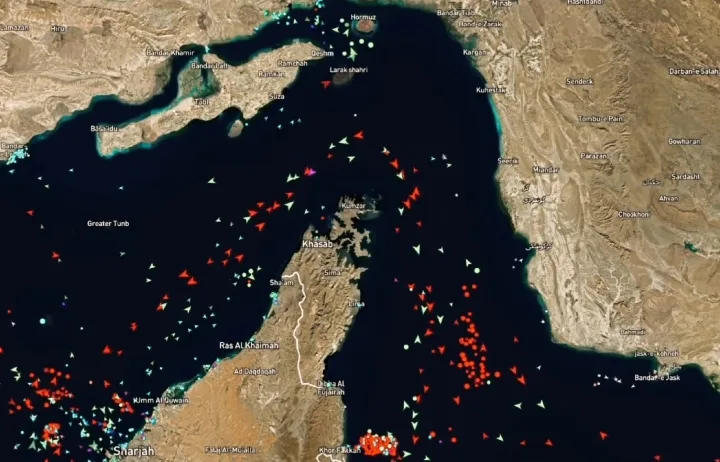
ASIATODAY.ID, JAKARTA – The escalating conflict involving Iran, Israel, and the United States is beginning to shake global energy stability. Its impact is no longer confined to the Middle East.
Across Asia, governments are already taking emergency steps—from closing universities to enforcing work-from-home policies—in an effort to conserve fuel and electricity.
In Bangladesh, the government has ordered all public and private universities to shut down starting Monday, March 9, 2026. The Eid al-Fitr holiday has also been brought forward as part of emergency measures to reduce electricity and fuel consumption amid a worsening energy crisis.
University campuses are among the country’s largest energy consumers, powering dormitories, classrooms, laboratories, and air-conditioning systems. By suspending academic activities, authorities hope to reduce national electricity demand while also easing traffic congestion that contributes to excessive fuel use.
“The decision was taken to reduce electricity and fuel consumption in light of the current global situation,” Bangladesh’s Ministry of Education said in a directive to universities.
The move highlights the country’s deep energy vulnerability. About 95 percent of Bangladesh’s energy supply comes from imports, making it highly exposed to disruptions in global oil and gas markets.
As the conflict in the Middle East hampers energy exports and drives prices higher, domestic supplies are becoming increasingly unstable.
The situation has already triggered public panic. Last week the government began restricting electricity purchases and fuel sales, prompting residents to stockpile gasoline and diesel.
Beyond universities, authorities have also ordered international-curriculum schools and private tutoring centers to suspend operations temporarily. Government offices and institutions are being encouraged to conserve energy by maximizing natural light and minimizing unnecessary electricity use.
Severe gas shortages have also forced Bangladesh to shut down four out of five state-owned fertilizer plants. The remaining gas supply has been redirected to power plants to prevent widespread electricity blackouts.
To bridge the supply gap, Bangladesh is now purchasing liquefied natural gas (LNG) from the spot market at significantly higher prices while seeking additional cargo shipments.
“We are doing everything we can to reduce consumption and ensure stability in electricity supply, fuel distribution, and imports,” a senior official from the Ministry of Power, Energy and Mineral Resources said.
Thailand Orders Civil Servants to Work From Home
The energy shock is spreading across Southeast Asia. In Thailand, Prime Minister Anutin Charnvirakul has ordered civil servants to work from home as part of a national energy-saving campaign triggered by the conflict involving the United States, Israel, and Iran.
Government spokesperson Lalida Periswiwatana said the work-from-home policy took effect on March 10, 2026, except for officials who must remain on duty to provide essential public services.
The government has also suspended overseas official travel and introduced additional measures to curb energy consumption. Air-conditioning systems in government offices must now be set between 26 and 27 degrees Celsius, while officials are encouraged to wear short-sleeved shirts instead of formal suits and ties.
Thailand currently has energy reserves estimated to last around 95 days, but authorities are seeking additional LNG supplies from the United States, Australia, and South Africa while simultaneously attempting to reduce domestic demand.
About 68 percent of Thailand’s energy consumption comes from natural gas. More than half of that supply is produced domestically, while roughly 35 percent is imported, including about 13 percent from Myanmar.
Earlier this month, Thailand also suspended energy exports to all countries except Laos and Myanmar. Government offices have been instructed to reduce electricity usage by switching off lights and electrical equipment when not needed.
If the crisis worsens, the government may introduce stricter measures, including dimming commercial billboards, limiting lighting in businesses and cinemas, and requiring gas stations to close at 10 p.m.
Asian Countries Begin Emergency Energy Policies
Other Asian nations are also preparing for potential fuel shortages.
Myanmar has introduced an odd-even license plate system to limit vehicle use and reduce fuel consumption. Meanwhile, the Philippines has implemented a four-day workweek for government employees to cut commuting and fuel demand.
Economist Bhima Yudhistira, Executive Director of the Center of Economic and Law Studies (CELIOS), believes Indonesia could adopt similar policies to mitigate the impact of a potential global energy crisis.
According to him, the government could reduce working hours in non-essential sectors to decrease mobility and fuel consumption.
“Indonesia could start reducing working hours for non-essential workers to cut mobility and fuel use,” Bhima said.
However, he stressed that such policies must still protect workers’ incomes. Companies should continue paying full salaries, and if they cannot afford to do so, the government could provide wage subsidy assistance.
Funding for such subsidies, he suggested, could be reallocated from large government programs such as the free nutritious meal program, village cooperatives, or the national food estate project.
Meanwhile, Indonesia’s Minister of Energy and Mineral Resources Bahlil Lahadalia said the government is currently evaluating possible energy-saving measures in response to rising global oil prices.
“We are conducting an exercise. What other countries are doing depends on their respective conditions. We will evaluate what steps are necessary to ensure energy efficiency,” Bahlil said.
Pakistan Tightens Energy-Saving Measures
The global energy turmoil has also reached Pakistan. The government led by Prime Minister Shehbaz Sharif has announced nationwide energy-saving measures, including reduced office hours and adjustments to educational activities.
The policy aims to cushion the economic impact of soaring global oil prices triggered by geopolitical tensions in the Middle East.
Authorities hope the measures will help control electricity and fuel consumption across the country while stabilizing the domestic energy market.
Energy analysts warn that if the Middle East conflict continues to escalate and disrupt key global oil routes, the world could face a new wave of economic instability driven by an energy shock.
Across Asia, governments are already bracing for the worst: expensive energy, limited supplies, and emergency policies to curb fuel consumption. (AT Network)
Follow Us at Google News and WA Channel