
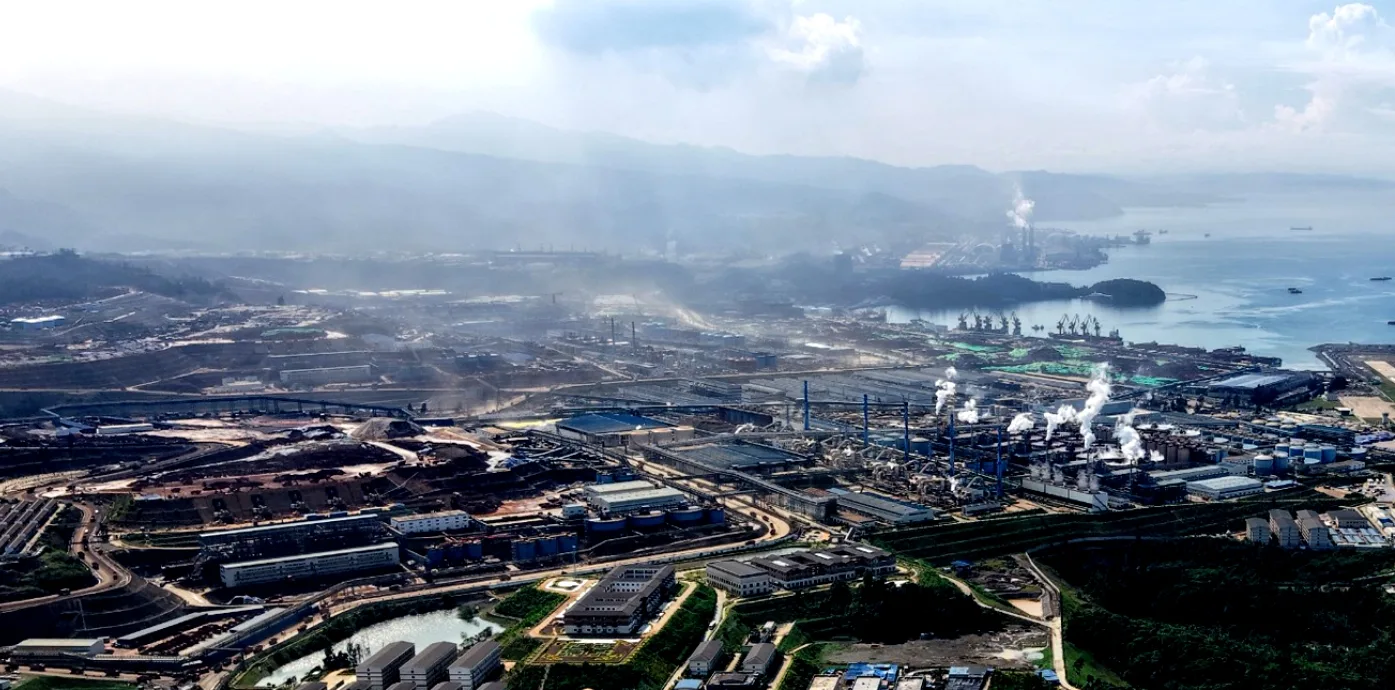
ASIATODAY.ID, JAKARTA – Indonesia’s booming nickel industry is facing growing pressure from international markets to demonstrate that its rapid expansion is not coming at the expense of the environment.
The warning comes as Indonesia’s downstream processing sector recorded investment realization of IDR147.5 trillion (approximately US$9 billion) in the first quarter of 2026, with nickel accounting for the largest share at IDR41.5 trillion.
While the country continues to strengthen its position as a global powerhouse in the nickel supply chain, industry leaders and international stakeholders say future market access will increasingly depend on compliance with Environmental, Social, and Governance (ESG) standards.
Speaking during the Indonesia Critical Minerals Conference 2026 organized by the UK and Ireland Bilateral Committee of the Indonesian Chamber of Commerce and Industry (Kadin), experts emphasized that production volumes alone will no longer determine competitiveness in global markets.
North Maluku Emerges as the Engine of Indonesia’s Nickel Boom
Massive investment in nickel mining and processing has transformed the economy of North Maluku, one of the world’s most important nickel-producing regions.
Supplying an estimated 13–15 percent of global nickel demand, the province recorded economic growth of 19.64 percent in the first quarter of 2026, the highest in Indonesia.
Ovan Tito, Head of Energy and Mineral Resources at Kadin’s UK and Ireland Bilateral Committee, said international delegates were impressed by the scale of industrial operations and environmental initiatives they observed during site visits.
“Many participants arrived with different expectations, but after seeing operations firsthand and reviewing environmental investments made by companies, we observed an industrial ecosystem that continues to improve its sustainability standards,” Tito said.
However, he noted that Indonesia’s biggest challenge is no longer attracting investment but convincing global markets that its nickel industry can grow while meeting increasingly stringent environmental expectations.
Local Communities Must Benefit from the Nickel Boom
Amid the surge of investment, North Maluku Governor stressed that economic gains must translate into meaningful opportunities for local communities.
The provincial government is expanding vocational education and workforce development programs to ensure local residents can secure skilled and strategic positions within the rapidly growing industry.
“We are strengthening education and skills development so that more North Maluku residents can take on greater roles in industry,” she said.
The initiative aims to prevent local communities from being sidelined as outside workers fill high-value positions created by the nickel boom.
Global Buyers Demand Proof, Not Promises
The strongest message came from international industry representatives who warned that sustainability claims must be backed by measurable evidence.
Chris Schlekat, Executive Director of NiPERA, said access to global markets will increasingly depend on producers’ ability to provide verifiable proof of responsible environmental, social, and governance practices.
“In the future, market access will be increasingly determined by a producer’s ability to demonstrate environmental, social, and governance performance that can be independently verified,” Schlekat said.
He added that ESG claims must be based on credible, science-based standards capable of objective measurement.
Andre Barahamin, Community Outreach Coordinator at IRMA, echoed the call for greater transparency and independent auditing across the mining sector.
“Transparency is not about assigning blame. It is about creating a common foundation for stakeholders to understand progress achieved and improvements still needed,” Barahamin said.
According to him, independent audits help companies identify areas for improvement while strengthening trust among local communities, investors, and international customers.
Indonesia’s Nickel Future Faces a Critical Test
As the global transition to electric vehicles and clean energy accelerates, Indonesia remains a key supplier of the critical minerals needed to power that transformation.
Yet international markets are sending an increasingly clear message: abundant reserves and competitive production costs alone are no longer enough.
To maintain its dominant position in the global nickel supply chain, Indonesia must prove that its mineral wealth can be developed responsibly, transparently, and sustainably.
Failure to meet rising ESG expectations could ultimately undermine access to the very markets driving demand for Indonesia’s nickel exports.
For the world’s largest nickel producer, the next phase of growth may depend as much on environmental credibility as on the size of its mineral reserves. (AT Network)
Follow Us at Google News and WA Channel