
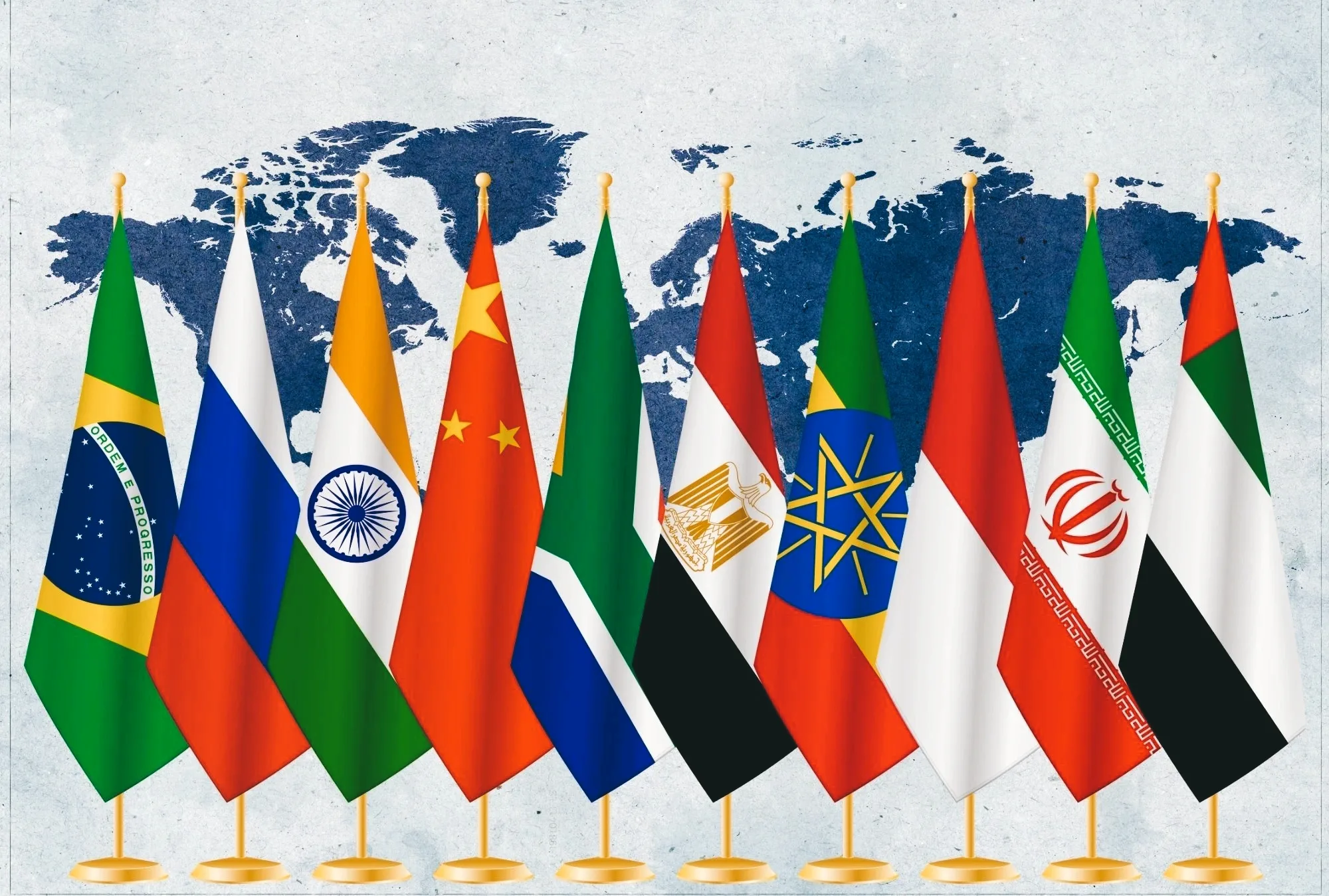
ASIATODAY.ID, NEW DELHI — BRICS nations called for a stronger voice for the Global South and accelerated efforts to reshape global governance as senior security officials from India, Russia and China met in New Delhi ahead of the bloc’s leaders’ summit later this year.
Speaking at the BRICS National Security Advisers’ meeting, Indian National Security Adviser Ajit Doval warned that growing geopolitical tensions, military conflicts and emerging security threats were testing the effectiveness of the current international order.
“Tumultuous times, marked by military conflicts and growing security challenges, need a stronger voice of the Global South,” Doval said on June 23.
The two-day gathering brought together top security officials from BRICS member states, including Russian Security Council Secretary Sergei Shoigu and Chinese Foreign Minister Wang Yi.
Doval said BRICS was established to promote a more multipolar world order, strengthen the representation of developing nations and advance peace, development and international cooperation.
The meeting underscored the bloc’s increasing ambition to play a larger role in global governance at a time when many emerging economies argue that existing institutions no longer reflect the realities of the world economy.
Echoing India’s concerns over declining multilateralism, Russia’s Shoigu said BRICS should become a driving force behind reforms of major international institutions, including the United Nations Security Council (UNSC) and the World Trade Organization (WTO).
“BRICS should play a key role in reforming failing international organizations,” Shoigu said.
Moscow also proposed the creation of a BRICS Emergency Reserve, a strategic mechanism designed to stockpile essential goods such as food, medicines, energy resources, fertilizers and rare earth minerals for use during global crises.
The proposal aligns with long-standing calls by Russian President Vladimir Putin for reforms to the United Nations, the International Monetary Fund (IMF) and the World Bank.
Putin has argued that global governance structures have failed to keep pace with the growing economic influence of developing nations, whose share of global output has expanded significantly over the past several decades.
The BRICS officials also reaffirmed their commitment to combating terrorism in all forms, including threats enabled by emerging technologies and digital platforms.
On the sidelines of the meeting, Doval held talks with Chinese Foreign Minister Wang Yi, with both sides describing the discussions as constructive and forward-looking.
India’s Foreign Ministry said the two countries noted progress toward the gradual normalization of bilateral relations following years of border tensions.
Wang called for mutual respect for core national interests and urged the resumption of dialogue mechanisms and broader cooperation in trade, finance, law enforcement and media exchanges.
The security advisers’ meeting serves as a preparatory step for the BRICS Leaders’ Summit scheduled for Sept. 12–13 in India, where Russian President Vladimir Putin is expected to participate.
As geopolitical rivalries intensify and confidence in existing multilateral institutions weakens, BRICS is increasingly positioning itself as a platform for emerging economies seeking greater influence over the future architecture of global governance. (RT)
Follow Us at Google News and WA Channel