
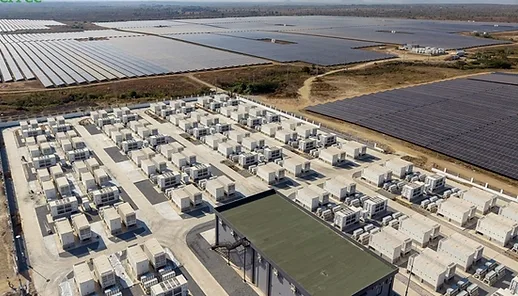
ASIATODAY.ID, MANILA — Cambodia has secured a $63.44 million financing package led by the Asian Development Bank (ADB) to develop a large-scale battery energy storage project, marking a major step in the country’s transition toward a cleaner and more resilient power system.
The financing will support the construction of a 250-megawatt (MW), 500-megawatt-hour (MWh) Battery Energy Storage System (BESS) at the Takeo substation in southern Cambodia. The facility will store excess electricity generated from renewable sources and release it back to the grid during periods of peak demand, helping stabilize power supply and improve grid reliability.
ADB said the project is designed to accommodate Cambodia’s rapidly growing electricity demand, driven by expanding industrial zones, agro-processing facilities, and urban development.
The battery storage system is also expected to strengthen cross-border electricity trade with neighboring Vietnam and support the long-term vision of the ASEAN Power Grid, a regional initiative aimed at creating a fully integrated Southeast Asian electricity network by 2045.
“Amid the global energy crisis, this project further reinforces Cambodia’s commitment toward clean energy transition,” said Yasmin Siddiqi, ADB Country Director for Cambodia on June 24, 2026.
“By strengthening the power grid with advanced battery storage, we are helping the country unlock more renewable energy while ensuring that families, farmers, and businesses benefit from safe, stable, and affordable electricity,” she added.
Reducing Dependence on Imported Fuel
Cambodia remains heavily dependent on imported fuels for electricity generation, leaving the country vulnerable to global price swings, supply disruptions, and geopolitical tensions.
While the country has made significant progress in expanding power generation capacity and transmission infrastructure, energy security remains a key challenge as electricity demand continues to rise.
The new battery storage facility is expected to play a critical role in reducing those vulnerabilities by enabling greater use of domestic renewable energy resources, particularly solar power.
Supporting Cambodia’s 2030 Renewable Energy Goal
The project aligns with Cambodia’s target of achieving 70% renewable energy capacity by 2030.
According to ADB, the battery system will facilitate higher penetration of solar and other renewable energy sources by storing electricity when production exceeds demand and dispatching it when needed.
Once operational, the project is expected to avoid up to 27,700 metric tons of greenhouse gas emissions annually.
Beyond infrastructure development, the initiative will strengthen the operational capacity of state-owned utility Electricité du Cambodge (EDC) to manage advanced energy systems and develop regulations governing battery energy storage technologies.
The project also includes workforce development programs aimed at increasing female participation in Cambodia’s energy sector, particularly in technical and leadership positions.
Climate Finance Support
The financing package consists of a $40 million concessional loan and a $5 million grant from ADB through the Asian Development Fund.
An additional $18.44 million will be provided through co-financing from the Green Climate Fund and the United Kingdom via the ASEAN Catalytic Green Finance Facility.
The investment underscores growing international support for energy storage technologies, increasingly viewed as a cornerstone of Asia’s clean energy transition.
As Southeast Asian nations seek to balance energy security, economic growth, and decarbonization goals, Cambodia’s battery storage project could become a model for integrating renewable energy while enhancing regional power connectivity. (AT Network)
Follow Us at Google News and WA Channel