
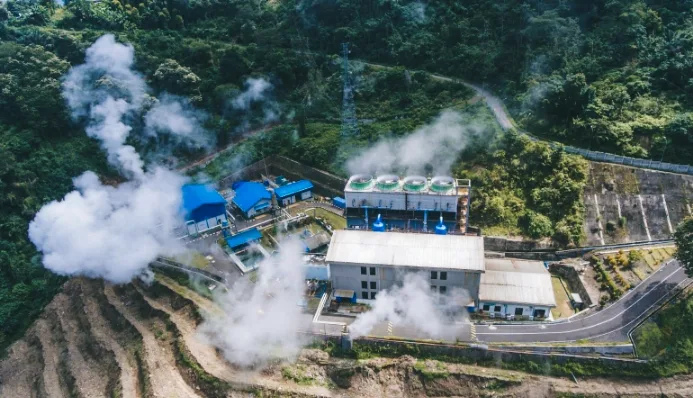
ASIATODAY.ID, JAKARTA — Indonesia’s ambition to expand renewable energy is facing a critical test in East Nusa Tenggara (NTT), where a long-running dispute over the Mataloko geothermal project has triggered a parliamentary investigation into environmental impacts, community concerns, and project accountability.
The House of Representatives’ Commission XII has announced plans to summon all stakeholders involved in the project, including government institutions, state-owned electricity company PT PLN (Persero), contractors, and other related parties, to obtain a complete assessment of the situation.
The investigation will focus on determining the facts behind reported hot mud activity, evaluating previous mitigation efforts, and identifying solutions for environmental recovery and social restoration.
“We want to understand what happened, how the impacts can be handled, and what mitigation measures must be implemented,” Commission XII Chairman Bambang Patijaya said following a hearing with representatives of affected communities at the Parliament complex in Jakarta on Monday, July 13, 2026.
Two Decades of Concerns in Flores
The dispute involves the Daratei Mataloko Geothermal Power Plant in Ngada Regency, Flores Island, where residents have raised concerns over environmental changes since exploration activities began in 2000.
Community representatives from the Forum for Communities Concerned About Environmental Impacts of the NTT Geothermal Project told lawmakers that problems allegedly linked to earlier exploration activities have affected agricultural land, residential areas, and local livelihoods.
Maria Christina Pupu, a representative of affected communities, said residents have spent more than 20 years seeking environmental recovery, transparency, and a clear resolution.
She stressed that public concerns should not be interpreted as opposition to renewable energy.
“People are not rejecting geothermal energy. We support clean energy development, but it must be carried out with proper technology, professional expertise, safety standards, and respect for communities,” she said.
PLN Asked to Address Past Issues Before New Investment
Commission XII has urged PT PLN to resolve unresolved issues from the previous project phase before moving forward with plans for additional geothermal development with a proposed capacity of 20 megawatts (MW).
Lawmakers highlighted concerns raised by residents regarding compensation processes, environmental rehabilitation, and the implementation of corporate social responsibility (CSR) programs.
Residents have also questioned the transparency of a reported IDR5 billion CSR allocation from PLN in 2018 and called for clearer information regarding its implementation.
Bambang Patijaya said the commission would review the project’s history, including the role of previous contractors, to ensure future geothermal investments are supported by stronger governance and accountability mechanisms.
Renewable Energy Expansion Meets ESG Expectations
The Mataloko controversy comes at a crucial moment for Indonesia’s energy transition.
Indonesia is seeking to increase renewable energy capacity as part of its efforts to strengthen energy security, reduce fossil fuel dependence, and attract green investment. Geothermal power is considered one of the country’s most strategic renewable energy resources due to its large potential.
However, the dispute reflects a broader global challenge: renewable energy development must go beyond producing clean electricity. It must also meet environmental, social, and governance (ESG) expectations.
Environmental concerns, community participation, land management, and transparency have become increasingly important factors influencing the success of renewable energy projects worldwide.
Academics and project operators have previously noted that geothermal areas naturally experience geological phenomena such as hot springs, steam releases, and mud activity. They emphasize that scientific studies are required before establishing any direct connection between such phenomena and drilling activities.
A Defining Moment for Indonesia’s Green Energy Reputation
The parliamentary review is expected to bring together scientific analysis, regulatory oversight, and community testimony to establish a comprehensive understanding of the Mataloko situation.
Beyond resolving a local dispute, the outcome could shape Indonesia’s approach to future geothermal investments and determine how the country balances renewable energy expansion with environmental protection and public confidence.
As Indonesia positions itself as a major clean energy player in Asia, the Mataloko case has become a test of whether its green transition can deliver not only new power capacity, but also trust, accountability, and sustainable development. (AT Network)
Follow Us at Google News, Instagram, WA Channel, and LinkedIn