
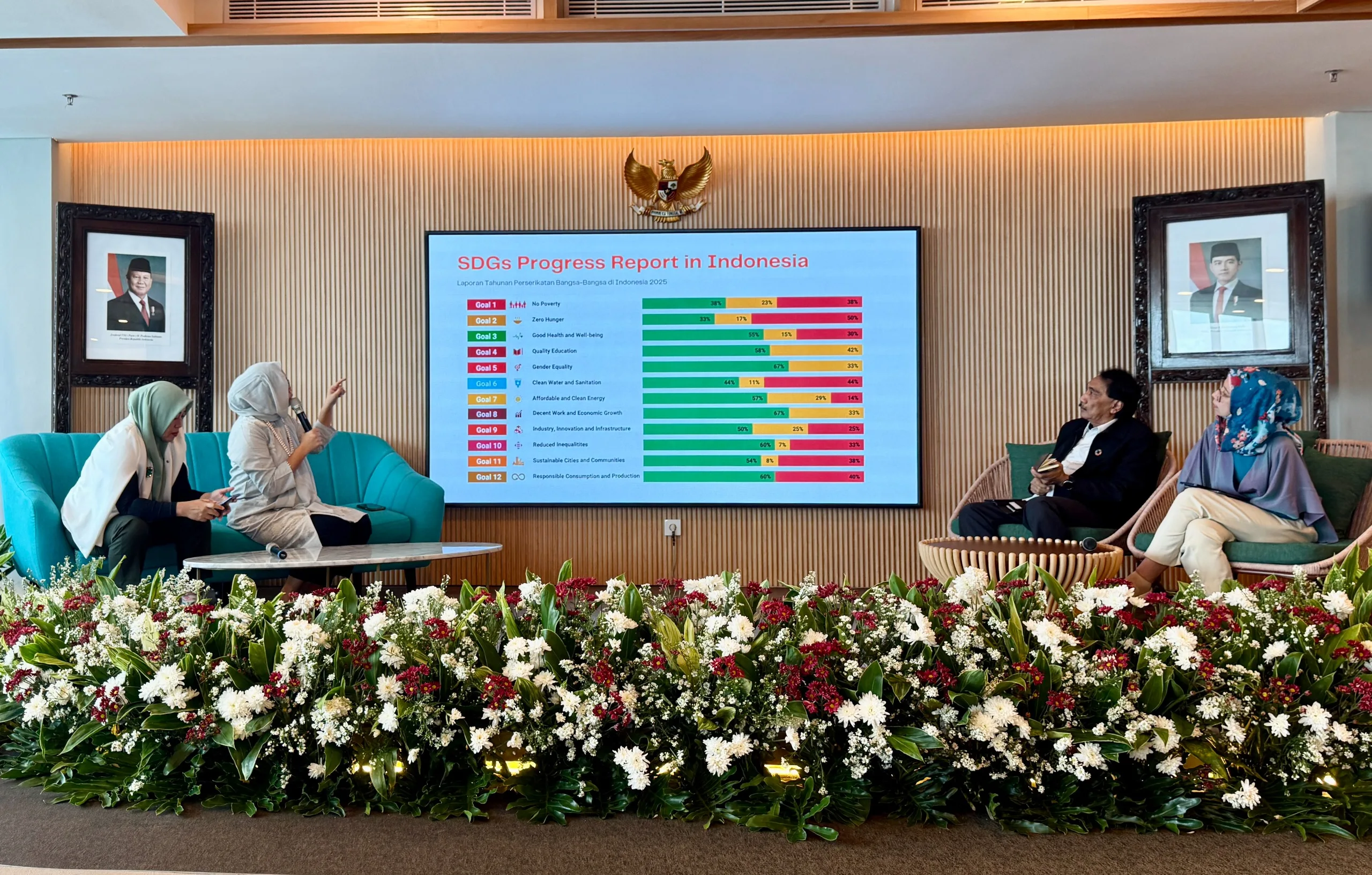
ASIATODAY.ID, JAKARTA – Jakarta is strengthening the role of museums as centres of learning, dialogue, and public engagement by integrating the global Sustainable Development Goals (SDGs) into cultural spaces.
The United Nations in Indonesia, in collaboration with the Jakarta Provincial Government, MUSEE ID, AMI DKI Jakarta, and museum partners, has launched the “Mainstreaming SDGs in Museums” initiative at Jakarta City Hall. The programme aims to enhance the capacity of museums to incorporate sustainability perspectives into exhibitions, educational programmes, and community outreach.
The initiative highlights a new approach to museums—not only as institutions preserving history and cultural heritage, but also as platforms that help communities understand global challenges and participate in creating sustainable solutions.
By connecting Indonesia’s diverse cultural heritage and local wisdom with the SDGs, the programme seeks to make sustainable development messages more accessible, relevant, and meaningful for the public.
Through a series of workshops, United Nations agencies will share expertise, experiences, and best practices to support museums in translating the SDGs into practical programmes and educational initiatives.
Expanding the SDG Corner Model
The initiative builds on the establishment of Indonesia’s first SDG Corner at Museum Bahari, launched earlier through collaboration between the Jakarta Provincial Government and the United Nations in Indonesia.
The SDG Corner serves as a pioneering model for integrating sustainable development themes into museum spaces, allowing visitors to explore global issues through the lens of history, culture, and community values.
Following its success, the approach is expected to be expanded to more museums across Jakarta and eventually to museums throughout Indonesia.
“Ten years after the adoption of the Sustainable Development Goals, the world is facing increasingly complex challenges. Museums have an increasingly important role—not only in preserving our shared heritage, but also in helping people understand today’s global challenges, fostering dialogue, and inspiring collective action for people and the planet,” said Miklos Gaspar.
He emphasized that Indonesian museums preserve important stories of resilience, diversity, innovation, and peaceful coexistence.
“By connecting these stories with the SDGs, museums can make sustainable development more accessible, relevant, and meaningful to the public,” he added.
Museums as Drivers of Sustainable Cities
Chair of AMIDA DKI Jakarta, Yiyok T. Herlambang, welcomed the collaboration as a significant step in strengthening museums as inclusive public learning spaces.
“The SDG Corner at Museum Bahari has demonstrated that museums can become spaces where people learn about sustainable development and their role in achieving it,” he said.
He added that the initiative would encourage more museums across Jakarta to integrate SDGs into their programmes and contribute to building a more inclusive, resilient, and sustainable city.
The experience of Museum Bahari has become a reference for the wider movement. Mis’ari, Head of the Museum Bahari Management Unit, said the SDG Corner has helped communicate global issues in ways that are easier for communities to understand.
“Through the SDG Corner, we have seen how global issues can be communicated in ways that are more relatable and accessible to the public,” he said.
Meanwhile, Executive Director of MUSEE ID, Nofa Farida Lestari, highlighted the connection between cultural heritage and sustainable development.
“By linking museum collections and narratives to the Sustainable Development Goals, visitors can see that values such as environmental stewardship, equality, mutual cooperation, resilience, and peaceful coexistence have long been embedded in Indonesia’s cultural heritage,” she said.
Connecting Heritage with the Future
The Mainstreaming SDGs in Museums programme contributes to the United Nations’ global “5 Years For” campaign, marking the final acceleration period toward achieving the 2030 Agenda for Sustainable Development.
The collaboration represents a long-term commitment to positioning museums as active partners in advancing sustainable development in Indonesia.
As Jakarta continues to strengthen its role as a global city, its museums are evolving into bridges between the past and the future—preserving cultural identity while inspiring communities to engage with global challenges.
Through the integration of SDGs into museum programmes, Indonesia’s cultural institutions are expected to play a greater role in promoting sustainability, inclusiveness, and collective action for future generations. (Midwan)
Follow Us at Google News, Instagram and LinkedIn