
ASIATODAY.ID, JAKARTA – As Indonesia’s film industry continues to expand its influence both domestically and internationally, a renewed movement to strengthen the foundation of national cinema has emerged through the revival of constructive film criticism.
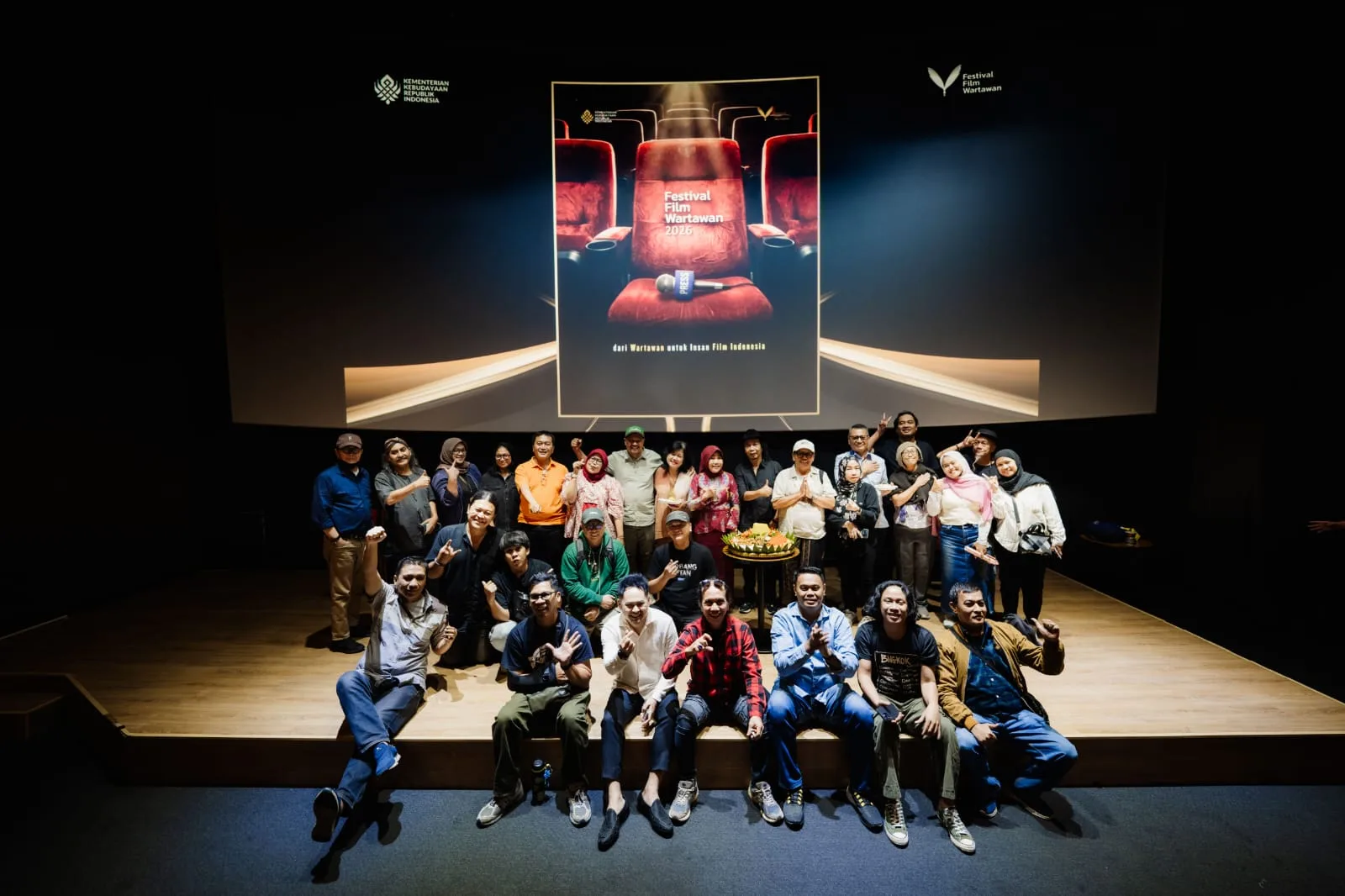
The Indonesian Journalists Film Festival/Festival Film Wartawan (FFW) 2026 has officially been launched in Jakarta, reaffirming the important role of journalists as partners in documenting, evaluating, and encouraging the growth of Indonesian cinema.
Carrying the message “From Journalists for Indonesian Filmmakers,” FFW 2026 is positioned not merely as a film award event, but as a platform to build meaningful conversations between critics, filmmakers, audiences, and cultural stakeholders.
The launch, held at CGV FX Jakarta on Tuesday, July 14, marked a renewed commitment to creating a healthier film ecosystem — one where appreciation and criticism work together to encourage creativity, quality, and innovation.
Film Criticism as a Catalyst for Cinema Growth
Director General of Cultural Development, Utilization, and Development at the Ministry of Culture (Kemenbud), Ahmad Mahendra, highlighted the strategic importance of FFW in advancing Indonesia’s film industry.
“There are two crucial roles of FFW. This festival challenges filmmakers to move further, while also nurturing the way we understand and appreciate what we watch,” Ahmad said during the launch attended by the FFW 2026 Selection Committee and organizing team.
He said Indonesian cinema has increasingly demonstrated its ability to become a strong force at home while gaining wider recognition on the international stage.
“This achievement is the result of contributions from many parties, including the Festival Film Wartawan and film journalists who continue to provide critical perspectives,” he added.
Indonesia’s cinema sector has experienced significant growth in recent years, supported by improving production quality, expanding audiences, and increasing participation in international film platforms.
In this journey, constructive criticism has become an essential element in helping filmmakers refine their works and strengthening public appreciation of cinema.
Honoring Wina Armada Sukardi’s Legacy
One of the key highlights of FFW 2026 is the introduction of the Wina Armada Sukardi Award for Best Film Criticism, honoring the legacy of the late journalist and film critic whose work contributed significantly to Indonesia’s film discourse.
FFW 2026 Chairman Benny Benke said the award represents recognition of a lifetime dedicated to developing film criticism in Indonesia.
“This name does not come from nowhere. In the 1980s, when film criticism competitions were still known as the Mitra Award, which later became the Citra Award, Wina Armada Sukardi had already proven that writing could become a powerful force,” Benny said.
He emphasized that good criticism is not intended to undermine creativity, but rather to encourage filmmakers to continue improving.
Representing the late critic’s family, Amalia Wina Armada, shared the philosophy that continues to inspire FFW.
“If Wina were still here, perhaps he would refuse to have his name honored this way. But for us, this is a great privilege. He always believed that films need criticism, but criticism must build. Write honestly, criticize with love,” she said.
The message reflects the core spirit of FFW 2026: criticism as a form of appreciation, responsibility, and commitment to the future of Indonesian cinema.
Expanding Film Dialogue Beyond the Festival
FFW 2026 will expand its programs through film screenings, monthly discussions, and collaborations with podcast platforms to reach broader audiences.
FFW Public Relations Chair Iris Riswoyo and Event Chair Ami Utari said the initiative aims to open wider discussions about cinema from the perspective of journalists.
“We want to explore aspects of films that are rarely discussed and present cinema from the perspective of journalists. This year, our collaboration opportunities are wider, including with various podcast platforms,” Iris explained.
Meanwhile, the Wina Armada Sukardi Film Criticism Award will be open to the public, allowing writers and film enthusiasts from various backgrounds to participate.
“Anyone can submit their writing. The identity of the writer will remain confidential when submitted to the jury. What will be assessed is the content, ideas, and sincerity of the work,” Benny said.
Government Supports Indonesia’s Creative Industry
Director of Film, Music and Arts at the Ministry of Culture, Irini Dewi Wanti, reaffirmed the government’s commitment to supporting film development across Indonesia.
“We do not differentiate based on scale. From major festivals to small communities in remote areas, all deserve support because the progress of cinema is the progress of all of us,” Irini said.
The launch of FFW 2026 concluded with a traditional tumpeng ceremony presented to Ahmad Mahendra, Irini Dewi Wanti, and Chairman of PWI Jakarta Kesit B Handoyo as a symbol of collaboration between government institutions, journalists, and filmmakers.
Through FFW 2026, film criticism is being repositioned as a driving force for improvement and innovation — not as a barrier to creativity.
As Indonesia continues to strengthen its position in the global creative economy, FFW 2026 delivers a powerful message: the future of cinema is shaped not only by those who create films, but also by those who thoughtfully observe, challenge, and celebrate them. (Silvia Andriani)
Follow Us at Google News, Instagram and LinkedIn