

ASIATODAY.ID, LONDON — Indonesia is moving to strengthen its position in the global carbon economy, unveiling plans to issue more than 30 million tonnes of forestry carbon credits and launch a new national carbon registry system aimed at boosting transparency, investor confidence, and climate finance flows.
The announcement was made by Indonesia’s Minister of Forestry, Raja Juli Antoni, on June 24, 2026 during his closing remarks at the high-level session “From Fragile to Financeable – De-risking Carbon Credit Markets” held as part of the in London Climate Action Week 2026.
Addressing government leaders, financial institutions, businesses, international organizations, and carbon market developers, the minister said the challenge facing global climate finance is not a lack of capital or ambition, but the need to create trusted market conditions capable of attracting large-scale investment.
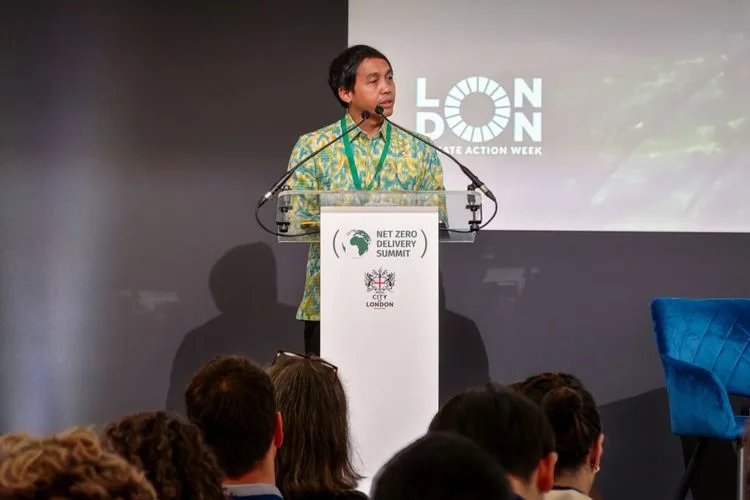
“Carbon markets have enormous potential to channel investment into emissions reductions, forest conservation, ecosystem restoration, and sustainable development. However, that potential can only be realized through integrity, transparency, regulatory certainty, and trust,” he said.
As home to one of the world’s largest tropical forest areas, Indonesia sees carbon markets as a strategic tool for mobilizing climate finance while supporting conservation and sustainable economic growth.
The government has been strengthening its carbon governance framework through a series of regulatory reforms, including the implementation of Presidential Regulation No. 110/2025 and new forestry regulations issued in 2026 aimed at improving environmental integrity, transparency, and investment certainty within the forestry carbon sector.
A key milestone will come on July 9, when Indonesia launches its new Carbon Unit Registry System (SRUK). The platform is expected to serve as the backbone of the country’s carbon market infrastructure by improving transparency, accountability, traceability, and market certainty for project developers and investors.
The launch will also include the registration of several forestry carbon projects using internationally recognized standards.
Earlier, on July 6, the Ministry of Forestry is set to approve and facilitate the issuance of forestry carbon credits exceeding 30 million tonnes of CO₂ equivalent, marking one of the largest carbon credit issuances in Indonesia’s history.
According to the ministry, the move demonstrates that Indonesia is not only developing regulatory frameworks but also creating tangible investment opportunities for global climate finance.
The minister also called for stronger international cooperation to develop a more mature and credible carbon market ecosystem. He emphasized the role of global financial centers in building trusted market institutions, developing risk-sharing mechanisms, and mobilizing private and institutional capital toward climate solutions.
Ahead of COP31, Indonesia is advocating three priorities for global carbon market development: strengthening market integrity and transparency, expanding market infrastructure and liquidity mechanisms capable of attracting large-scale investment, and ensuring carbon finance delivers tangible benefits to local communities, Indigenous peoples, and forest stewards.
“The future of carbon markets will not be defined solely by the volume of credits traded, but by the trust they generate, the investments they mobilize, and the climate and development outcomes they deliver,” Raja Juli Antoni said.
With the launch of its national registry and the planned issuance of more than 30 million carbon credits, Indonesia is positioning itself as an increasingly influential player in the rapidly evolving global carbon market, seeking to unlock new flows of climate capital while leveraging the value of its vast tropical forests. (AT Network)
Follow Us at Google News and WA Channel