
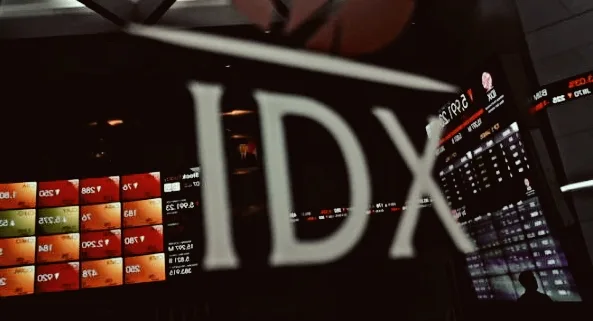
ASIATODAY.ID, JAKARTA — Global index provider MSCI has kept Indonesia in its Emerging Market classification, sparing Southeast Asia’s largest economy from a potentially damaging downgrade while highlighting persistent concerns over transparency and market integrity in the country’s stock market.
In its 2026 Market Classification Review released on June 23, MSCI decided not to reclassify Indonesia and did not open a consultation on a possible downgrade to Frontier Market status, allowing the country to remain within a key investment universe tracked by global fund managers.
The decision preserves Indonesia’s position among major emerging-market destinations at a time when international investors are increasingly selective amid global economic uncertainty.
However, MSCI’s review carried a warning. The index provider pointed to ongoing concerns among institutional investors regarding the transparency of share ownership structures and indications of coordinated trading activity, issues that could affect the accuracy of free-float calculations and undermine confidence in market pricing.
The concerns strike at two critical pillars of MSCI’s market accessibility framework: information flow and market infrastructure.
While stopping short of launching a formal consultation on Indonesia’s status, MSCI indicated that further review remains possible if credible progress is not demonstrated.
The assessment places pressure on Indonesian authorities to accelerate reforms before MSCI’s next major review cycle in November 2026.
MSCI acknowledged a series of reforms introduced by Indonesian regulators, including enhanced disclosure requirements for shareholders owning more than 1% of listed companies, more granular investor classifications, the introduction of a High Shareholding Concentration framework, and a roadmap to increase minimum free-float requirements.
The reforms are part of a broader effort by the government, financial regulators, the Indonesia Stock Exchange, and the Indonesian Central Securities Depository to strengthen corporate governance, improve market surveillance, and enhance investor confidence.
Coordinating Minister for Economic Affairs Airlangga Hartarto said the review should be viewed as a catalyst for deeper reforms rather than a final endorsement of current market conditions.
“Indonesia’s continued Emerging Market status reflects the strength of our economic fundamentals and market accessibility. Our priority now is ensuring reforms are fully implemented and deliver measurable improvements in transparency, market integrity, and investor confidence,” Airlangga said.
The government plans to intensify oversight of trading activities, improve disclosure standards, strengthen enforcement mechanisms, and deepen domestic capital markets to broaden investor participation and increase liquidity.
For global investors, MSCI’s decision delivers a mixed message: Indonesia remains one of the world’s key emerging markets, but concerns over transparency and market quality have not disappeared.
The coming months may prove decisive. Successful implementation of reforms could reinforce Indonesia’s standing as one of Asia’s most attractive investment destinations. Failure to show meaningful progress, however, could reopen questions about the long-term investability of Southeast Asia’s largest stock market. (AT Network)
Follow Us at Google News and WA Channel