
ASIATODAY.ID, BANJUL — Indonesia and Gambia have taken a major step to deepen bilateral relations, launching a landmark partnership that expands cooperation in agriculture, trade, diplomacy, and human capital development while reinforcing Indonesia’s growing engagement with West Africa.
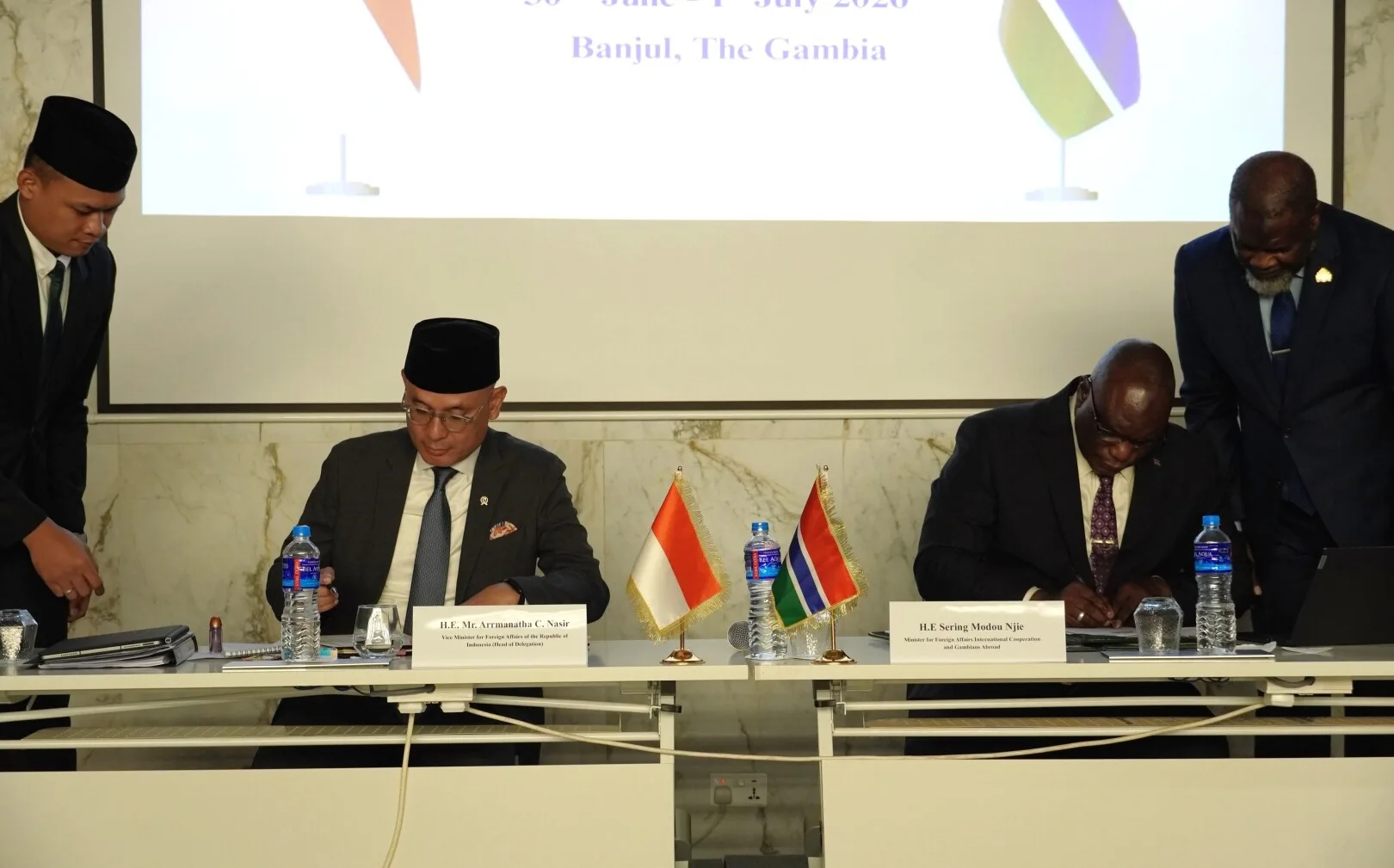
The agreements were reached during the Second Indonesia–Gambia Joint Commission Meeting, held in Banjul from June 30 to July 1, 2026. Co-chaired by Indonesia’s Deputy Foreign Minister Arrmanatha Nasir and Gambia’s Foreign Minister Sering Modou Njie, the meeting marked a significant milestone in bilateral relations since diplomatic ties were established in 1982.
A key outcome was the signing of a Memorandum of Understanding on the General Framework of Cooperation, providing a long-term roadmap for expanding collaboration in agriculture, trade, investment, education, diplomacy, and institutional capacity building. The agreement is expected to strengthen coordination between government agencies and facilitate the implementation of future bilateral initiatives.
Another major milestone was the reopening of the Agricultural Rural Farmers Training Centre (ARFTC) in Jenoi. Supported by Indonesia, the center is expected to enhance farmers’ skills, improve agricultural productivity, and strengthen food security in Gambia while serving as a platform for broader agricultural cooperation across West Africa.
“The meeting reflects the strong commitment of both countries to deepen diplomatic relations built on friendship, solidarity, mutual respect, and the spirit of the Bandung Conference,” Arrmanatha Nasir said.
Economic cooperation emerged as another key priority. Indonesia renewed its proposal for a Preferential Trade Agreement (PTA) with the Economic Community of West African States, aiming to expand access to a regional market of more than 450 million consumers.
Gambia expressed its readiness to support the initiative, while both governments agreed to promote partnerships between local administrations, strengthen small and medium-sized enterprises (SMEs), and encourage greater private-sector collaboration.
The meeting also reinforced cooperation in human resource development. Indonesia welcomed Gambia’s initiative to establish a Foreign Service Academy and offered to share expertise in diplomatic education, curriculum development, and professional training.
Gambian diplomats have also been invited to participate in Indonesia’s International Mid-Career Diplomat Training Program later this year.
To strengthen people-to-people ties, Arrmanatha visited University of The Gambia and attended the launch of the Alumni Association of Gambia-Indonesia Students (AL-GAMINDAS), describing the alumni network as a valuable bridge for future cooperation in education, research, and cultural exchange.
Indonesia also welcomed Gambia’s plan to appoint an Honorary Consul in Jakarta, a move expected to improve consular services while fostering stronger business, investment, tourism, and cultural exchanges between the two countries.
The outcomes of the Joint Commission Meeting underscore the shared commitment of Indonesia and Gambia to transform South-South cooperation into practical initiatives that deliver tangible benefits for farmers, entrepreneurs, students, and local communities.
The partnership also reflects Indonesia’s broader strategy of strengthening engagement with Africa through sustainable agriculture, trade connectivity, capacity building, and inclusive economic development.
As Indonesia expands its diplomatic and economic outreach across Africa, the renewed partnership with Gambia highlights Jakarta’s ambition to become a trusted long-term partner in supporting sustainable growth and regional resilience throughout West Africa. (AT Network)
Follow Us at Google News, WA Channel, and LinkedIn