
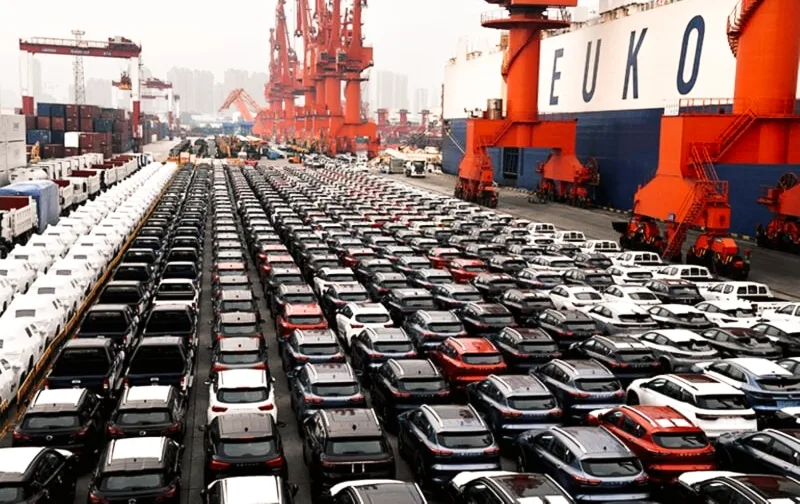
ASIATODAY.ID, KUALA LUMPUR – Malaysia has introduced a sweeping overhaul of its electric vehicle (EV) import policy, imposing stricter requirements that are expected to reshape the country’s fast-growing EV market and create new challenges for Chinese automakers that have gained a strong foothold across Southeast Asia.
Effective July 1, 2026, the Ministry of Investment, Trade and Industry (MITI) now requires all completely built-up (CBU) electric vehicles imported into Malaysia to meet two key criteria: a minimum Cost, Insurance and Freight (CIF) value of 200,000 ringgit (approximately US$49,000) and an electric motor output of at least 180 kW (around 241 horsepower).
After import duties, taxes, logistics costs, and dealer margins are added, qualifying vehicles are expected to retail well above 200,000 ringgit, effectively excluding many lower-priced EV models from the Malaysian import market.
The policy is expected to have its greatest impact on Chinese automakers, whose competitively priced vehicles have helped them dominate Malaysia’s rapidly expanding new energy vehicle (NEV) segment.
Among the companies most affected is BYD, whose seven-model lineup in Malaysia currently starts below the new import threshold. Popular models such as the BYD Dolphin and the entry-level Atto 3 also fall short of the new minimum power requirement.
Other Chinese-made EVs, including the Zeekr 7X and the Chery Omoda E5, are also expected to become ineligible for CBU imports under the revised regulations.
According to data from Malaysia’s Road Transport Department (JPJ), Chinese brands—excluding national automaker Proton, which is partly owned by China’s Geely—accounted for around 60 percent of Malaysia’s new energy vehicle market in 2025, highlighting how significantly the new rules could affect the competitive landscape.
Malaysia Shifts Focus to High-Value EV Manufacturing
The revised policy also raises the threshold for companies seeking to establish local manufacturing operations.
For new automotive projects approved after September 1, 2025, manufacturers must comply with several stringent conditions. Vehicles assembled locally must have a minimum selling price of 100,000 ringgit, at least 80 percent of production must be exported, and key value-added processes—including welding, painting, and final assembly—must be carried out in Malaysia.
The tougher requirements could complicate expansion plans for foreign automakers hoping to bypass import restrictions through local assembly.
Reports indicate that BYD’s proposed Completely Knocked Down (CKD) facility in Tanjung Malim, Perak, covering approximately 600,000 square meters, has encountered regulatory hurdles under the new framework.
Industry analysts cited by Chinese media say the mandatory 80 percent export requirement could prove difficult for BYD to satisfy, given the company’s substantial manufacturing capacity in China, Thailand, and Indonesia, which already serves regional demand.
Malaysia’s latest policy signals a broader industrial strategy aimed at attracting higher-value manufacturing and strengthening its domestic EV ecosystem rather than relying primarily on imported vehicles. Although the regulations apply to all automakers, Chinese brands are expected to feel the strongest impact because of their dominant presence in Malaysia’s affordable EV market.
The move also underscores intensifying competition among Southeast Asian economies to attract advanced EV manufacturing investment while balancing market openness with long-term industrial development. (AT Network)
Follow Us at Google News, WA Channel, and LinkedIn