
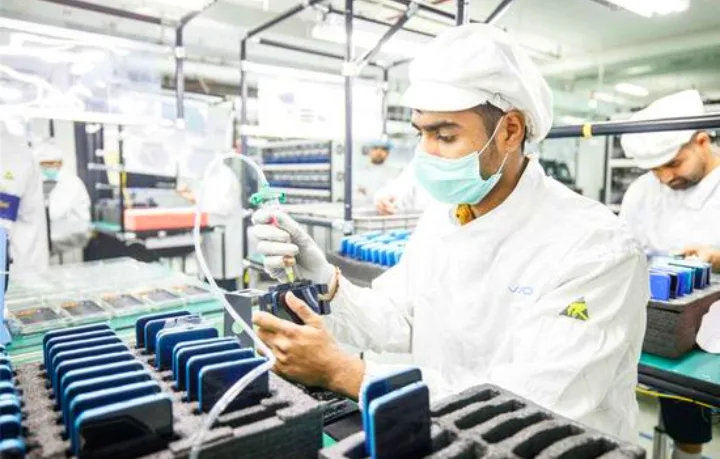
ASIATODAY.ID, NEW DELHI – India has approved a landmark joint venture between Chinese smartphone giant Vivo and Indian electronics manufacturer Dixon Technologies, signaling a carefully calibrated shift in New Delhi’s approach toward Chinese investment in strategic industries after years of tight restrictions.
The approval allows Noida-based Dixon Technologies to establish a smartphone manufacturing venture with Vivo, India’s leading smartphone brand by shipment volume. Dixon will retain a controlling 51 percent stake, reflecting the government’s preference for majority Indian ownership while benefiting from Chinese technology, manufacturing expertise, and global supply chains.
The decision marks one of the clearest indications yet that India is selectively reopening the door to Chinese investment, provided projects strengthen domestic manufacturing, expand technology transfer, and preserve national control over strategic assets.
The move comes shortly after India’s Finance Ministry allowed four Chinese power equipment manufacturers—TBEA Energy, Nanjing Electric India, New Northeast Electric India, and Taikai Electric (India)—to participate in government tenders for critical power infrastructure projects. The companies were exempted from restrictions requiring firms from neighboring countries to obtain special government approval before bidding on sensitive contracts.
The policy adjustments reflect India’s growing need to accelerate industrial capacity as electricity demand surges alongside the rapid expansion of data centers, artificial intelligence, electric vehicles, and advanced manufacturing. The country expects peak power demand to reach approximately 300 gigawatts next year.
India introduced strict screening of foreign direct investment from neighboring countries in 2020 during the COVID-19 pandemic, a policy that remained firmly in place after the deadly Galwan Valley border clash sharply worsened relations between New Delhi and Beijing. Since then, Chinese investments in sensitive sectors have faced extensive government scrutiny.
While those safeguards remain intact, recent approvals suggest policymakers are moving toward a more pragmatic, case-by-case framework that weighs national security concerns against economic priorities and industrial competitiveness.
Vijay K. Mishra, Executive Vice Chairman of the India-China Trade Center in New Delhi, said the two Asian economies continue to maintain complementary trade and industrial ties, particularly in electronics, pharmaceuticals, and infrastructure.
“India is always cautious when considering foreign direct investment. These regulations apply to all countries, not only China,” Mishra said.
Analysts say the government’s latest decisions underscore a broader strategy to strengthen India’s manufacturing ecosystem without abandoning its security priorities. By allowing tightly structured partnerships under majority Indian ownership, New Delhi aims to attract advanced technology, deepen local production capabilities, reduce supply chain vulnerabilities, and reinforce its ambition to become a global manufacturing hub.
The approvals also reflect the increasingly complex economic relationship between Asia’s two largest emerging economies. Despite persistent geopolitical tensions, bilateral trade continues to expand, making China a critical supplier of industrial components and manufacturing technology that remain essential to India’s long-term economic growth. (RT)
Follow Us at Google News, Instagram, WA Channel, and LinkedIn