
ASIATODAY.ID, JAKARTA — Indonesia is facing one of the most significant corruption scandals in its modern history after police named former Attorney General for Special Crimes (Jampidsus) Febrie Adriansyah as a suspect in multiple corruption and money laundering investigations. The case has triggered an unprecedented political response, with lawmakers publicly calling for the maximum punishment permitted under Indonesian law, including the death penalty.
The investigation has rapidly evolved into more than a domestic legal case. It has become a major governance test for Southeast Asia’s largest economy, highlighting concerns over institutional integrity, judicial accountability, and the effectiveness of anti-corruption enforcement at the highest levels of government.
According to Indonesia’s National Police Anti-Corruption Corps (Kortastipidkor), Febrie has been named a suspect in investigations involving alleged corruption linked to coal procurement for the state electricity sector, the management of state-owned insurer PT ASABRI, and financial transactions related to PT Krakatau Steel. Authorities have also charged him under Indonesia’s anti-money laundering laws.
Investigators said the decision followed months of evidence gathering, including the examination of 15 witnesses, expert testimony, extensive financial tracing, and coordinated searches across multiple locations in Jakarta and Bogor.
The scale of the assets seized has stunned both the public and political observers.
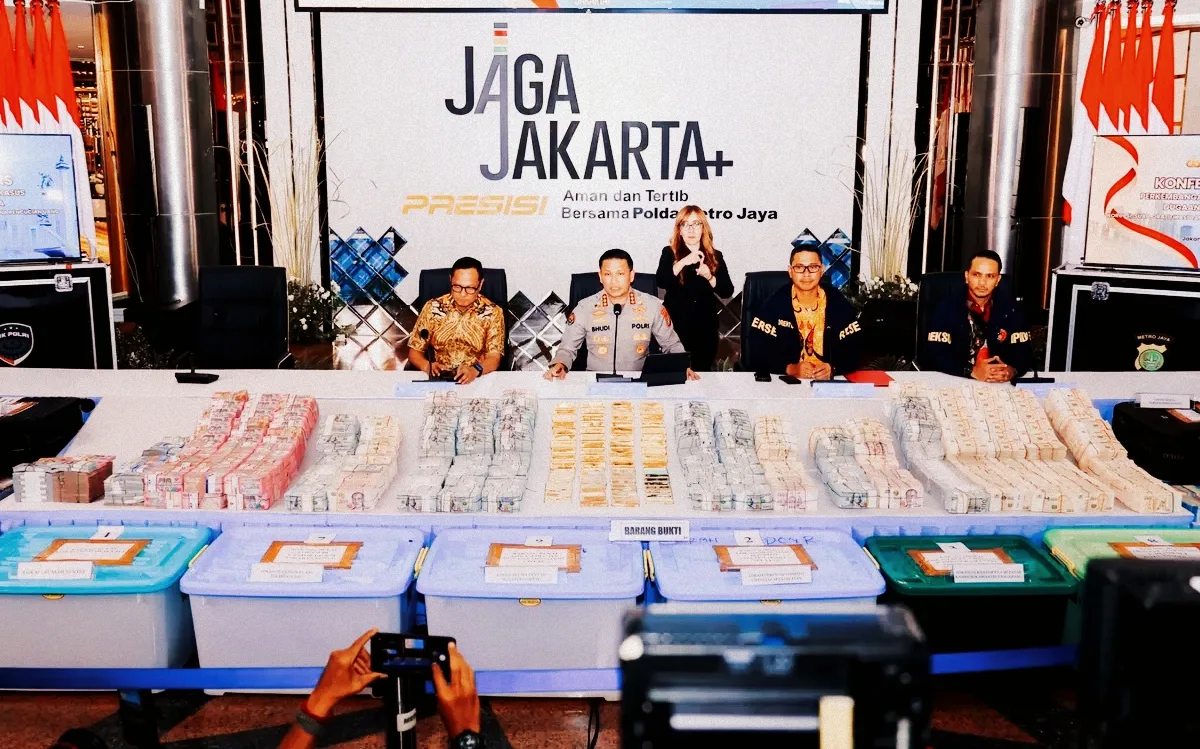
Authorities confiscated 74 kilograms of gold bars, millions of US dollars and Singapore dollars, large amounts of Indonesian rupiah, and dozens of financial documents and electronic devices. Assets recovered from a residence in Sentul acknowledged by Febrie as his property, together with seizures from other locations including a money changer and commercial premises, are estimated to exceed IDR540 billion (approximately US$33 million).
Police say the assets remain under forensic examination as investigators seek to determine whether they originated from bribery, gratification, abuse of office, or other corruption-related activities.
The political reaction has been swift and unusually severe.
During a special parliamentary session, members of Indonesia’s House of Representatives argued that corruption committed by senior law enforcement officials represents an extraordinary betrayal of public trust. Several lawmakers said those found guilty should receive the harshest possible punishment, with some openly advocating the death penalty because the alleged crimes involved public funds and institutions responsible for protecting citizens’ interests.
Parliament has also established a special supervisory team to monitor the investigation while urging police, prosecutors, and anti-corruption agencies to ensure that the legal process remains transparent, independent, and free from institutional rivalry.
Legal scholars describe the investigation as a watershed moment for Indonesia’s anti-corruption campaign.
Experts argue that the discovery of enormous quantities of cash, foreign currency, and precious metals significantly strengthens the importance of asset-tracing and anti-money laundering enforcement. Under Indonesia’s anti-corruption framework, public officials accused of possessing extraordinary wealth are expected to provide a lawful explanation for the origin of those assets during judicial proceedings.
The scandal has also reignited debate over governance standards across Asia, where corruption remains one of the principal obstacles to sustainable economic growth and foreign investment.
As Southeast Asian countries compete to attract global capital amid shifting supply chains and geopolitical realignments, transparency, judicial independence, and institutional credibility have become increasingly important considerations for international investors alongside macroeconomic performance.
Former Jampidsus Febrie Adriansyah has denied any wrongdoing and said he respects the legal process. He acknowledged ownership of the residence searched by investigators but maintained that questions regarding the assets seized should be resolved through formal judicial proceedings rather than public speculation.
The investigation is continuing, with authorities indicating that additional suspects and financial transactions remain under examination.
For Indonesia, the outcome of the case will extend far beyond the courtroom. It will serve as a critical measure of the country’s commitment to the rule of law and institutional reform at a time when it seeks to strengthen its position as one of Asia’s leading investment destinations.
Across the Asia-Pacific region, the case is increasingly being viewed as a benchmark for whether major emerging economies can demonstrate that even the most powerful public officials are fully accountable before the law—a standard that global investors, development partners, and the international community are watching closely. (AT Network)
Follow Us at Google News, Instagram, WA Channel, and LinkedIn