
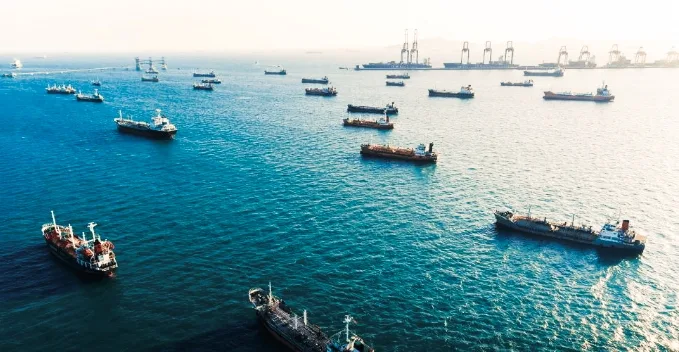
ASIATODAY.ID, TEHRAN – Iran has declared that the Strait of Hormuz will remain closed to commercial shipping until the United States ends what Tehran describes as “illegal intervention” in the region, escalating tensions around one of the world’s most critical energy chokepoints.
The announcement by the Islamic Revolutionary Guard Corps (IRGC) Navy came after reports that Washington had urged Iranian negotiators, through mediation talks in Oman, to guarantee the full reopening of the strategic waterway for international shipping.
“The Strait of Hormuz will remain closed until further notice and until the end of US intervention in the region. No ship will be permitted to transit the waterway,” the IRGC Navy said in a statement.
The force also warned that any further military action against Iran would trigger a strong response, with regional US military facilities potentially becoming targets.
The Strait of Hormuz, located between Iran and Oman, is one of the world’s most important maritime trade routes, carrying a significant share of global oil shipments from Gulf producers to international markets.
The continued closure has raised concerns among energy-importing economies across Asia, including major oil consumers such as China, India, Japan, and South Korea, which rely heavily on stable supplies from the Middle East.
The crisis intensified after the United States launched strikes against Iran following attacks on several tankers in the Strait of Hormuz. Iran has denied direct responsibility for the tanker incidents but previously warned that vessels passing through the waterway must comply with IRGC instructions and designated shipping routes.
Global Energy Market Faces New Uncertainty
Analysts warn that prolonged disruption in the Strait of Hormuz could trigger volatility in global oil prices, increase shipping costs, and accelerate concerns over energy security.
For Asian economies, the situation highlights the strategic importance of diversifying energy sources, strengthening regional energy cooperation, and expanding investment in renewable energy and alternative supply chains.
A prolonged shutdown of Hormuz would not only affect crude oil flows but could also disrupt liquefied natural gas (LNG) shipments and global maritime logistics, putting additional pressure on inflation and economic growth.
The Strait of Hormuz crisis has therefore become more than a regional confrontation between Iran and the US — it has emerged as a major test for global energy resilience and geopolitical stability. (AT Network)
Follow Us at Google News, Instagram, WA Channel, and LinkedIn