
ASIATODAY.ID, BANGKOK — Thailand is placing young people at the heart of its long-term national development strategy, using the 80th anniversary of its membership in the United Nations to showcase a new model of inclusive governance that could influence policymaking across Southeast Asia.
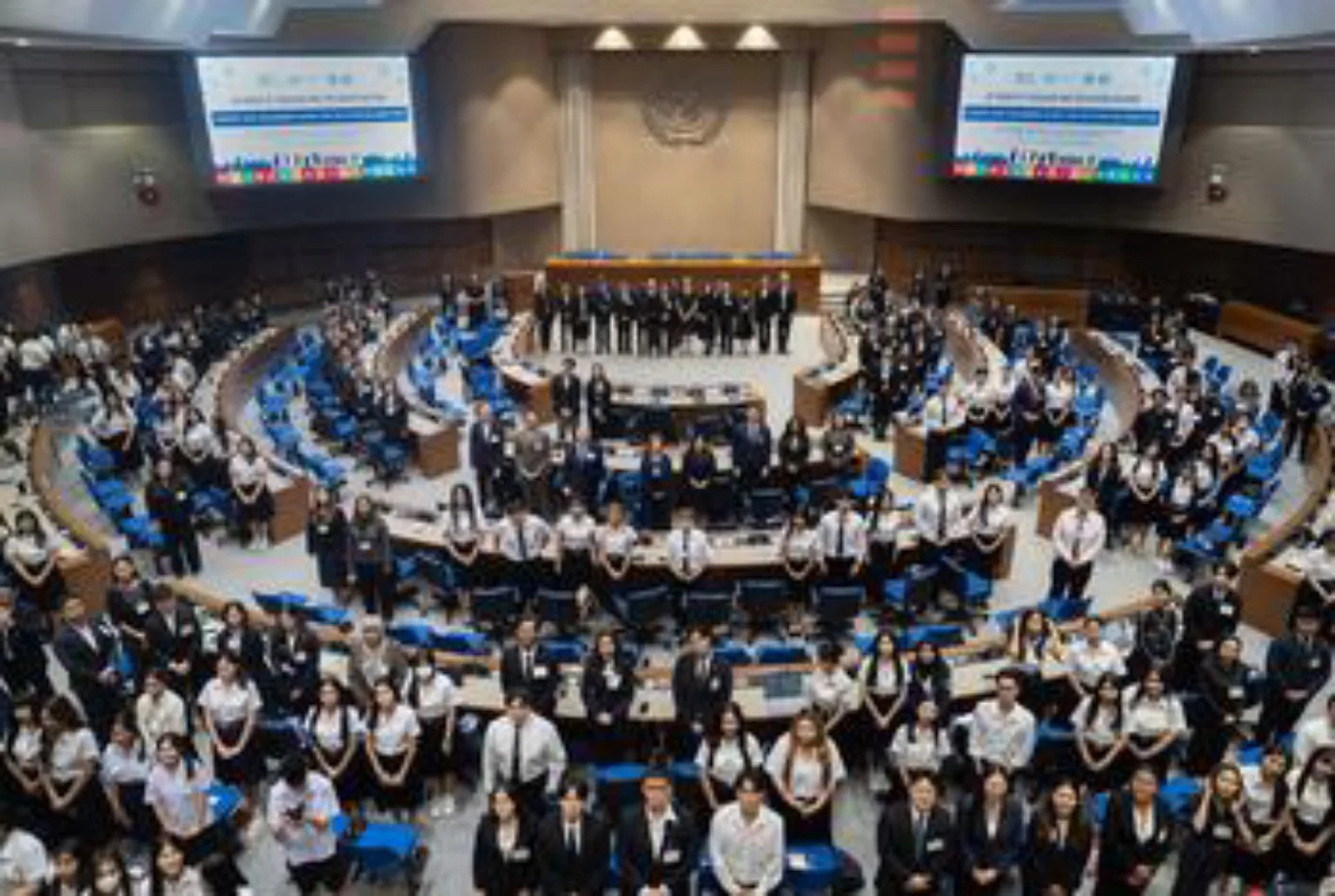
Nearly 400 youth leaders from across the country gathered in Bangkok for a national dialogue commemorating eight decades of Thailand–UN cooperation. More than a ceremonial event, the forum became a platform for shaping how young people can help implement the UN Pact for the Future, the landmark agreement adopted by UN Member States in 2024 to address climate change, technological disruption, inequality, sustainable development, and the rights of future generations.
The dialogue reflects a growing global recognition that young people are no longer viewed merely as beneficiaries of public policy, but as essential partners in designing solutions to increasingly complex economic, environmental, and social challenges.
From Consultation to Co-Creation
Speaking at the event, UN Resident Coordinator in Thailand Michaela Friberg-Storey emphasized that achieving the ambitions of the Pact for the Future will require genuine partnerships across governments, businesses, academia, and civil society—with young people playing a central leadership role.
“The energy, creativity, and leadership of young people will determine whether today’s global commitments become tomorrow’s tangible results,” she said.
The message echoed a broader shift within the United Nations, which increasingly encourages governments to move beyond symbolic youth engagement toward meaningful participation in policymaking.
Young Leaders Call for Real Decision-Making Power
Thai youth representatives argued that participation should extend far beyond consultation.
Rattanachart Paengkum, Assistant President of Thailand’s Children and Youth Council, said Thailand already possesses one of Southeast Asia’s strongest institutional frameworks for youth participation. The challenge now, he said, is ensuring those mechanisms genuinely influence government decisions.
Soonyata Panurat, who represented Thailand at the ECOSOC Youth Forum at UN Headquarters in New York, stressed that young people should become co-designers of national policies.
“Young people experience the challenges policymakers seek to solve every day. Effective policies should therefore be developed with youth—not merely presented to them after decisions have already been been made,” he said.
Climate Action Starts in Local Communities
Environmental advocate Chairat Dipho illustrated how community initiatives can shape global climate diplomacy.
Raised in Omkoi District in northern Thailand, he progressed from leading local environmental projects to representing ethnic minority youth at COP30 in Belém, Brazil.
According to Chairat, empowering young people requires more than financial investment.
“Resources include education, mentors, knowledge, networks, and opportunities. When young people are recognized as equal partners rather than future participants, local action can generate global impact.”
Building Inclusive Development
The forum also highlighted the importance of ensuring that indigenous communities and persons with disabilities are fully represented in national development strategies.
Marisa Yapangku, President of Thailand’s Indigenous Youth Seed Network, argued that indigenous women continue to face overlapping barriers linked to ethnicity and gender.
She called for decision-making processes that extend beyond capital cities and international conferences to include communities where development challenges are experienced firsthand.
Meanwhile, visually impaired youth advocate Panwasa Srikuna described how artificial intelligence is transforming access to education by enabling independent learning through AI-powered tools.
She urged governments to ensure digital transformation remains accessible to everyone, warning that technological progress must not create new forms of exclusion.
Mental Wellbeing as a Policy Priority
Another major theme emerging from the dialogue was youth mental health.
Nattanicha Kattiyavara, Youth Advisor to the UN Youth Office and founder of The Burnout Advocate Initiative, argued that sustainable civic engagement depends on protecting the wellbeing of young changemakers.
She warned that expecting continuous resilience without adequate institutional support risks weakening long-term social participation and innovation.
Thailand Signals ASEAN’s Emerging Governance Model
Thailand’s initiative reflects an increasingly important shift across Asia, where governments are adapting public institutions to meet the realities of younger populations, accelerating technological change, and the transition toward greener economies.
Across ASEAN, countries are seeking new approaches to harness demographic advantages while addressing climate risks, digital transformation, artificial intelligence, and widening social inequalities. Thailand’s decision to institutionalize youth participation aligns closely with these regional priorities and may provide a practical governance model for neighboring countries.
The initiative also reinforces the objectives of the UN Pact for the Future, which calls for stronger intergenerational cooperation and more inclusive decision-making as essential foundations for sustainable development.
As nearly half of the global population remains under the age of 30, youth leadership is rapidly evolving from a social agenda into a strategic policy imperative.
For Thailand, the 80th anniversary of its partnership with the United Nations is therefore more than a diplomatic milestone—it represents a declaration that the country’s future competitiveness, resilience, and sustainable development will increasingly depend on empowering its next generation of leaders. (UN News)
Follow Us at Google News, Instagram, WA Channel, and LinkedIn