
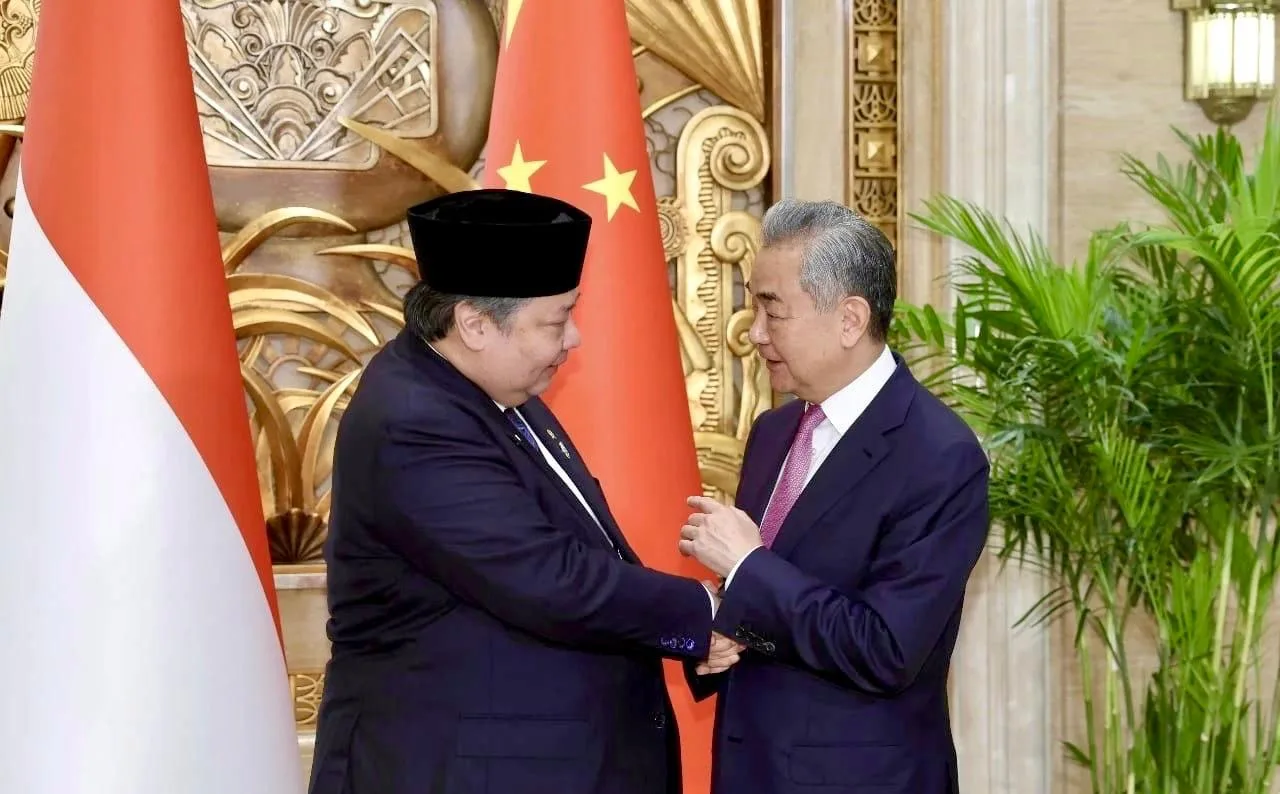
ASIATODAY.ID, SHANGHAI — Indonesia and China are entering a new era of strategic economic partnership, expanding cooperation beyond conventional trade toward future industries that will shape Asia’s economic landscape, including artificial intelligence (AI), renewable energy, advanced manufacturing, and digital transformation.
The new direction was highlighted during a series of high-level meetings between Indonesia’s Coordinating Minister for Economic Affairs Airlangga Hartarto and Chinese officials in Shanghai, including Foreign Minister Wang Yi and Minister of Commerce Wang Wentao.
The discussions marked a significant moment following Indonesia’s decision to become one of the founding members of the World Artificial Intelligence Cooperation Organization (WAICO), strengthening Jakarta’s role in global technology cooperation and responsible AI governance.
Indonesia Emerges as Key Player in Global AI Cooperation
During his meeting with Wang Yi, Airlangga emphasized Indonesia’s commitment to building an inclusive global AI ecosystem that promotes innovation while ensuring technology benefits are distributed fairly among nations.
Through Wang Yi, Chinese President Xi Jinping conveyed appreciation to Indonesian President Prabowo Subianto for Indonesia’s support in establishing WAICO as one of its founding members.
Indonesia’s participation reflects its growing strategic influence as a major emerging economy with a large population and expanding digital ecosystem.
Airlangga highlighted that global AI governance should be built upon human-centered development, respect for digital sovereignty, inclusive multilateral cooperation, and alignment with international principles.
“AI development must ensure that technological progress creates shared prosperity while respecting national interests and global responsibilities,” Airlangga said.
As a founding country of WAICO, Indonesia has proposed taking a strategic role in the organization’s future institutional structure, including possible representation within its secretariat.
From Trade Relations to Strategic Economic Partnership
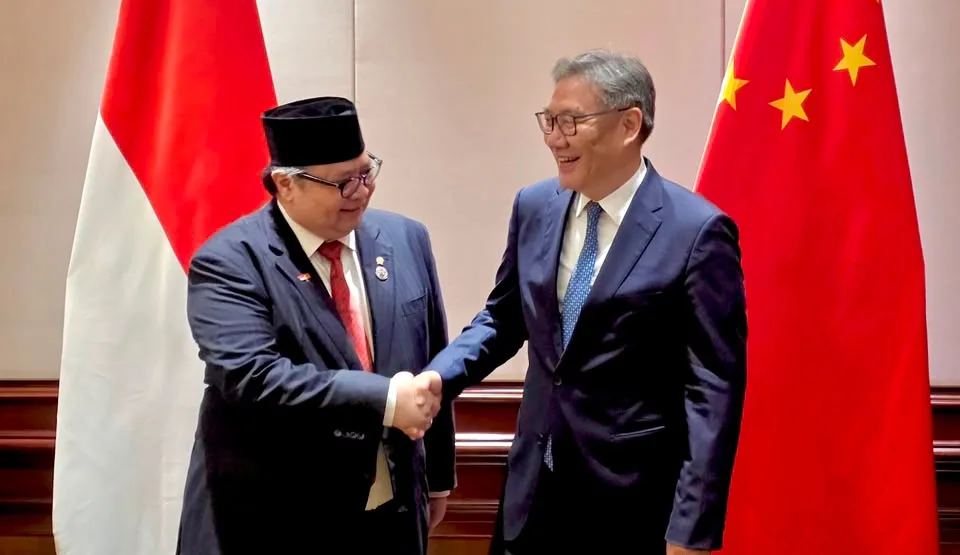
Indonesia and China also reaffirmed their commitment to strengthening economic cooperation through more balanced trade, higher-quality investment, technology transfer, and industrial collaboration.
China remains Indonesia’s largest trading partner, with bilateral trade reaching USD154.6 billion in 2025. Trade relations between the two countries recorded average growth of 7.24 percent during 2021–2025, reflecting the depth of economic interdependence.
However, Indonesia continues to encourage stronger value creation through expanded market access, increased exports of processed products, industrial downstreaming, and stronger regional supply chains.
“Indonesia and China have complementary economic structures. Future cooperation must focus on balanced trade, quality investment, technology transfer, and strengthening industrial capacity,” Airlangga said.
China is also among Indonesia’s largest foreign investors. In 2025, Chinese investment reached nearly USD8.1 billion, supporting sectors including manufacturing, energy, trade, transportation, logistics, and infrastructure.
Industrial Parks Drive Next Generation Growth
Indonesia is accelerating cooperation under the Two Countries Twin Parks (TCTP) framework, positioning industrial zones as engines for manufacturing transformation and global supply chain integration.
The initiative has generated 30 Memorandums of Understanding with estimated investment potential of around IDR37.1 trillion.
Jakarta is encouraging companies from both countries to transform these agreements into concrete investment projects through joint ventures, technology partnerships, and industrial collaboration.
The expansion of TCTP is expected to strengthen Indonesia’s manufacturing ecosystem, accelerate technology transfer, create new employment opportunities, and enhance competitiveness in global markets.
Green Investment Becomes Strategic Priority
The energy transition agenda has become a central pillar of Indonesia–China cooperation.
Indonesia invited Chinese companies to participate in its ambitious renewable energy roadmap, including the development of up to 100 gigawatts of solar power capacity.
Jakarta also highlighted the success of the Cirata Floating Solar Power Plant as a symbol of cooperation in clean energy development.
Future collaboration will focus on building an integrated green industrial ecosystem, including solar manufacturing, battery technology, and energy storage systems.
The Morowali Green Industrial Park is expected to become one of the strategic hubs supporting Indonesia’s ambition to develop a globally competitive clean technology supply chain.
Indonesia Strengthens Role in Regional Economic Architecture
Indonesia also called for stronger cooperation within regional economic frameworks, including support for establishing a permanent secretariat for the Regional Comprehensive Economic Partnership (RCEP) in Indonesia.
Jakarta believes a permanent RCEP institution would strengthen coordination, improve implementation, and help businesses maximize opportunities from the world’s largest trade agreement.
Indonesia also supports the evolution of RCEP 3.0 to address future challenges, including digital transformation, supply chain restructuring, and economic resilience.
APEC 2026: Building the Next Chapter of Cooperation
Indonesia expressed support for China’s leadership of APEC 2026, which will take place in Shenzhen in November.
The two countries are preparing strategic economic initiatives that could become important outcomes during future meetings between their leaders.
A business summit is also expected to strengthen private-sector cooperation and transform political commitments into concrete economic partnerships.
The Indonesia–China partnership, built on the principles of sustainable development, innovation, and cooperation among Global South economies, reflects a broader shift in Asia’s economic landscape.
The Shanghai meetings demonstrate that bilateral relations are moving beyond traditional trade ties toward a future-focused partnership centered on technology, green transformation, industrial competitiveness, and shared economic resilience. (AT Network)
Follow Us at Google News, Instagram and LinkedIn