
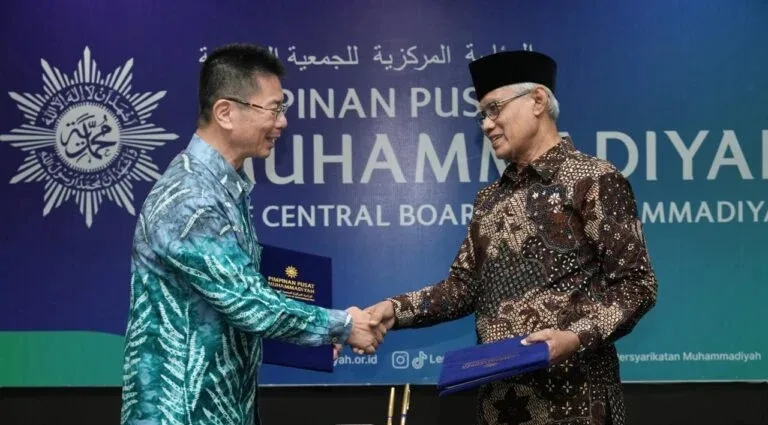
ASIATODAY.ID, YOGYAKARTA — Japan’s Kaikoukai Healthcare Corporation and Indonesia’s Muhammadiyah have forged a strategic healthcare partnership to strengthen medical services, hospital management, and healthcare workforce development, underscoring the growing importance of healthcare as a pillar of Indonesia–Japan relations.
The memorandum of understanding (MoU), signed by Muhammadiyah Chairman Haedar Nashir and Kaikoukai President Tetsuya Yamada, establishes a long-term framework for collaboration in four priority areas: hemodialysis, hospital development, elderly care, and international healthcare programs.
The partnership brings together one of Japan’s leading healthcare providers and one of Indonesia’s largest non-government healthcare networks, creating new opportunities to improve clinical standards, expand knowledge transfer, and strengthen institutional cooperation between the two countries.
Haedar said the collaboration is aligned with Muhammadiyah’s long-term strategy to modernize healthcare services through innovation, institutional transformation, and international partnerships.
He described Japan as one of Indonesia’s closest strategic partners, saying the two nations share values of discipline, professionalism, and public service that provide a strong foundation for long-term cooperation.
Muhammadiyah expects the agreement to generate practical initiatives across its nationwide network of Muhammadiyah-‘Aisyiyah hospitals while deepening collaboration among hospitals, universities, researchers, and healthcare professionals in both countries. The organization also sees the partnership as an opportunity to reinforce its institutional presence in Japan through its existing overseas branch.
For Kaikoukai, the alliance supports its international engagement while responding to Japan’s rapidly aging population, which continues to increase demand for advanced medical services and qualified caregivers.
Yamada highlighted Kaikoukai’s expertise in hemodialysis, noting that the organization has achieved five-year survival rates of more than 70 percent among dialysis patients—one of the strongest outcomes in Japan. The healthcare group operates four hospitals, including three in Nagoya and one in Tokyo.
He also praised the contribution of Indonesian healthcare professionals working in Japan and expressed hope that more graduates from Muhammadiyah universities will pursue careers in the country’s healthcare sector.
“The four pillars of this partnership will provide a strong foundation for long-term cooperation while bringing Indonesia and Japan even closer,” Yamada said.
The agreement reflects the evolving nature of Indonesia–Japan ties, with healthcare emerging alongside manufacturing, technology, and investment as a strategic area of bilateral cooperation.
As Asia faces mounting demographic pressures, rising chronic diseases, and growing demand for high-quality medical services, partnerships such as this are expected to play an increasingly important role in strengthening regional healthcare resilience and developing the next generation of healthcare professionals. (AT Network)
Follow Us at Google News, Instagram and LinkedIn