
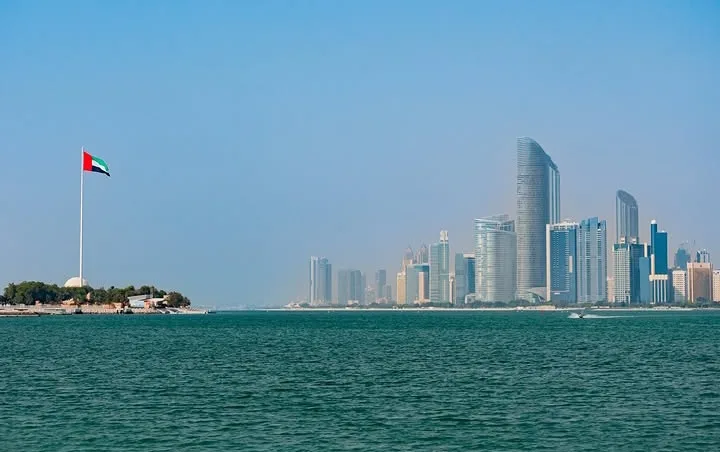
ASIATODAY.ID, ABU DHABI — As geopolitical uncertainty continues to reshape the Middle East, the United Arab Emirates (UAE) is sending a powerful message to global markets: economies built on strong foundations can withstand even the most challenging storms.
The International Monetary Fund (IMF) has highlighted the UAE’s remarkable economic resilience, supported by robust financial buffers, sound policymaking, a strong banking sector, and an ambitious diversification agenda that continues to attract global investors.
Following an IMF staff visit to Abu Dhabi and Dubai from July 7–16, 2026, the institution said the UAE has successfully contained the economic impact of regional tensions while maintaining financial stability and investor confidence.
“The UAE economy has demonstrated significant resilience amid the geopolitical conflict in the Middle East. Strong fundamentals, ample policy buffers, advanced preparedness, and a swift policy response have contained the overall impact of the shock,” said Said Bakhache, IMF Mission Chief for the UAE.
A Strong Economic Shield Amid Regional Turbulence
Despite heightened uncertainty across the region, the UAE’s fiscal and external positions are expected to remain in surplus in 2026.
The IMF attributed this strength to favorable oil revenues, conservative budget management, prudent financial policies, and low levels of public debt.
Strong government balance sheets and the solid financial position of government-related entities (GREs) have helped the UAE absorb external shocks while protecting economic stability and sustaining market confidence.
The country’s strong fiscal position also provides significant room for further policy support if global or regional risks intensify.
Banking Sector Remains a Pillar of Stability
The UAE’s financial system has remained resilient despite global market volatility.
According to the IMF, UAE banks continue to maintain strong capital positions, sufficient liquidity, and healthy credit and deposit growth.
While real estate activity has moderated after several years of rapid expansion, the adjustment remains manageable.
The IMF noted that property prices generally remain at or above 2025 levels, while banking sector exposure to real estate remains contained.
Beyond Oil: Building the Economy of the Future
The UAE’s resilience is not solely driven by its energy sector.
Over the past decade, the country has accelerated its transformation into a global hub for technology, artificial intelligence, clean energy, logistics, tourism, trade, and financial services.
The IMF emphasized that continued economic diversification will be critical to sustaining long-term growth.
Deeper trade integration through Comprehensive Economic Partnership Agreements (CEPA), stronger supply chain resilience, and sustained investment in technology and human capital are expected to further strengthen the UAE’s competitiveness in the global economy.
Abu Dhabi and Dubai Continue to Attract Global Capital
Although regional uncertainty has affected sectors such as tourism, transportation, trade, and real estate, the IMF expects the UAE economy to regain stronger momentum in the second half of 2026.
A recovery in exports, increased energy production, and improving global trade flows are expected to support growth.
The IMF projects stronger expansion in 2027 as hydrocarbon production rises and non-oil sectors recover.
This outlook reinforces Abu Dhabi and Dubai’s status as leading global destinations for investment, innovation, and international business.
UAE Emerges as a Symbol of Economic Resilience
At a time when global markets face increasing uncertainty, the UAE is demonstrating a development model built on stability, diversification, and long-term vision.
The country is no longer viewed only as an energy powerhouse, but as a strategic economic bridge connecting Asia, Europe, and Africa.
For international investors, the UAE’s resilience represents a broader signal: the Middle East remains a region of opportunity, innovation, and growth.
Amid global turbulence, the UAE is proving that strong fundamentals, strategic transformation, and economic ambition can turn uncertainty into opportunity. (AT Network)
Follow Us at Google News, Instagram and LinkedIn