
ASIATODAY.ID, JAKARTA – Indonesia has expanded its strategic economic framework by granting limited exemptions from its new Natural Resource Export Proceeds (DHE SDA) rules to four major trading partners: China, the United States, Australia, and Canada.
The policy adjustment reflects Jakarta’s effort to maintain strong international trade relationships while ensuring that export earnings from the country’s natural resources continue to strengthen domestic economic stability.
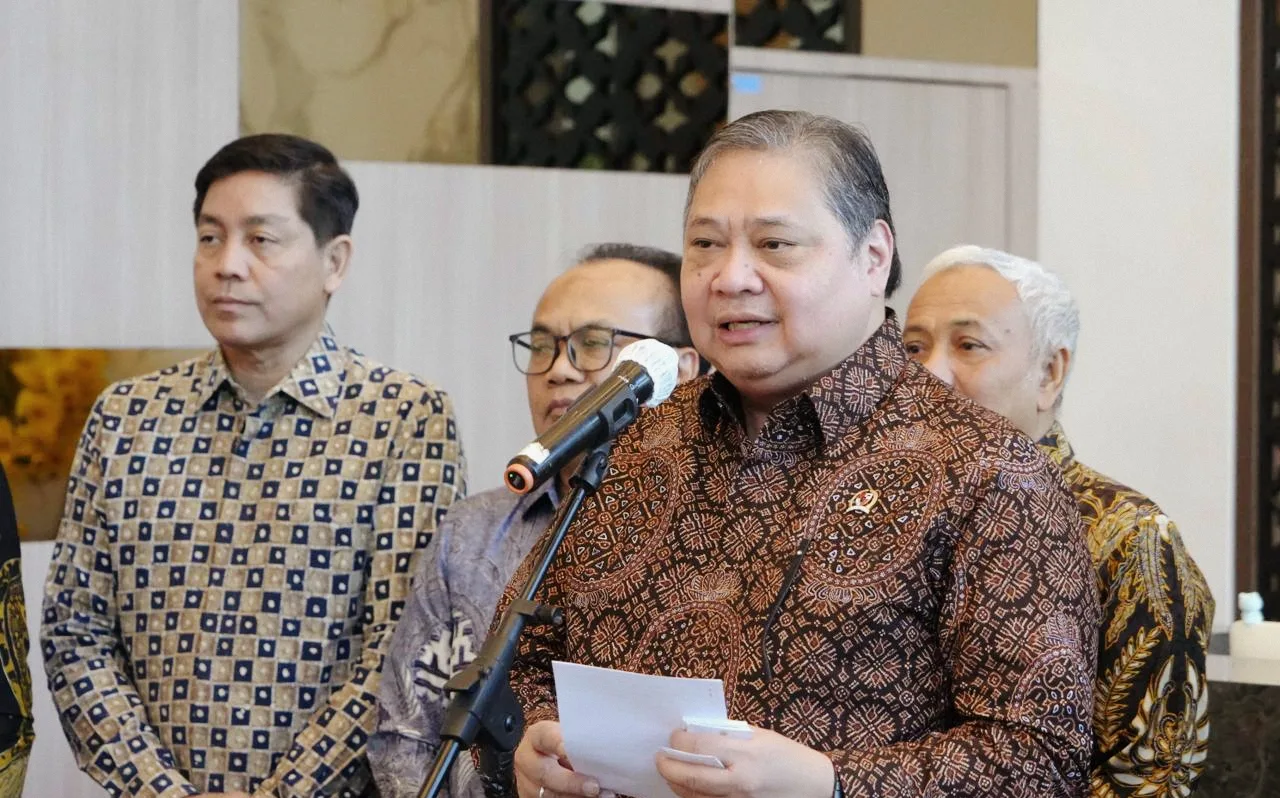
Coordinating Minister for Economic Affairs Airlangga Hartarto said the exemption was granted based on the intensity of bilateral economic cooperation between Indonesia and the four countries.
“Several countries have extensive bilateral cooperation with Indonesia, including China, the United States, Australia, and several other partners,” Airlangga said in Jakarta.
Under the revised framework, the exemption applies specifically to banking transactions involving financial institutions from those countries. The arrangement is not limited to Indonesia’s state-owned banks but also covers private banking institutions.
“The banks can be both Himbara (state-owned banks) and non-Himbara banks,” Airlangga said.
The DHE SDA policy requires exporters of Indonesia’s natural resources to manage export proceeds through domestic financial channels. The regulation is designed to increase foreign exchange availability, strengthen the rupiah, and improve the country’s economic resilience.
Previously, only the United States had received an exemption under the regulation. The latest decision adds China, Australia, and Canada, three countries with significant economic engagement with Indonesia across trade, investment, mining, energy, and industrial development.
Finance Minister Purbaya Yudhi Sadewa emphasized that the policy remains flexible and will be evaluated periodically based on economic conditions and international cooperation.
The government expects export proceeds from natural resources to begin flowing into Indonesia more significantly from September, potentially providing additional support for the rupiah.
“By September, the funds should start entering Indonesia, and this should help strengthen the rupiah,” Purbaya said.
Balancing Economic Sovereignty and Global Partnerships
Indonesia’s latest move highlights Jakarta’s strategy of balancing economic sovereignty with global connectivity.
As the world’s largest nickel producer and a major exporter of coal, palm oil, and other natural resources, Indonesia has been seeking ways to maximize the domestic benefits of its commodity exports while maintaining attractive conditions for international investors.
China remains Indonesia’s largest trading partner and a key investor in downstream industries, particularly nickel processing and electric vehicle supply chains. The United States, Australia, and Canada also maintain important partnerships in trade, minerals, energy, and strategic industries.
The expanded DHE SDA exemption signals Indonesia’s broader economic diplomacy approach: securing foreign exchange stability while strengthening cooperation with major global economies.
Amid rising geopolitical uncertainty and global economic fragmentation, Jakarta is positioning its natural resource sector not only as a source of export revenue but also as a foundation for long-term strategic partnerships. (AT Network)
Follow Us at Google News, Instagram and LinkedIn