
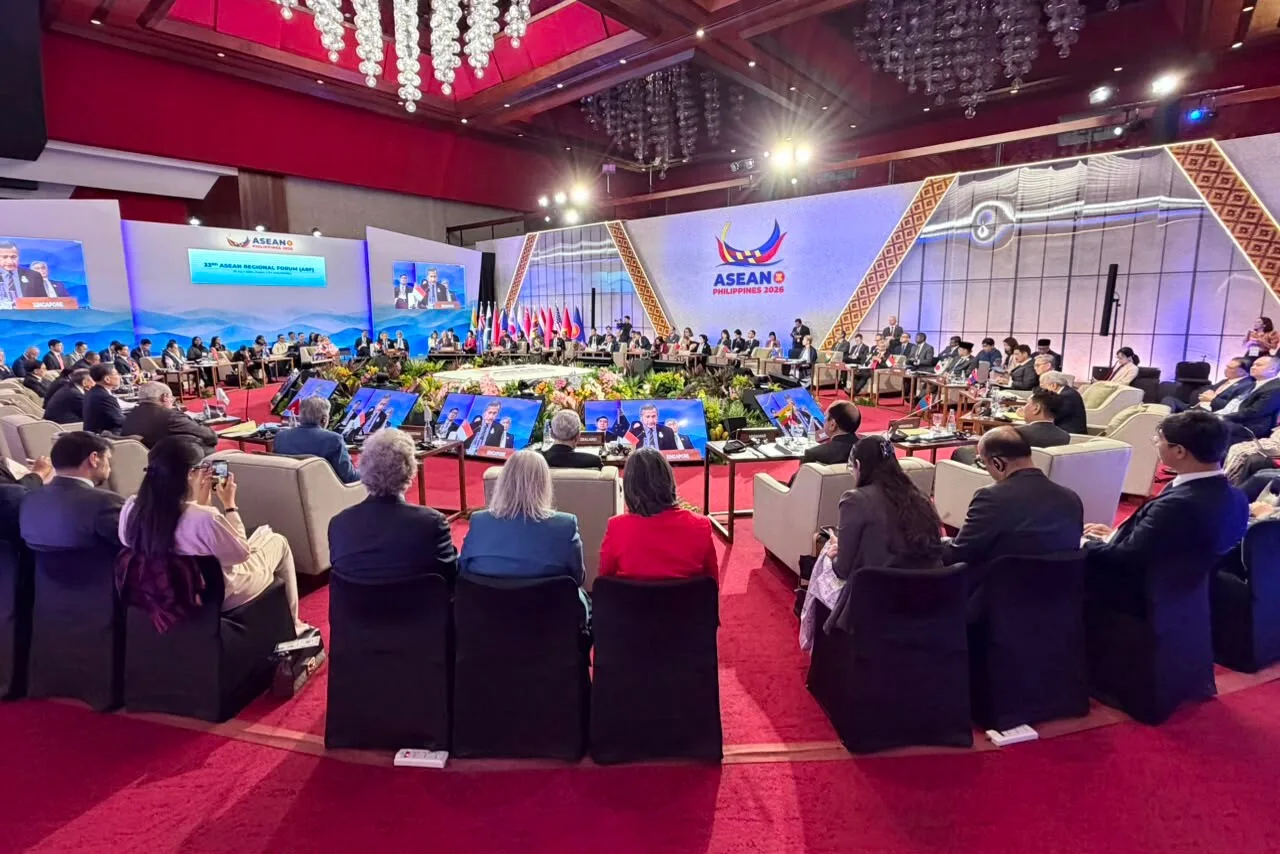
ASIATODAY.ID, MANILA — ASEAN is moving to rebuild its regional security framework as geopolitical rivalries, economic uncertainty, and global conflicts reshape the strategic landscape of the Indo-Pacific.
Through a series of high-level diplomatic meetings in Manila, ASEAN and its partners reaffirmed their commitment to strengthening key regional platforms — the ASEAN Regional Forum (ARF), East Asia Summit (EAS), and ASEAN Plus Three (APT) — with a stronger focus on practical cooperation, preventive diplomacy, and long-term resilience.
The meetings highlighted ASEAN’s effort to maintain its role as a stabilizing force in a rapidly changing world, ensuring that the Indo-Pacific remains a region of dialogue and cooperation rather than confrontation.
Indonesia emphasized that ASEAN-led mechanisms must continue to evolve to address emerging challenges while preserving ASEAN centrality as the foundation of regional peace and stability.
ARF Pushes for More Action-Oriented Regional Security
At the 33rd ASEAN Regional Forum (ARF) in Manila, participating countries adopted the Manila Plan of Action 2026–2036, a strategic roadmap aimed at strengthening confidence-building measures, preventive diplomacy, and practical cooperation among members.
Indonesia called for a revitalized ARF that can respond more effectively to growing security challenges, including geopolitical tensions, maritime disputes, and emerging non-traditional threats.
“Revitalization does not mean changing the fundamental purpose of ARF. It means strengthening the tools we already have so that the forum can better respond to real regional challenges,” Indonesia’s Foreign Minister Sugiono said.
Established in 1994, ARF has become one of Asia’s most important diplomatic platforms, bringing together ASEAN members and major global powers. However, shifting geopolitical dynamics have increased expectations for the forum to move beyond dialogue and deliver more concrete outcomes.
Indonesia stressed that ARF cooperation should become more implementation-oriented, ensuring that regional commitments are translated into tangible partnerships.
The forum also welcomed the United Kingdom as its newest participant, expanding ARF’s membership to 28 countries and strengthening its role as an inclusive platform for regional security discussions.
EAS Strengthens Indo-Pacific Cooperation
The East Asia Summit (EAS) reaffirmed its strategic role as a platform for maintaining stability in the Indo-Pacific amid increasing competition among major powers.
Indonesia highlighted the importance of keeping the region open for cooperation, particularly as countries face shared challenges involving energy security, food resilience, maritime stability, and transnational crime.
For two decades, EAS has provided a channel for strategic dialogue between ASEAN and major global partners. Regional leaders emphasized that dialogue must lead to trust, and trust must create practical cooperation.
The meeting reaffirmed the importance of international law, including the United Nations Charter, the United Nations Convention on the Law of the Sea (UNCLOS) 1982, and the Treaty of Amity and Cooperation (TAC) as the foundation for peaceful relations.
ASEAN also addressed humanitarian concerns related to conflicts beyond Southeast Asia, including the situation in Palestine, calling for sustainable ceasefire efforts, humanitarian access, and a credible pathway toward lasting peace.
With 19 members, including ASEAN countries and major partners such as China, Japan, South Korea, India, Australia, Russia, and the United States, EAS remains a central mechanism shaping the future of the Indo-Pacific.
ASEAN Plus Three Builds Resilience Before Future Crises
Meanwhile, the 27th ASEAN Plus Three Foreign Ministers’ Meeting focused on strengthening regional resilience amid disruptions affecting food supplies, energy markets, financial stability, and global supply chains.
Indonesia urged ASEAN Plus Three members to focus not only on responding to crises but also on building stronger systems before disruptions occur.
“APT was born from crisis. Its future should be shaped by the resilience we build before the next crisis happens,” Indonesia said.
The meeting highlighted efforts to strengthen the ASEAN Plus Three Emergency Rice Reserve (APTERR) as a regional food security mechanism through agricultural innovation, improved supply chains, and diversified reserves.
Financial resilience was also discussed through the Chiang Mai Initiative Multilateralization (CMIM), a regional financial safety mechanism designed to support stability during periods of economic uncertainty.
ASEAN’s Role in a More Fragmented World
The Manila meetings reflect ASEAN’s continued effort to preserve strategic autonomy while navigating a more fragmented global order.
Rather than becoming an arena for major-power competition, ASEAN seeks to keep the Indo-Pacific open, inclusive, and anchored in dialogue, cooperation, and international rules.
As global uncertainty grows, ASEAN’s future influence will depend on its ability to transform diplomatic commitments into concrete action — strengthening peace, stability, and shared prosperity across one of the world’s most strategically important regions. (AT Network)
Follow Us at Google News, Instagram and LinkedIn