
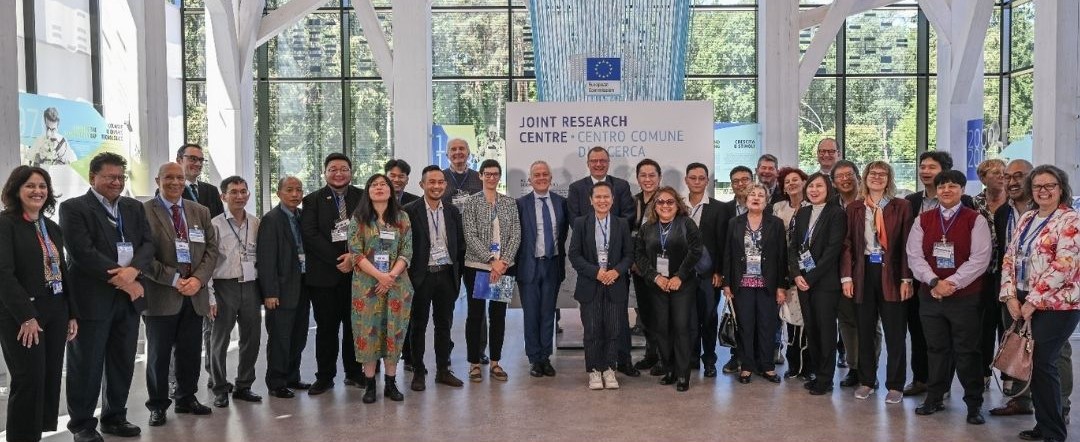
ASIATODAY.ID, ISPRA – The European Commission’s Joint Research Centre (JRC) is hosting 15 delegates from ASEAN Member States for a pivotal study visit on the Eurocodes, Europe’s structural design standards for buildings and other civil engineering works.
The study visit from 28 to 30 May 2024 is focusing on developing a roadmap towards the adoption and implementation of the Eurocodes at national level. Tailored technical support is provided to Brunei Darussalam, Cambodia, Malaysia, and Viet Nam – four ASEAN Member States that have already shown interest in adopting the Eurocodes. Representatives from Lao PDR and Thailand are also participating in the workshop.
This study visit follows the momentum generated by a regional workshop held in Singapore in October 2023 with the scope to increase awareness of the Eurocodes in ASEAN Member States and share knowledge and technical expertise on the adaptation of structural design to climate change. In the regional workshop, Singapore shared the experience on the implementation of the Eurocodes as the only structural design standards in the country, and Malaysia explained the status and future plans for the Eurocodes implementation at national level.
The Eurocodes offer a common language for designers, clients, manufacturers, constructors, practitioners and researchers. They are used in many countries around the world with the possibility for each country to adapt them to its specific conditions – as for example construction practices, climatic and geological conditions. Moreover, technical standards for construction products and works facilitate trade of goods and services as well as increase the competitiveness of the construction industry.
The study visit on the Eurocodes comes at an important moment within the Eurocodes evolution process as the second generation of the Eurocodes is under preparation and expected in 2026. The second generation of the Eurocodes will ensure that the standards remain fully up to date through embracing societal demands, including sustainability, climate resilience and safety in the built environment, as well as incorporate new methods, materials, and new regulatory and market requirements.
“The EU-ASEAN Dialogue on Eurocodes demonstrates the European Union’s commitment to support the ASEAN region in fostering social and economic development,” said H. E. Sujiro Seam, Ambassador of the European Union to ASEAN.
“This study visit provides an invaluable platform for knowledge exchange and collaboration, paving the way for safer and more resilient infrastructure in the ASEAN region.”
“This study visit marks a significant step for Cambodia and other ASEAN Member States in ensuring that we are well-equipped with the adept knowledge and resources in the construction sector,”’ remarked Dr Mom Mony, Secretary-General of the National Council for Building Technical Regulations (NCBTR) of Cambodia.
“The insights gained here will be instrumental in our efforts to adopt and implement the Eurocodes, ultimately benefiting our construction industry and contributing to regional cooperation.”
During the study visit, delegates from ASEAN Member States engage with representatives from the European Committee for Standardization (CEN) and experts from CEN/Technical Committee 250 ‘Structural Eurocodes’ that has the overall responsibility for the drafting and maintenance of the Eurocodes.
The delegates attend a training session on the JRC Eurocodes’ Nationally Determined Parameters (NDP) database, and learn from case studies on the Eurocodes implementation process presented by experts from EU Member States’ National Authorities. Visits to JRC’s advanced research facilities, including the European Laboratory for Structural Assessment and the European Crisis Management Laboratory, are also a key feature of the study visit, highlighting research and technical activities in support of policy-making for the built environment.
At the end of the visit, the delegates will have a deeper understanding of drafting national roadmaps towards the Eurocodes adoption and elaborating the National Annexes to the Eurocodes. Delegates from ASEAN Member States will have gained familiarity with the EU research infrastructures, which is crucial for consolidating communication channels between the EU and ASEAN, ensuring ongoing support and knowledge exchange. Showcasing various research facilities opens up new collaboration opportunities and strengthened links to the EU-ASEAN Regional Research Infrastructure Dialogue. The EU-ASEAN Dialogue on Eurocodes, including this study visit, has been supported by the Enhanced Regional EU-ASEAN Dialogue Instrument (E-READI). (AT Network)
Follow Us at Google News and WA Channel