
ASIATODAY.ID, JAKARTA – Asia must prepare for a new global economic era as the world faces unprecedented transformation driven by geopolitical fragmentation, technological disruption, rising debt and climate challenges, the International Monetary Fund (IMF) has warned.
The warning comes as the global economy enters a period of profound change, where traditional growth models are being challenged and countries must adapt faster to survive and compete.
Speaking at the Atlantic Council, IMF Director of Strategy, Policy and Review Christian Mumssen said the world economy is experiencing multiple transformations at the same time, creating a level of uncertainty unlike previous decades.
“The global economy is changing in profound ways,” Mumssen said, highlighting the impact of the COVID-19 pandemic, inflation shocks, trade tensions and geopolitical conflicts that have reshaped economic relationships worldwide.
Global inflation reached nearly 9.5 percent in 2022, forcing around four-fifths of the world’s central banks to tighten monetary policy simultaneously. Although inflation pressures have eased, the IMF warned that deeper structural challenges are now defining the next phase of global growth.
A More Fragmented World Economy
According to the IMF, the current global transformation is different from previous crises because several major forces are unfolding simultaneously.
Demographic shifts, climate change, artificial intelligence (AI), digital finance and geopolitical rivalry are creating a more complex economic environment.
Advanced economies and many emerging markets are facing aging populations, while regions such as Africa and South Asia are experiencing rapid demographic expansion.
At the same time, AI and digital technologies are accelerating changes in productivity, industries and labor markets, creating both opportunities and risks.
“The post-war global order is giving way to a more fragmented, multipolar world,” Mumssen said.
The IMF cautioned that this fragmentation is occurring precisely when international cooperation is needed most to address shared challenges.
IMF’s Four Priorities for a Changing World
To navigate the new global reality, the IMF outlined four major priorities for governments.
Protect Macroeconomic Stability
Economic stability remains the foundation for sustainable growth.
The IMF emphasized the importance of sound public finances, responsible debt management, inflation control and financial stability.
Global public debt is projected to approach 100 percent of global GDP by 2029, creating pressure for governments to maintain stronger economic buffers.
For emerging markets, maintaining fiscal space will be crucial to continue investing in infrastructure, human capital and sustainable development.
Build Stronger Economic Resilience
The global economy is experiencing a major shift in trade and industrial strategies.
Between 2023 and 2025, more than 10,000 trade-distorting industrial policy interventions were recorded worldwide as countries sought to secure strategic industries and supply chains.
Energy security, supply chain diversification and industrial competitiveness are becoming central priorities.
The IMF also warned that rapid growth in digital finance and non-bank financial institutions creates new opportunities but also introduces new financial risks.
Adapt to a More Uncertain Future
In an era of repeated shocks, countries can no longer rely only on traditional economic forecasts.
The IMF urged governments to develop flexible policies, stronger institutions and contingency plans to respond quickly to unexpected disruptions.
“Agility and adaptability are key to managing shocks and structural change,” Mumssen said.
Harness Technology for Inclusive Growth
Artificial intelligence is expected to become one of the most transformative forces shaping the global economy.
The IMF said AI could generate impacts comparable to previous industrial revolutions by transforming productivity, employment and global competitiveness.
However, countries must ensure that technological progress creates inclusive growth and does not widen economic inequality.
Asia’s Moment to Prepare and Lead
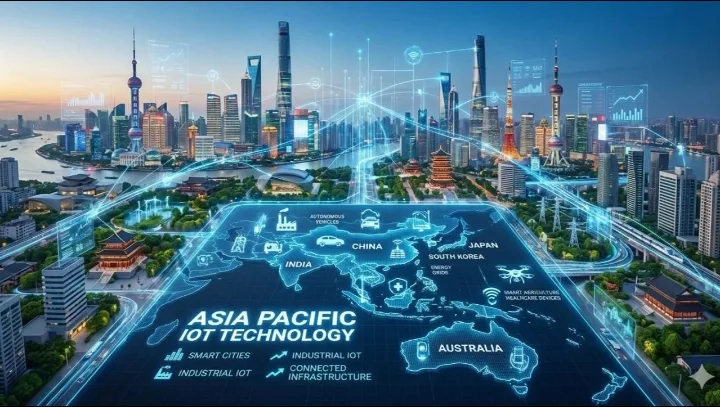
For Asia, the IMF’s warning represents both a challenge and a historic opportunity.
As the world’s fastest-growing economic region, Asia cannot afford to remain vulnerable to external shocks or become only a production base within global supply chains.
The region must strengthen its capacity to shape the next economic order through innovation, cooperation and strategic resilience.
Strengthening Regional Integration
Asia’s first priority must be deeper economic cooperation.
Stronger regional supply chains, trade partnerships and investment networks will help countries reduce vulnerability amid geopolitical uncertainty.
ASEAN, China, India, Japan and South Korea will play increasingly important roles in maintaining regional economic stability and global connectivity.
Moving Beyond Traditional Growth Models
Asia’s future growth cannot depend only on low-cost manufacturing or commodity exports.
The region must accelerate industrial upgrading, research capacity and innovation-driven development.
Countries such as Indonesia are pursuing industrial downstreaming strategies, including mineral processing, electric vehicle ecosystems and green industries, to create higher-value economic opportunities.
Winning the AI and Digital Competition
Technology will determine the competitiveness of economies in the coming decades.
Asian countries must invest in digital infrastructure, education, talent development and responsible AI governance.
The ability to combine technological innovation with skilled human resources will become a key advantage in the new economic era.
Building Green and Energy Resilient Economies
Climate change is no longer only an environmental issue; it is becoming a major economic challenge.
Asia must accelerate clean energy development, strengthen climate adaptation and build sustainable industrial systems while ensuring energy security.
The transition toward a greener economy will create new opportunities in renewable energy, green manufacturing and sustainable investment.
Strengthening Financial Protection
Rising global debt and financial uncertainty require stronger domestic financial systems.
Asian economies must improve financial resilience, manage external risks and expand regional financial cooperation to withstand future shocks.
Asia’s Choice: Adapt or Fall Behind
Despite growing uncertainty, Asia enters the new era with significant advantages: large consumer markets, strong industrial capacity, technological capabilities and a dynamic workforce.
The challenge is transforming these advantages into long-term strategic strength.
The IMF’s message is clear: the next economic era will belong to economies that can adapt faster, innovate more effectively and cooperate more strategically.
For Asia, the choice is no longer whether change will come.
The real question is whether Asia will simply respond to the new global order — or help shape it. (AT Network)
Follow Us at Google News, Instagram and LinkedIn