
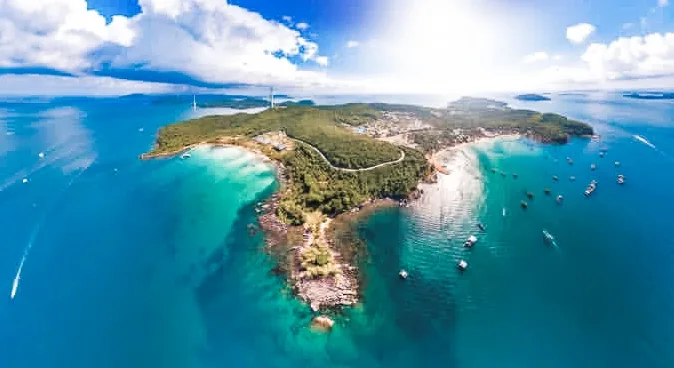
ASIATODAY.ID, JAKARTA — Asia’s tourism landscape is undergoing a noticeable shift. Long dominated by established icons such as Bali, the region is now facing a serious challenger: Phu Quoc Island in Vietnam.
Recently crowned Asia’s most beautiful island by readers of Condé Nast Traveler, Phu Quoc is now projected to become one of the world’s most talked-about travel destinations in 2026. The forecast was issued by What’s On, a leading lifestyle and travel magazine based in the United Arab Emirates.
Once known as a quiet fishing island, Phu Quoc has rapidly moved up the tourism ladder. The expansion of direct flight routes from East Asia, combined with growing global air connectivity, has transformed the island into an international-scale resort and entertainment hub.
This rapid evolution positions Phu Quoc as a new contender in Southeast Asia’s tourism race—long associated with Bali and Phuket.
As global travelers grow increasingly weary of overcrowded, overcommercialized destinations, Phu Quoc is emerging as a compelling alternative. Its appeal lies in a rare blend of relatively untouched tropical beaches, vibrant marine ecosystems, forested interiors, and mountainous terrain, supported by an expanding modern tourism infrastructure.
Beyond nature, the island is also investing heavily in man-made attractions. The development of world-class theme parks, integrated resorts, and family-oriented entertainment complexes has broadened its market reach, attracting both leisure seekers and mass tourism.
Visitor figures highlight the momentum. In 2025, Phu Quoc welcomed 8.1 million tourists, including 1.8 million international visitors. For 2026, local authorities are targeting 8.5 million arrivals, with foreign tourist numbers expected to reach two million.
With new international routes set to connect Phu Quoc directly to major tourism hubs across Asia and beyond, the island is strengthening its position within the global travel network.
This ambition places Phu Quoc as a serious challenger to Asia’s long-established tourism heavyweights, including Bali.
No longer merely an alternative destination, Phu Quoc now symbolizes a broader realignment in Asia’s tourism hierarchy, signaling that the region’s travel map is being redrawn. (AT Network)
Follow Us at Google News and WA Channel