
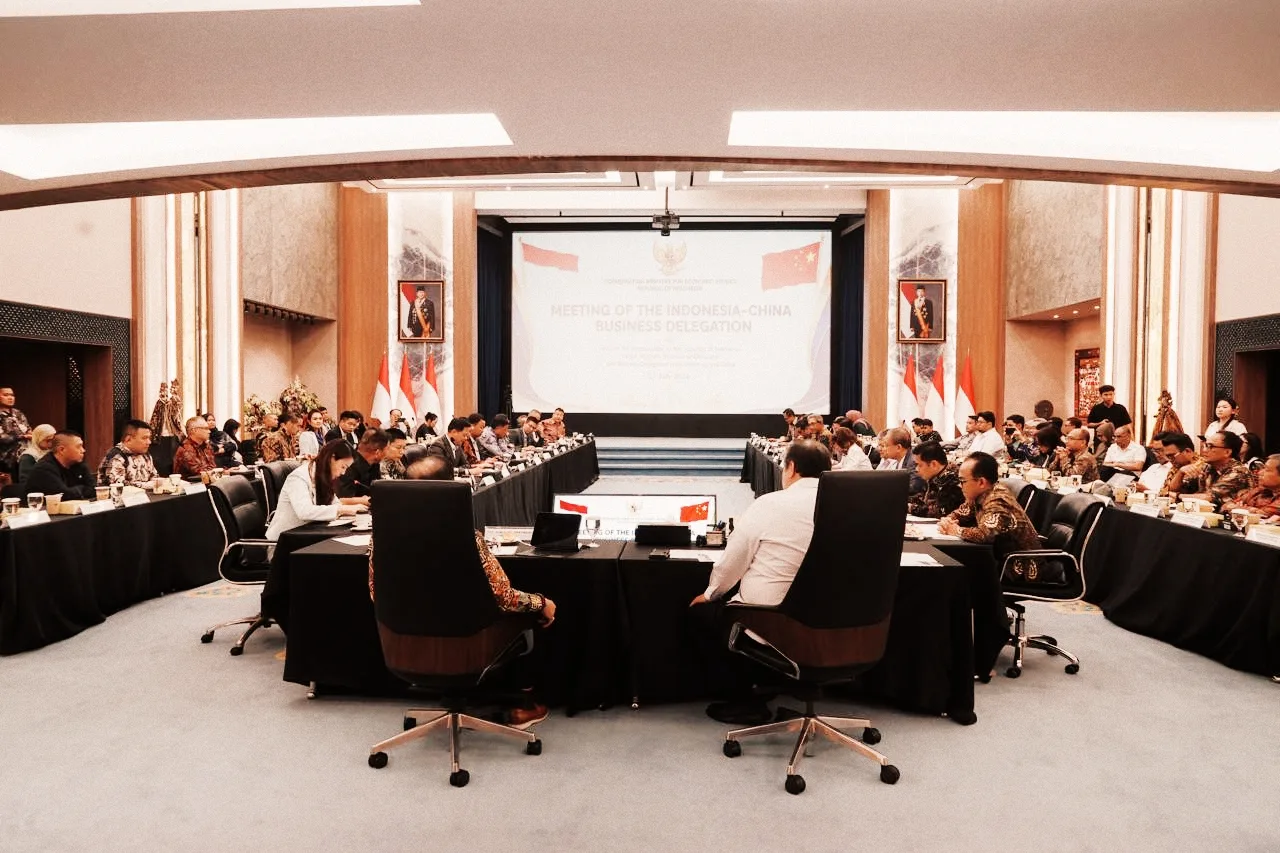
ASIATODAY.ID, JAKARTA — China’s investment landscape in Indonesia is undergoing a major transformation. After becoming a key player in Indonesia’s nickel downstream industry, Chinese investors are now turning their attention to high-value technology sectors, including artificial intelligence (AI), semiconductors, green energy, and digital infrastructure.
Indonesia’s Ambassador to China, Djauhari Oratmangun, said Chinese investors are increasingly exploring new opportunities beyond traditional industries as Indonesia accelerates its industrial transformation.
“New areas of interest are emerging, particularly energy transformation, waste-to-energy, artificial intelligence, semiconductors, and other advanced sectors,” Djauhari said in Jakarta.
The shift marks a new chapter in Indonesia-China economic relations, with cooperation expanding from resource-based industries toward technology-driven and innovation-focused investment.
AI and Semiconductor Investment Becomes New Priority
Indonesia is positioning itself as a future hub for digital transformation in Southeast Asia by attracting investment in artificial intelligence, semiconductor ecosystems, data centers, and advanced technology industries.
The momentum was strengthened after Coordinating Minister for Economic Affairs Airlangga Hartarto signed the Declaration of the World Artificial Intelligence Cooperation Organization (WAICO) in Shanghai, making Indonesia one of the founding members of the global AI cooperation initiative.
The government sees AI development as a strategic opportunity to strengthen Indonesia’s competitiveness and integrate the country into the global technology supply chain.
Airlangga has encouraged Chinese companies to invest in sectors with higher added value, including technology, digital economy, education, and advanced manufacturing.
“We welcome cooperation with global partners, including China, in trade, investment, services, education, and technology. We encourage more investment in sectors that generate greater value,” Airlangga said.
US$2 Billion Deals Highlight Green Economy Cooperation
The expansion of cooperation comes alongside stronger economic ties between Jakarta and Beijing.
Indonesia and China recently signed three Memorandums of Understanding (MoUs) worth around US$2 billion, covering green energy, food and beverage industries, as well as property and engineering.
One of the flagship projects is a 300-megawatt agrivoltaic solar power plant in North Sumatra, valued at approximately US$1.35 billion.
The project combines renewable energy production with agricultural activities, supporting Indonesia’s transition toward a cleaner energy future.
Other agreements include cooperation between Indonesian and Chinese companies in the food industry and engineering sectors.
Indonesia-China Trade Momentum Accelerates
Economic relations between the two countries continue to strengthen.
Djauhari said bilateral trade reached around US$101 billion during the first half of 2026, with total trade projected to reach US$200 billion by the end of the year if current momentum continues.
China remains Indonesia’s largest trading partner. Chinese customs data showed bilateral trade reached around US$168 billion in 2025, exceeding Indonesia’s trade with the European Union and the United States.
“China is our main partner. Last year, trade between Indonesia and China was around US$168 billion, compared with around US$30 billion with the European Union and around US$40 billion with the United States,” Djauhari said.
Indonesia also recorded a trade surplus of around US$5.6 billion with China during the first half of 2026.
From Nickel Downstream to High-Value Industries
China has played a major role in Indonesia’s nickel downstream development, particularly in processing facilities and electric vehicle battery supply chains.
However, the next investment wave is moving toward industries with greater technological value.
Government data showed investment from China and Hong Kong reached around US$10 billion in the first half of 2026, placing China among Indonesia’s largest sources of foreign investment.
Indonesia’s investment incentives, including tax holidays, tax allowances, investment allowances, and super tax deductions, are designed to attract global companies into strategic sectors.
Digital Partnership Shapes the Future
Indonesia-China cooperation is also expanding into the digital economy.
The Indonesian government is promoting investment in semiconductor manufacturing, fiber optic networks, digital platforms, and data center infrastructure to support the country’s digital transformation.
Cooperation has also expanded in education and research, including collaboration with leading Chinese universities.
In the automotive sector, Chinese electric vehicle manufacturers such as BYD and Chery Automobile are strengthening their presence in Indonesia’s growing electric vehicle market.
Rupiah-Yuan Transactions Strengthen Economic Connectivity
Financial cooperation between Indonesia and China is also expanding through the use of local currencies.
Djauhari said transactions using the rupiah-yuan local currency mechanism increased by more than 200 percent from January to June 2026, according to Bank Indonesia data.
Meanwhile, Indonesia’s QRIS payment system has been available throughout mainland China since May 2026, simplifying transactions for Indonesian travelers and businesses.
The latest developments indicate that Indonesia-China relations are entering a new era — shifting from a commodity-centered partnership toward a broader strategic alliance built on technology, innovation, renewable energy, and the digital economy.
As China searches for new growth opportunities, Indonesia is emerging as one of its most important investment destinations in Southeast Asia. (AT Network)
Follow Us at Google News, Instagram and LinkedIn