
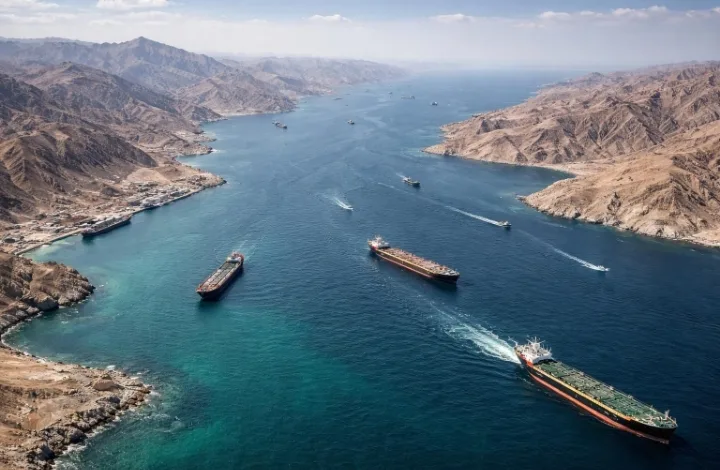
ASIATODAY.ID, JAKARTA — The escalating conflict in the Persian Gulf is creating fresh challenges for Asia’s food security as disruptions along the Strait of Hormuz threaten global fertilizer supply chains, pushing up market uncertainty and raising concerns over agricultural production costs.
A new analysis by the World Trade Organization (WTO) found that fertilizer trade has become one of the sectors most severely affected since the Gulf conflict erupted in February 2026, with fertilizer-related shipments through the strategic waterway falling close to zero since early March.
The disruption has raised concerns that prolonged supply constraints could reduce farm productivity, increase food production costs and add pressure on food prices across Asia, a region home to some of the world’s largest agricultural economies.
Asia Faces Growing Exposure to Fertilizer Supply Risks
Asian economies are among the most vulnerable to fertilizer market disruptions because many countries rely heavily on imports from Gulf producers.
WTO data shows that India sources nearly two-thirds of its nitrogen fertilizer imports from Gulf economies, while Thailand obtains close to half of its nitrogen fertilizer supplies from the region.
Other Asian economies, including Sri Lanka, Nepal, Indonesia, Malaysia, Vietnam, the Philippines, Japan and South Korea, are also monitoring potential risks as prolonged disruptions could affect agricultural costs and food supply stability.
For Southeast Asia, including Indonesia, fertilizer availability remains strategically important as governments continue efforts to maintain agricultural productivity, strengthen food resilience and protect consumers from global commodity shocks.
Fertilizer Prices Surge After Strait of Hormuz Disruption
The impact of the crisis has already been reflected in global fertilizer markets.
WTO data shows that urea prices surged from around US$400 per metric tonne to more than US$850 per metric tonne in April 2026, following the outbreak of the conflict, before easing to approximately US$453 per metric tonne in June.
Diammonium phosphate (DAP), a major phosphate fertilizer, also recorded a significant increase, rising from around US$580 per tonne to approximately US$770 per tonne.
Although prices remain below the historic peaks recorded after the Russia-Ukraine war in 2022, the WTO warned that continued geopolitical uncertainty could trigger renewed volatility in fertilizer markets.
Gulf Countries Remain Key Global Fertilizer Suppliers
The Gulf region plays a critical role in global fertilizer trade due to its large production capacity and strategic location.
According to the WTO, Gulf economies account for approximately 24.8% of global nitrogen fertilizer exports and 11.4% of global phosphate fertilizer exports.
Asia represents the largest destination market. Around 40% of nitrogen fertilizer exports from Gulf economies are shipped to Asian countries, while nearly half of Gulf phosphate fertilizer exports are also directed toward the region.
This concentration makes Asia particularly sensitive to disruptions affecting major maritime trade routes.
Farmers and Consumers Could Face Rising Pressure
Fertilizers are essential inputs for agricultural production, supporting yields for staple crops such as rice, wheat and corn.
A prolonged increase in fertilizer prices could squeeze farmers’ margins and increase food production costs, especially in developing economies where agricultural sectors remain highly dependent on imported inputs.
India has expanded fertilizer support programs to protect farmers from rising costs. WTO noted that India’s nutrient-based subsidy scheme for phosphate, potash and non-urea nitrogen fertilizers is valued at around US$4.5 billion.
Thailand has also increased support measures to help farmers manage higher fertilizer expenses.
Export Restrictions Tighten Global Markets
The fertilizer market has also been affected by export restrictions and policy responses from several producing countries.
The WTO estimates that fertilizer trade measures introduced in 2026 could affect up to 15% of global fertilizer exports.
If disruptions to Gulf exports through the Strait of Hormuz are included, the share of potentially affected fertilizer trade could reach around 23.3% of global exports.
China, Russia and Türkiye have also introduced policy adjustments affecting fertilizer products and key production inputs.
Asia Must Strengthen Supply Chain Resilience
The WTO said reopening the Strait of Hormuz would help stabilize fertilizer markets and reduce trade tensions.
However, the crisis highlights the need for Asian economies to build more resilient agricultural supply chains through supplier diversification, stronger domestic production capacity, improved fertilizer efficiency and investment in sustainable alternatives such as green ammonia.
“Policy responses should take into consideration the particular vulnerability of developing economies, notably in Asia and Africa,” the WTO said.
As geopolitical tensions continue reshaping global trade flows, disruptions at strategic chokepoints such as the Strait of Hormuz are emerging as a major factor influencing Asia’s food security, inflation outlook and economic stability. (AT Network)
Source: World Trade Organization (WTO) Data Blog, 10 July 2026
Follow Us at Google News, Instagram, WA Channel, and LinkedIn