
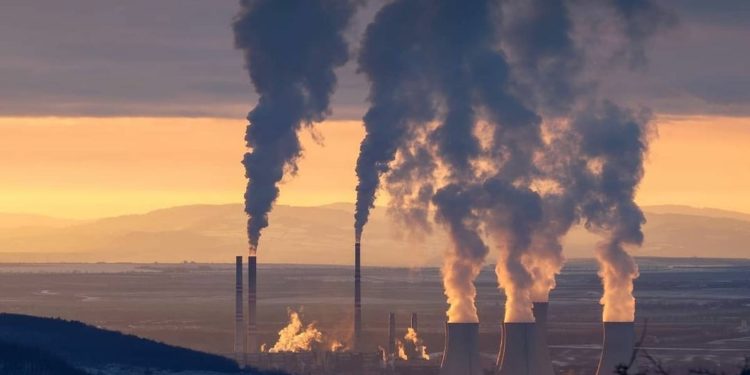
ASIATODAY.ID, JAKARTA – The risk of climate change poses a serious threat to the future of human civilization. Indonesia is not spared from that. Climate projections show a decrease in rainfall in most parts of Indonesia. The extreme weather phenomenon that has recently become more pronounced is clear evidence of the increasing impact of climate change in Indonesia.
Data from the Meteorology, Climatology and Geophysics Agency (BMKG) shows that the average air temperature in Indonesia as of October 2023 reached 27.7 °C, which is the first highest for the same month since 1981. In general, Indonesia experienced an increase in air temperature + 0.7°C compared to the average period from 1991-2020 which was 26.8°C.
“Maybe the number is small, zero point or so, but the impact of increasing temperatures is quite large. Especially if it happens all over the world. “This is what we are really afraid of,” said Climate and Environment Observer, Emilya Nurjani.
The lecturer in the Environmental Geography study program, Faculty of Geography, Gadjah Mada University, explained that the phenomenon of global warming will cause a series of intertwined negative impacts.
Even a slight increase in temperature will cause the polar ice to melt. This then results in a rise in sea levels which then has an impact, among other things, on land loss, high sea waves and various hydrometeorological disasters. The risk of food insecurity also lurks as a further effect of reduced water availability.
Global warming
Emil said that the main factor in global warming which is the fundamental trigger for climate change is the increase in carbon dioxide (CO2) gas in the air. As is known, gas emissions released into the atmosphere from various human activities on earth cause a greenhouse effect in the atmosphere. These greenhouse gases are carbon dioxide (CO2), sulfur dioxide (SO2), nitrogen monoxide (NO), nitrogen dioxide (NO2), methane gas (CH4), and chlorofluorocarbons (CFC).
Exposure to the sun’s heat cannot be reflected out because it is trapped by a thick layer of greenhouse gases in the atmosphere because it is not absorbed by plants on land or seaweed in the waters because the area is increasingly eroded and the ecosystem is damaged.
The climate model used as a reference by the Intergovernmental Panel on Climate Change (IPCC) shows that global surface temperatures will increase by 1.1 to 6.4°C between 1990 and 2100 due to human activity.
Indonesia itself ranks seventh out of 11 countries producing the largest greenhouse gas emissions in the world in 2022 based on the emissions database for the European Commission’s Global Atmospheric Research (EDGAR). Meanwhile, the top six countries producing the largest global greenhouse gas emissions in 2022 are China, the United States, EU27, Russia and Brazil.
According to EDGAR, Indonesia emits 1.24 gigatons of carbon dioxide equivalent (Gt CO2e) in 2022 from total world GHG emissions which reached 53.79Gt CO2e.
Emil continued to explain the sources of emissions including motor vehicle use, electricity use, industrial waste, deforestation, livestock and agricultural waste, and food waste.
“In Indonesia, the biggest sources of emissions come from changes in land use and burning of fossil fuels,” said Emil.
Changes in land use, for example from forest land to developed land, from rice fields to residential areas, or from primary forests to industrial plantation forests. The Central Statistics Agency noted that Indonesia’s forest cover area had decreased by 956,258 hectares (ha) in the 2017-2021 period or the equivalent of 0.5% of Indonesia’s total land area. The largest reduction in forest area occurred in Kalimantan, Papua and Sumatra. Almost half of Indonesia’s total emissions come from the forestry sector.
The other biggest source of emissions is the burning of fossil fuels such as coal, petroleum and natural gas. These fossil fuels are used, for example, for the industrial, transportation and energy sectors.
The Ministry of Industry reports that industrial sector greenhouse gas emissions in Indonesia will reach 238.1 million tons of CO2e in 2022. In the 2015-2022 period, it will reach 8-20% of the total national greenhouse gas emissions. With the largest contributor to emissions coming from industrial energy use.
Meanwhile, the Ministry of Energy and Mineral Resources noted that coal still dominates the country’s primary energy mix, namely 67.21% in 2022, in line with the increase in steam power generation capacity to 42.1 gigawatts. Meanwhile, new renewable energy will only reach 14.11% in 2022.
The urgency of mitigation
Climate change mitigation is increasingly urgent. As the seventh largest contributor to emissions in the world, Indonesia’s decarbonization steps are certainly significant for handling global climate change.
Real mitigation steps also have an impact on the lives of 275 million people in Indonesia today, and even the existence of future generations.
2021 World Bank data states that Indonesia is ranked third as a country with high exposure to climate risks, both floods and extreme heat. Indonesia is increasingly vulnerable because 65% of its population lives in coastal areas. In fact, 80% of natural disasters in Indonesia occur due to climate change. Not only is the risk of natural disasters high, the 2020 NDC Adaptation Roadmap estimates that climate change also has the potential to harm the Indonesian economy by 0.66-3.45% of GDP in 2030.
Recognizing its vulnerability to the climate crisis, Indonesia contributed to handling the issue of climate change by ratifying the Paris Agreement in 2016 through a nationally determined contribution (NDC) commitment statement which was then updated in 2021 and 2022.
In the 2022 NDC target, Indonesia is committed to reducing greenhouse gas emissions by 31.89% on its own and can reach 43.20% by 2030 with international support in the fields of funding, technology and capacity building.
Furthermore, the government’s commitment to handling climate change is outlined in the 2020-2024 National Medium Term Development Plan (RPJMN). Improving the quality of the environment, disaster resilience and climate change, and low-carbon development are priority programs.
Meanwhile, the main priority for reducing greenhouse gas emissions is in the forestry, energy and transportation sectors which cover 97% of Indonesia’s total NDC emissions reduction target. Furthermore, with the strengthening global trend on the issue of climate change, Indonesia has also targeted to achieve Net Zero Emissions in 2060 or earlier.
To support financing for climate change control, the government uses the State Revenue and Expenditure Budget (APBN), including issuing financing instruments such as green sukuk, green bonds and SDGs bonds.
Various fiscal stimuli are also provided to attract investors to participate in green projects, such as through the provision of tax holidays, tax allowances and VAT facilities.
The realization of the climate change budget in 2021 based on the Ministry of Finance’s report is IDR 112.74 trillion, an increase of 55.71% compared to 2020.
Various challenges
Climate change mitigation steps cannot be separated from various challenges. For example, limited APBN funding. According to the World Bank (2022), the budget allocation for handling climate change in the APBN is still relatively small compared to the need to achieve the NDC target. Meanwhile, the Fiscal Policy Agency of the Ministry of Finance assesses that Indonesia needs funds of $281 billion to achieve the 2030 NDC target.
Recognizing these fiscal limitations, the Government has established various institutions to encourage the entry of non-public funds or as platforms for funding cooperation aimed at decarbonization, including the Indonesia Climate Change Trust Fund (ICCTF), the Environmental Fund Management Agency, SDG Indonesia One, and Indonesia Investment Authority (INA). Apart from that, Indonesia has also launched the Energy Mechanism Transition (ETM) country platform, in collaboration with the Asian Development Bank (ADB), to attract more financing, especially to gradually phase out the use of coal-based power plants.
Meanwhile, according to Emil, Indonesia’s vast and diverse geographical conditions are a challenge in itself. So, in addition to generally applicable policies, policies are also needed that are appropriate to the regional conditions of each region.
The next challenge is how to harmonize climate change action with the government’s development priorities. For example, as a developing country, Indonesia is still very dependent on energy sources from fossil fuels such as coal. In fact, Indonesia is the third largest coal producer in the world after China and India. This commodity is also significant to Indonesia’s business and trade cycles. Meanwhile, coal is a non-renewable energy.
Then from the infrastructure sector, on the one hand, massive infrastructure development is needed to boost the economy. However, on the other hand, it has an impact on reducing open land.
Muhamad Chatib Basri and Teuku Riefky in the journal Keys to Climate Action (2023) explained that historically Indonesia is one of the largest contributors to emissions due to its high dependence on non-renewable energy and making the emission-producing sector the main engine of growth.
Apart from that, challenges in terms of funding also hinder the pace of handling climate change in Indonesia. Therefore, support from all stakeholders is needed to ensure a transition to a green economy that is fair and affordable, not only for those in power. But also for vulnerable groups.
Fiscal stimulus must be in line with development, government priorities and political interests. As understood, developing countries prioritize issues of health, social protection and support for Micro, Small and Medium Enterprises (MSMEs). So that green programs adopted into government policy must be in line with these priorities. According to Chatib and Riefky, several steps can be taken to smooth the transition to a fair and affordable green economy.
First, by increasing state revenues through taxation on entities that cause negative impacts on the environment. Such as implementing a carbon tax, excise taxes on plastic and fossil fuels. This step can be combined with reducing the burden of fuel subsidies for more optimal results.
Second, from the spending side, fiscal consolidation can be further improved by improving the quality of spending both from an economic and environmental perspective. Fund allocation must be oriented towards environmentally friendly sectors with a high multiplier effect so that growth can be in line with decarbonization. At the same time, during the transition process to a green economy, poor and vulnerable groups must remain protected through productive and well-targeted spending allocations.
“These options, however, need political support if they are to be implemented. Going forward, the green economy needs to be framed as a part of economic development. “Treating it as an issue integrated into a bigger development picture will help the movement shed its supposedly elite stature and will hopefully build support from the general public,” wrote Chatib and Riefky.
It is also said that Indonesia will be able to move faster in the transition to a green economy if it gets more support from global stakeholders.
Back to nature
Climate change mitigation requires the participation of various parties, not only the government as regulator, but also the private sector and the community.
According to Emil, the private sector plays a role because the industrial sector is one of the largest contributors to emissions. For example, reducing emissions can be done by reducing production time and using electricity sourced from new, renewable energy. Then, the office sector can also carry out mitigation by implementing an eco office.
The construction of the Cirata Floating solar power plant in Purwakarta Regency, West Java is one form of utilizing renewable energy in Indonesia as a transition effort towards clean energy.
The Ministry of Energy and Mineral Resources explained that the Cirata Floating solar power plant is a national strategic project owned by PLN Nusantara Power and is a showcase for accelerating PT PLN’s energy transition towards Net Zero Emission (NZE) and providing green electricity. This power plant is predicted to contribute to NZE of 245 GWh per year and reduce carbon emissions by 214,000 tons of CO2/year. This power plant with a capacity of 192 MWp is estimated to be able to electrify 50 thousand homes in Indonesia with clean energy.
This project was built on collaboration between PLN through PLN Nusantara Power and Masdar, an energy company based in Abu Dhabi, United Arab Emirates. As well as receiving financial support from international financial institutions, namely Sumitomo Mitsui Banking Corp, Societe Generale, and Standard Chartered Bank. The largest Floating PLTS project in Southeast Asia is claimed to increase Foreign Direct Investment in Indonesia worth $143 million.
Apart from government and private support, community contributions are determining in the success of climate change mitigation. Emil said that people can start getting used to or building an environmentally friendly lifestyle. Such as planting trees, reducing the use of private vehicles, reducing the use of plastic.
“So to prevent global warming, we return everything to nature. “By planting trees or providing more green open space,” said Emil.
Then other efforts include saving electricity, reducing textile waste by buying clothes as needed, consuming food, recycling waste, and processing organic waste into compost.
“These small things, if done together, will become a global action. “It also means a lot,” he added.
Emil hopes that the government can socialize climate change mitigation actions at all levels of education, from early childhood to university. So that public awareness at various levels of climate change issues can be built,
He also hopes that the government can provide more support and appreciation for climate change mitigation movements, whether initiated by the community, private sector or government level.
The success of East Kalimantan Province as the first region in Indonesia and even the Asia Pacific to successfully obtain carbon funds from the World Bank in 2023 is an example of a movement that according to Emil needs to be supported and pursued in other regions in Indonesia.
This carbon trading is part of the Forest Carbon Partnership Facility Carbon Fund (FCPF CF) partnership program which aims to reduce emissions from deforestation and forest degradation, improve sustainable forest management and forest carbon stocks in developing countries, through a results-based payment scheme. .
Reporting from Antara News, the results of East Kalimantan Province’s carbon dioxide (CO2) trade with the World Bank according to the contract are worth $110 million for an emissions reduction target of 22 million tonnes. This target must be achieved within 18 months from July 2019 to December 2020 with a contract value of $5 per ton of emissions.
“Success in maintaining forests is then converted into monetary value. It needs to be moved. “So natural forests are no longer cut down to become industrial forest plantations, but their naturalness is maintained and later they can get funds from carbon trading,” he concluded. (Media Keuangan)
Check out other news and articles at Google News