
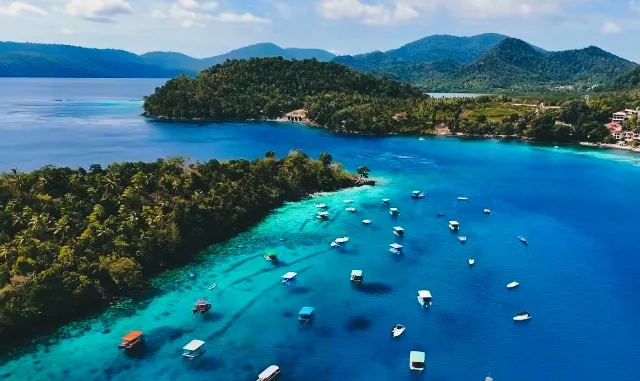
ASIATODAY.ID, JAKARTA – The Ministry of Marine Affairs and Fisheries (KKP), in partnership with the International Fund for Agricultural Development (IFAD), has officially introduced the Blue Coast Project, a strategic initiative designed to strengthen coastal economies through sustainable and climate-resilient ocean resource management.
Director General of Marine Spatial Planning, Kartika Listriana, stated that the project will be funded through IFAD’s loan and grant scheme, with a primary focus on poverty reduction, economic growth in coastal and small-island communities, ecosystem restoration, and improved marine spatial governance.
“The Blue Coast Project supports Indonesia’s blue economy agenda by empowering coastal communities, enhancing food security through sustainable value chains, strengthening blue carbon economic potential, and improving the quality of marine and fisheries data,” Kartika said in the official statement quoted on Thursday, November 27, 2025.
Four Core Components of the Blue Coast Project
Scheduled for implementation between 2027 and 2031, the project is built on four major components:
1. Marine Spatial Planning & Ecosystem Resilience – Strengthening marine spatial planning and restoring coastal ecosystems.
2. Community Empowerment & Livelihood Diversification – Expanding livelihood opportunities and supporting community-based economic empowerment.
3. Enabling Blue Value Chains & Private Sector Investment – Developing sustainable blue value chains and encouraging private sector participation.
4. Program Management & Institutional Strengthening – Enhancing institutional capacity and project management systems.
Seven Priority Locations Across Indonesia
KKP has proposed seven provinces as priority sites for the project: Aceh, Riau Islands, Central Java, West Nusa Tenggara, East Nusa Tenggara, Central Sulawesi, and Papua.
According to Kartika, these regions were selected based on several criteria, including alignment with the 2025–2029 National Medium-Term Development Plan (RPJMN), rural coastal and small-island characteristics, the need for integrated coastal spatial planning, strong fisheries potential, and the presence of key ecosystems—coral reefs, seagrass beds, and mangroves—that require rehabilitation. Priority is also given to areas that have not previously received similar support.
Planning Framework Approved by Bappenas
Between June and July 2025, the Directorate General of Marine Spatial Planning and IFAD refined the project’s blue book concept using a marine spatial planning approach. The proposal has since been approved by Indonesia’s National Development Planning Agency (Bappenas).
The Blue Coast Project is fully aligned with the policy direction of Minister of Marine Affairs and Fisheries Sakti Wahyu Trenggono, who has emphasized the importance of advancing a blue economy model that balances economic growth with the long-term sustainability of marine resources. (AT Network)
Follow Us at Google News and WA Channel