
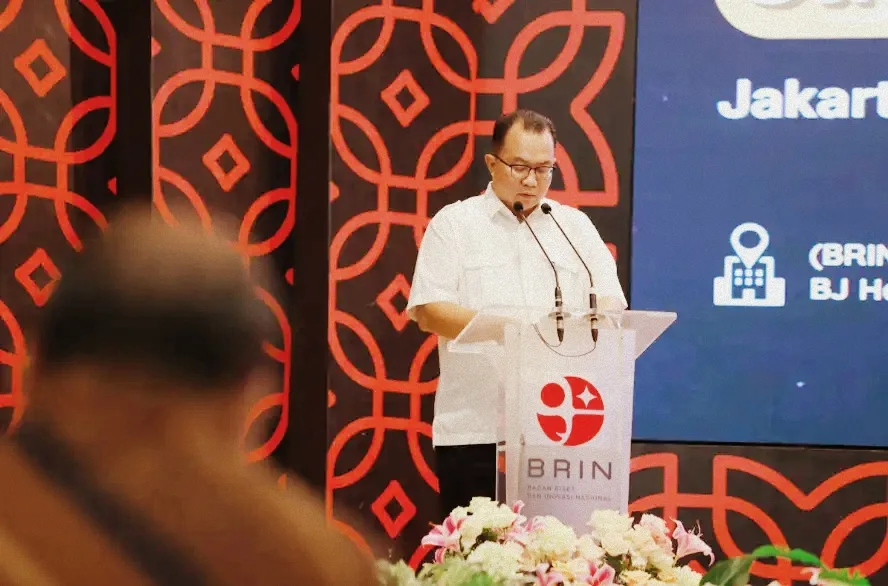
ASIATODAY.ID, JAKARTA — Indonesia is accelerating its transformation into a space-capable nation by expanding the use of Global Navigation Satellite Systems (GNSS) to strengthen disaster mitigation, transportation safety, environmental monitoring, and national digital infrastructure.
These priorities became the central focus of the GNSS Workshop 2025, organized by the National Research and Innovation Agency (BRIN) in collaboration with University of Indonesia and the United Nations Office for Outer Space Affairs (UNOOSA), held on 17–21 November 2025 at the BJ Habibie Building in Jakarta.
BRIN Chair Prof. Arif Satria emphasized that GNSS has become the backbone of modern infrastructure and must serve as a core component of the Indonesia Space Policy 2045.
“GNSS supports mapping, transportation, mining, communications, safety, and disaster mitigation. It is a strategic technology for national development,” he stated.
Satellite Navigation Technology: A Critical Asset for Disaster Mitigation
Prof. Arif underlined Indonesia’s active participation in global space governance through the United Nations Committee on the Peaceful Uses of Outer Space (UNCOPUOS) and the International Committee on Global Navigation Satellite Systems (ICG). Through these platforms, Indonesia contributes to discussions on satellite interoperability, sustainability, and responsible technology use.
However, he noted that several structural challenges remain, including:
Gaps in GNSS infrastructure
Uneven technological capacity across regions
Limited human resources in satellite engineering
Weak policy integration across ministries
BRIN, he affirmed, is committed to strengthening research ecosystems, developing talent, and building global partnerships to ensure inclusive and sustainable GNSS development.
UNOOSA representative Sharafat Gadimova praised the workshop as a crucial step in strengthening global collaboration. She highlighted growing global pressures—from climate change and resource degradation to demographic shifts—that demand collective action and equitable access to space-based technologies.
GNSS Data: A Foundational Need, But Indonesia Still Relies on Foreign Systems
Director of the Indonesian Space Agency Secretariat (INASA) Erna Sri Adiningsih stressed that despite its growing reliance on satellite-based technologies, Indonesia remains dependent on foreign navigation systems such as GPS (United States), GLONASS (Russia), BeiDou (China), and Galileo (European Union).
“Satellite navigation is a ‘silent technology’ that operates continuously behind the scenes. Without satellite signals, Google Maps, drone systems, global time synchronization, and robotics would not function,” she said.
Any disruption — whether operational or geopolitical — could directly impact national infrastructure and public services.
From User to Producer: Indonesia Must Build Its Own Navigation Satellites
Indonesia currently operates experimental satellites A1, A2, and A3, but none are dedicated navigation satellites. Existing navigation enhancements for aviation, maritime transport, and drones still rely on land-based augmentation systems, which are costly and limited in coverage.
Erna emphasized the urgency of shifting from reliance to capability:
Satellite-based augmentation offers nationwide coverage
National security requires independent navigation systems
Indonesia has strong potential to develop its own satellite industry
“Indonesia must not remain merely a market for foreign technology. We must become a producer of satellite services and build our own space industry,” she asserted.
GNSS and Earth Observation: A Foundation for SDGs and Environmental Management
Erna further explained that integrating GNSS with remote sensing technologies plays a crucial role in supporting the Sustainable Development Goals (SDGs). Satellite data is essential for:
Forest fire detection
Land cover monitoring
Disaster early warning and response
Natural resource inventory
Agricultural monitoring
Climate impact assessment
Challenges persist, including space debris, infrastructure limitations, system compatibility issues, and restricted access to advanced technologies in remote regions.
Toward Satellite Navigation Sovereignty by 2045
The five-day GNSS Workshop brought together key stakeholders — including the Ministry of Transportation, AirNav Indonesia, academics, space experts, and industry players — to form a unified roadmap toward developing Indonesia’s satellite navigation capability.
The outcomes are expected to strengthen:
National space policy integration
Development of Indonesian navigation satellite systems
International research cooperation
Technology transfer and human resource development
Growth of a domestic satellite manufacturing ecosystem
“With the world’s increasing reliance on satellite data, Indonesia must begin building its own capabilities so it is no longer fully dependent on foreign systems,” Erna concluded. (AT Network)
Follow Us at Google News and WA Channel