
ASIATODAY.ID, JAKARTA – Indonesia and China are expanding their scientific partnership to unravel the history of human migration, cultural connectivity, and the evolution of Asian civilizations through cutting-edge multidisciplinary research that combines archaeology, genetics, linguistics, anthropology, and history.
The collaboration was highlighted during the 2nd Public Lecture Series on “China–Indonesia Archaeological Connectivity,” jointly organized by the Center for Prehistoric and Historical Archaeological Research of Indonesia’s National Research and Innovation Agency (BRIN) and the Kunming Institute of Zoology, Chinese Academy of Sciences.
Speaking at the event, Irfan Mahmud, Head of BRIN’s Center for Prehistoric and Historical Archaeological Research, said the relationship between Indonesia and China dates back thousands of years—long before the emergence of modern nation-states.
According to Irfan, archaeological discoveries, historical records, linguistic evidence, and genetic studies collectively reveal centuries of interaction driven by human migration, maritime trade, technological exchange, and cultural diffusion across Asia.
Findings linked to the Hoabinhian cultural tradition, the Austronesian expansion, and the widespread distribution of Chinese ceramics throughout the Indonesian archipelago demonstrate that ideas, technologies, and cultural practices have flowed across the region for millennia.
“Understanding the historical connectivity between Indonesia and China means understanding the shared heritage that continues to shape bilateral relations today and into the future,” Irfan said on June 25, 2026.
He added that future cooperation will extend beyond archaeological excavations to include population genetics, human migration studies, digital heritage preservation, archaeological site conservation, and researcher exchange programs.
Genomics Opens a New Window into Human History
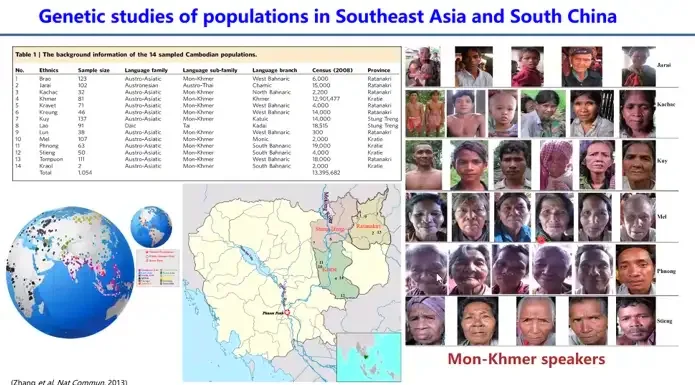
Professor Xiao Ming Zhang of the Kunming Institute of Zoology emphasized that reconstructing human population history requires more than archaeological evidence alone. Modern genomic science and ancient DNA analysis have become indispensable tools for tracing humanity’s past.
Advances in genome sequencing technologies now enable scientists to reconstruct migration routes from Africa into Asia, identify relationships among ancient populations, and understand how humans biologically adapted to diverse environments over thousands of years.
Indonesia occupies a uniquely important position in this research because it lies along one of the world’s most significant prehistoric migration corridors while possessing extraordinary genetic diversity.
Genetic studies have revealed distinct differences between western and eastern Indonesian populations, reflecting multiple waves of migration that shaped the archipelago over thousands of years.
Beyond illuminating humanity’s past, genomic research is also expected to contribute to the future of precision medicine and personalized healthcare.
Professor Xiao encouraged Indonesia’s young researchers to deepen international collaboration in genetics, archaeology, and human evolutionary studies to accelerate scientific discoveries across Asia.
Ancient Rock Art Reveals Cross-Asian Cultural Connections
During the lecture, Yun Wu of the Yunnan Provincial Institute of Cultural Relics and Archaeology presented new findings on prehistoric rock art in southwest China, highlighting its significance as a historical record of early human societies.
The rock paintings depict human figures, animals, hunting scenes, and spiritual symbols that offer valuable insights into prehistoric social life and belief systems.
Remarkably, several artistic motifs closely resemble prehistoric rock art traditions found across Southeast Asia, including Indonesia, suggesting long-standing cultural interactions among ancient communities throughout the region.
Yun noted that digital technologies for documenting and mapping archaeological sites will play a crucial role in both scientific research and cultural heritage preservation.
He described Indonesia–China cooperation as a promising platform for comparative studies on rock art, prehistoric migration, and the development of ancient Asian cultures.
Building a Stronger Asian Research Network
Meanwhile, Herry Jogaswara, Head of BRIN’s Research Organization for Archaeology, Language, and Literature, described the public lecture as an important step toward strengthening international scientific cooperation.
He expressed hope that the partnership between BRIN and the Kunming Institute of Zoology would continue to expand through joint research projects, researcher exchanges, laboratory collaboration, technical cooperation, and human resource development.
As Indonesia and China deepen their scientific ties, both countries aim to generate new discoveries that not only shed light on the origins of Asia’s diverse populations but also safeguard shared cultural heritage while advancing global knowledge of human history. (AT Network)
Follow Us at Google News, WA Channel, and LinkedIn